








NVIDIA Confirms DLSS 5 as Blackwell-Exclusive: Official Launch Set for September 3
NVIDIA has officially put months of speculation to rest, confirming that its latest iteration of Deep Learning Super Sampling, DLSS 5, will make its public debut on September 3. The technology is set to launch alongside the highly anticipated NBA 2K27, but the news comes with a strict hardware caveat: the feature will be exclusive to the company’s latest GeForce RTX 50-series “Blackwell” GPUs.
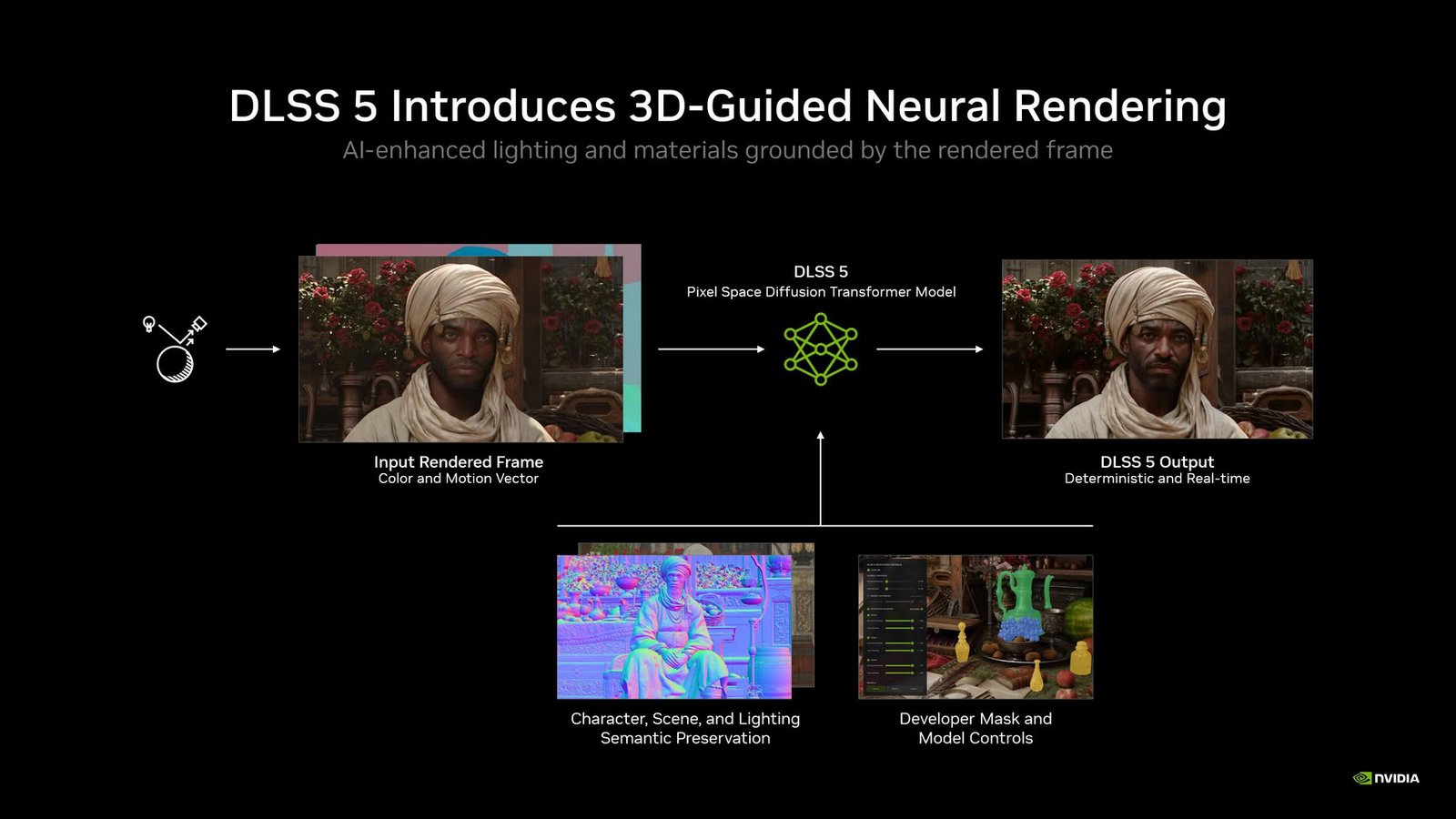
During a technical briefing at Gamescom, NVIDIA representatives were unequivocal when asked if older architectures might see support in the future. Their response was blunt: “It’s RTX 50-series only.” According to the company, DLSS 5 is the largest and most complex model they have developed to date. Its architecture is specifically optimized for the fifth-generation Tensor cores found in Blackwell hardware, leaving no official “fallback path” for users of the RTX 40-series or earlier generations.
The Modding Community’s “Workaround”
The official stance from NVIDIA aligns with findings from the modding community, which gained access to the technology early via a leaked DLL file contained within an unreleased build of NBA 2K27. Enthusiasts who decompiled the file discovered executable code explicitly gated to Blackwell hardware.
Despite the lack of official support, modders have successfully managed to patch the technology to run on older cards, providing a window into how the model handles different architectures. On an RTX 4090, a modded version was able to render Control, though the performance tax was substantial, resulting in a frame rate drop of approximately 36 to 39 percent.
The situation is far more dire for older hardware. While the RTX 40-series (Ada Lovelace) possesses native FP8 acceleration, the RTX 30-series (Ampere) does not. Tests on Ampere cards showed that performance “fell off a cliff,” suggesting that the computational requirements of DLSS 5 are deeply intertwined with the specific data-type support present in the newer Blackwell silicon.
A Disputed Necessity?
The ability to get the technology running on RTX 40-series hardware has sparked debate among enthusiasts. Since the 40-series includes native FP8 acceleration, many critics argue that NVIDIA could have provided a “lite” or lower-tier version of the tech for existing customers. However, NVIDIA’s focus remains clear: by restricting the feature to the 50-series, the company aims to prioritize the peak performance of its latest architecture rather than diluting the experience to accommodate legacy hardware.
As the September 3 release date approaches, all eyes will be on how DLSS 5 performs in real-world scenarios on Blackwell hardware, and whether the performance gains on the new architecture can justify the strict hardware gate imposed by NVIDIA.