





Opposition Bloc Intensifies Pressure on Election Commission Amidst Voter Roll Controversy
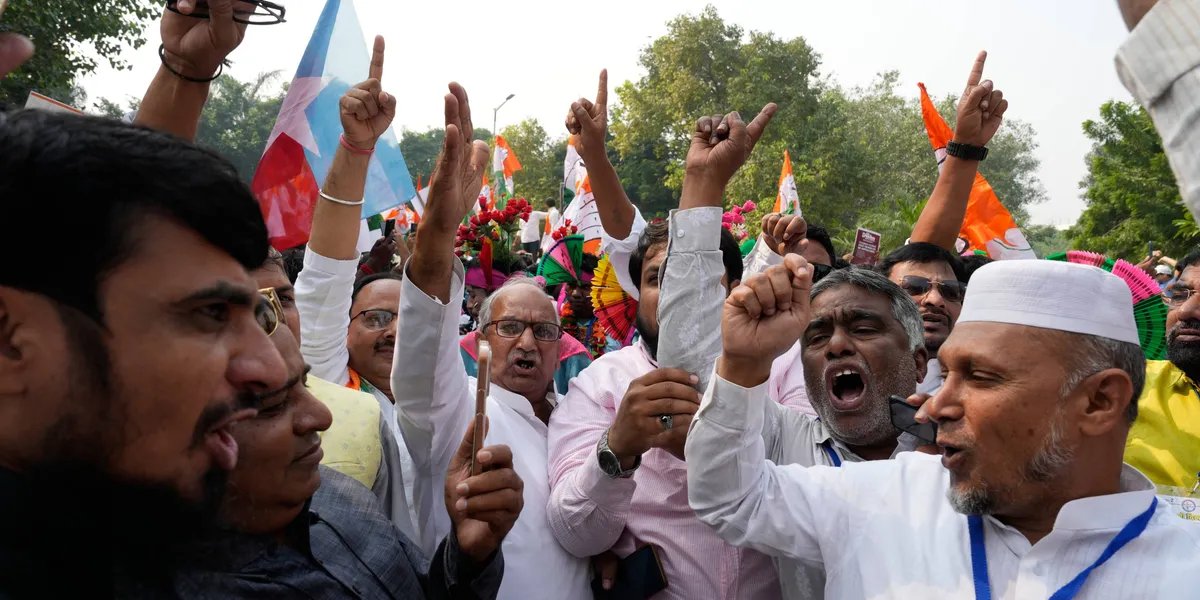
NEW DELHI — Thousands of demonstrators converged at New Delhi’s Ramlila Maidan on Sunday as the opposition INDIA bloc staged a massive show of strength against the government of Prime Minister Narendra Modi. The rally served as a flashpoint for escalating tensions surrounding the nation’s electoral integrity, with leaders and activists demanding the immediate resignation of Chief Election Commissioner Gyanesh Kumar.
The protest, which brought together a diverse coalition of opposition parties and youth-led activist groups, signaled a deepening divide in Indian politics. Demonstrators arrived with musical instruments and placards, chanting slogans against federal policies and calling for the protection of democratic institutions.
The Contested Voter Rolls
At the heart of the unrest is an ongoing, sweeping review of India’s voter lists. According to reports, over 130 million names have been removed from the rolls since last year. Opposition leaders and civil society organizations argue that this exercise is a calculated attempt to disenfranchise millions, with a specific, disproportionate impact on minority communities, particularly Muslims.
The Election Commission, supported by the ruling Bharatiya Janata Party (BJP), has consistently rejected these claims. Government officials maintain that the exercise is a necessary bureaucratic update designed to identify and purge duplicate or ineligible entries to ensure the accuracy of the democratic process.
However, international scrutiny is mounting. Human Rights Watch (HRW) recently issued a stern warning, stating that the current revision process undermines the fairness of upcoming electoral cycles. Elaine Pearson, Asia director at HRW, urged authorities to abandon the current methodology, noting that it has already impeded access to voting rights and essential government services for the country’s most vulnerable populations.
A Growing Movement
The protest was bolstered by the participation of the “Cockroach” movement, a youth-led collective that has emerged as a potent political force. Originally born from an online satirical campaign reacting to disparaging remarks by India’s Chief Justice—who had compared unemployed youth to parasites—the movement has gained surprising momentum. Their influence was previously felt in July, when they successfully pressured Modi’s education minister to resign, marking a rare and significant political defeat for the Prime Minister.
Rahul Gandhi, a prominent leader of the Congress party, joined the youth movement on stage, underscoring the alliance between established political entities and grassroots activism.
Security and Rhetoric
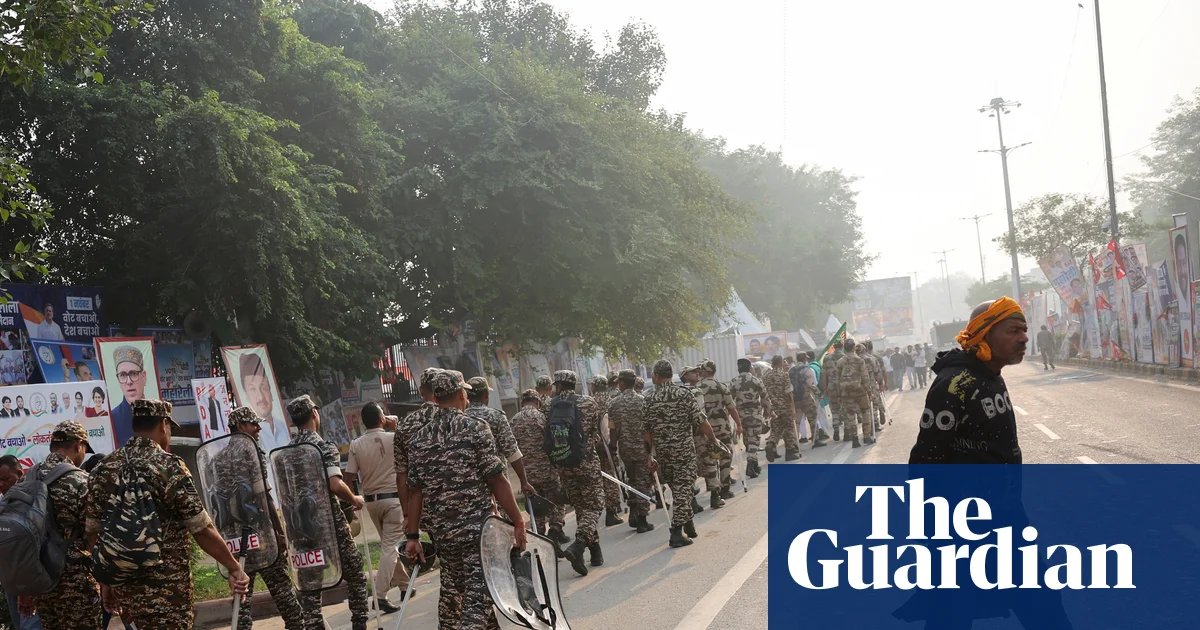
The government’s response to the gathering was heavy-handed. After authorities rescinded permission to use Jantar Mantar—the capital’s traditional epicenter for civil protest—the event was moved to the expansive Ramlila Maidan. Security was intense, with thousands of paramilitary personnel stationed around the site. The area was placed under rigorous surveillance, utilizing drones, body-worn cameras, and a network of over 200 CCTV cameras to monitor the proceedings.
While Prime Minister Modi has maintained a public silence regarding the protests, members of his cabinet and BJP leadership have been vocal. Dismissing the demonstrators as “anarchists,” ruling party representatives have alleged, without providing concrete evidence, that the movement is being steered by foreign interests.
As the protest concluded, leaders of the INDIA bloc vowed to continue their agitation until the Election Commission addresses their concerns, setting the stage for a prolonged confrontation as the nation looks toward future electoral challenges.
Disclaimer: This content is auto-generated for informational purposes only.
Source: Read Original News