








Jaishankar Pushes for Diplomacy, Highlights Energy Security Concerns at G20 Summit in Atlanta
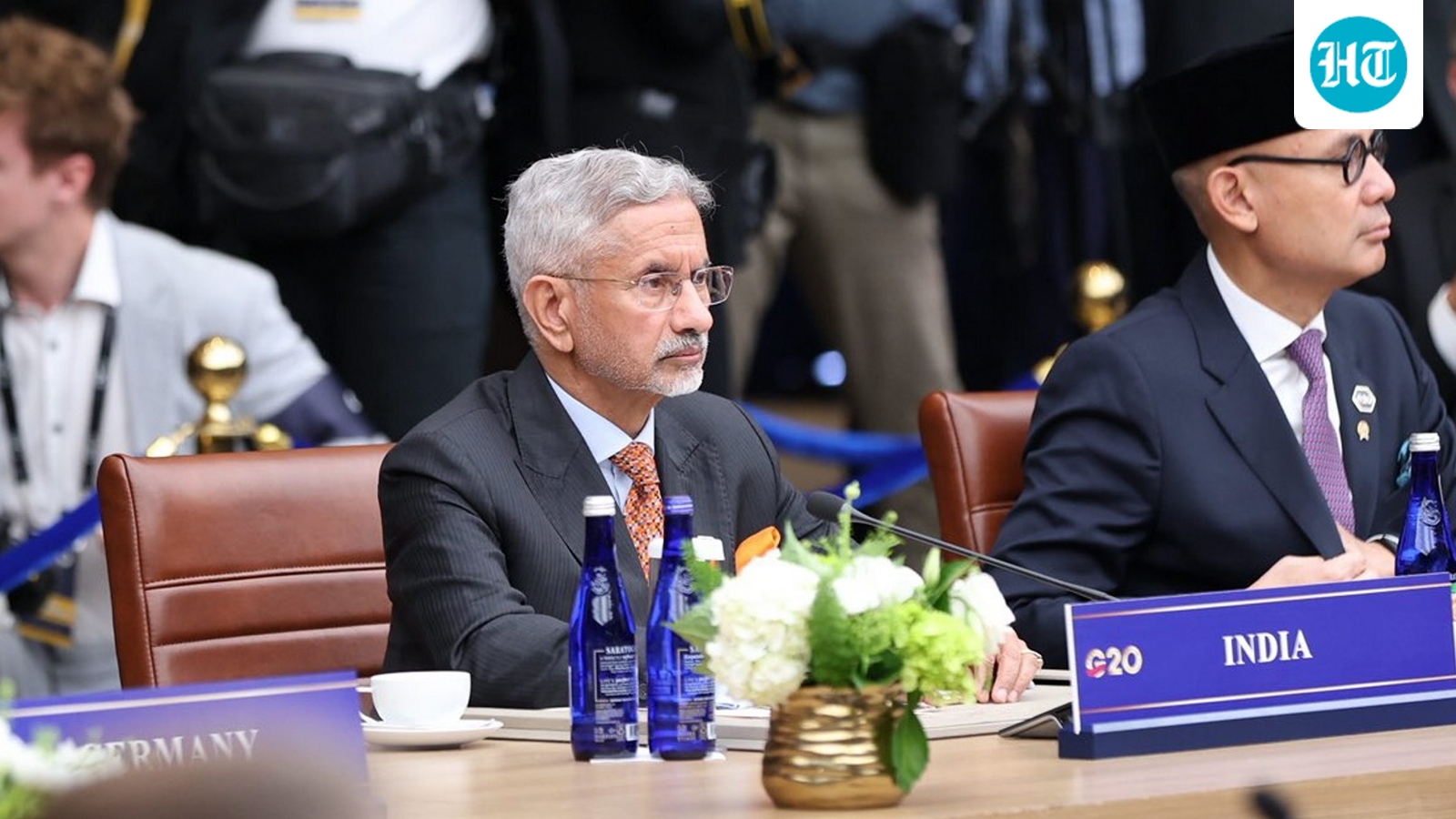
ATLANTA: External Affairs Minister S Jaishankar has underscored the urgency of diplomatic intervention to mitigate the global fallout of the ongoing Ukraine conflict. Representing India at the G20 Foreign Ministers’ meeting held in Atlanta this past weekend, Jaishankar advocated for a structured approach to resolve the humanitarian and economic crises triggered by the war.
During his interactions on the sidelines of the summit, the Minister revealed that India has been actively facilitating discussions between Moscow, Kyiv, and various European stakeholders. According to Jaishankar, New Delhi’s mediation efforts are focused on three primary pillars essential to maintaining global stability: the safety of maritime transit, the restoration of grain exports, and the sensitive issue of energy infrastructure security.
Addressing the Complexity of Energy Security
While maritime security and food supply chains remain critical, Jaishankar identified energy security as the most intricate challenge currently facing the international community. Speaking to reporters, he noted that the definition of “energy infrastructure” remains a significant point of contention among the parties involved.
“The non-attack on energy infrastructure is arguably the most complicated piece of this puzzle,” Jaishankar remarked. “The interpretation of what constitutes critical energy infrastructure varies wildly—to some, it implies refineries, while to others, it encompasses power grids or even vessels transporting fuel. Reaching a consensus on these definitions is essential to preventing further escalation.”
India’s proactive stance follows high-level diplomatic outreach. Prime Minister Narendra Modi engaged in detailed dialogue with Russian President Vladimir Putin during the 18th BRICS Summit in India this past September. Complementing this, Jaishankar has conducted a series of strategic meetings in Moscow, Kyiv, and Washington, coordinating with the US administration regarding their own peace-building initiatives. On the sidelines of the Atlanta summit, Jaishankar held a bilateral meeting with Russian Foreign Minister Sergey Lavrov to address both the Ukraine crisis and broader West Asian security concerns.
Championing the Global South
A key component of India’s diplomatic outreach at the G20 has been the consistent representation of the Global South. Jaishankar warned that developing nations are disproportionately suffering from the indirect effects of global conflicts, particularly regarding the soaring costs and interrupted supply of food, fuel, and fertilizers.
The Minister emphasized that the safety of seafarers and civilian shipping lanes is non-negotiable. With India having recently reported the loss of 22 nationals—including 14 seafarers—due to instability in the broader region over the past eight months, the issue carries significant domestic weight.
“In the face of these systemic global challenges, it is clear that military solutions will not suffice,” Jaishankar stated in a post-summit address. He reiterated that diplomacy must be granted the space to function, noting that the international community has a collective responsibility to prioritize dialogue over kinetic action.
Beyond the Ukraine issue, Jaishankar utilized the summit to strengthen bilateral ties, holding substantive talks with Polish Deputy Prime Minister Radoslaw Sikorski regarding India-EU relations and the evolving geopolitical landscape. As the Atlanta summit concluded, India’s message remained firm: sustainable peace requires a pragmatic, interest-based dialogue that addresses the foundational needs of the world’s most vulnerable populations.
Disclaimer: This content is auto-generated for informational purposes only.
Source: Read Original News