







The Strategic Pivot: Evaluating India’s Hydrogen Rail Ambitions
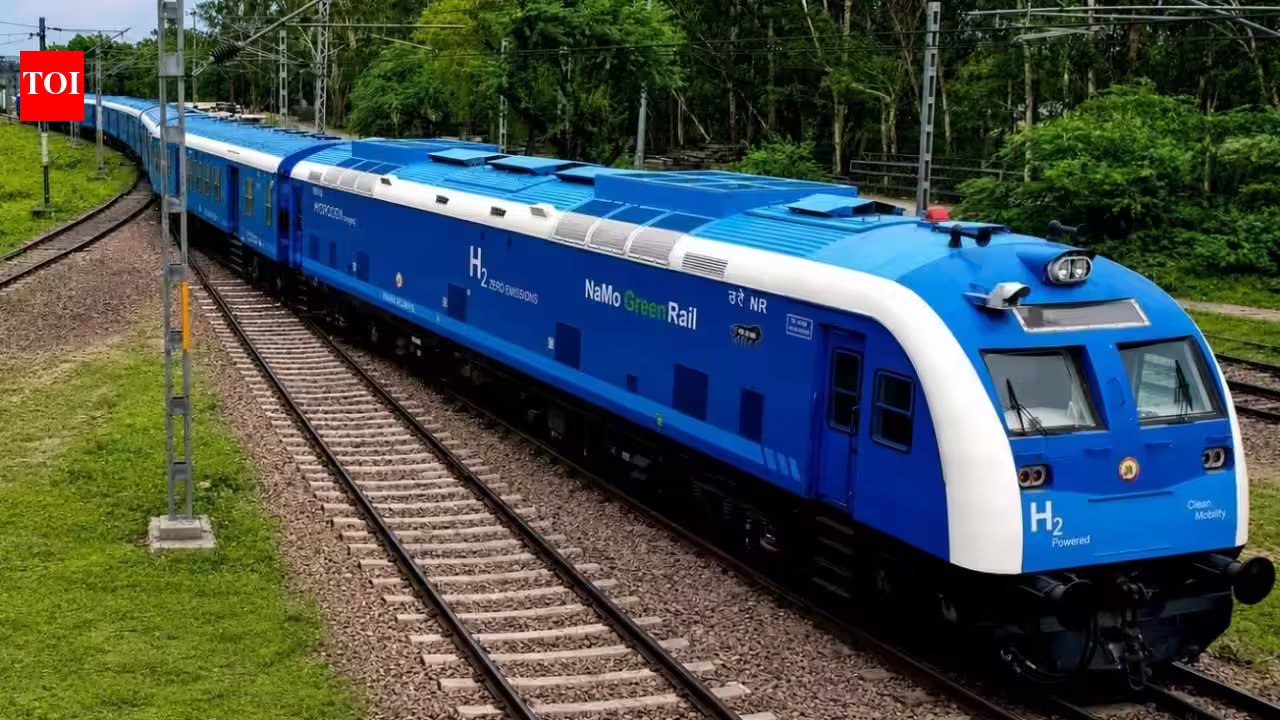
The launch of India’s inaugural hydrogen-powered train in July 2026 marked a watershed moment for the Indian Railways. As a technology demonstrator, the project successfully showcased the nation’s capacity to integrate cutting-edge green propulsion systems into one of the world’s largest rail networks. However, the operational reality of the Jind-Sonipat route has surfaced a disconnect between technological milestones and commercial viability. With occupancy rates hovering between 40 and 60 passengers against a capacity of 2,600, the project currently serves as a cautionary tale on the importance of demand-side planning in infrastructure development.
The proposal to extend the service to the national capital, Delhi, is a reactive strategic shift. It addresses the underutilization of the asset by shifting the focus from rural connectivity to the high-density commuter market of the National Capital Region (NCR). While the technology has proven its reliability over the last two months, the commercial success of India’s hydrogen rail transition depends on aligning these advanced machines with routes that possess sufficient passenger density to justify their operational costs.
Demand Realignment and Market Utilization
The core challenge facing the Jind-Sonipat route is not the efficiency of the hydrogen propulsion system, but the demographics of the catchment area. The existing service, which replaced a Diesel Electric Multiple Unit (DEMU), has inherited a route that lacks the requisite volume of daily office-goers or industrial workers. Railways are essentially capital-intensive assets that require consistent ridership to remain financially sustainable.
Moving the service to the Delhi corridor—a transit artery teeming with professional commuters and industrial workers—is a logical attempt to optimize resource allocation. From a business perspective, shifting a pilot project from a low-demand corridor to a high-density transit zone is essential to proving the concept’s value proposition. By targeting the Delhi segment, Indian Railways aims to gather data on how hydrogen technology performs under high-stress, high-frequency conditions, which is a necessary precursor to large-scale fleet modernization.
Operational Challenges and Engineering Realities
Extending the hydrogen train to Delhi introduces distinct logistical hurdles that go beyond simply extending the track length. A primary concern is the disparity between the current 10-coach configuration of the hydrogen train and the standard 18 to 20-coach sets required to manage the passenger volume of the Delhi rail network. Infrastructure constraints, such as platform length and overall track capacity, become significant variables when introducing new rolling stock into saturated corridors.
While the fuel range of 250 km to 300 km is theoretically sufficient for the Jind-Delhi journey, the limitation of a single fueling station in Jind creates a structural bottleneck. In professional rail operations, redundancy is vital. Extending the route requires not just track availability, but the development of a secondary fueling ecosystem near Delhi to ensure that the train can support the rigors of a daily high-frequency schedule. Without investment in distributed hydrogen infrastructure, the extension remains vulnerable to operational downtime.
Alternative Routes and Competitive Connectivity
The feedback from local stakeholders suggesting a circuitous route—connecting Jind, Sonipat, Panipat, and Safidon—offers a compelling alternative to the Delhi extension. This proposal highlights the importance of industrial hubs in determining route profitability. Panipat is a known industrial center, which inherently generates consistent transit demand. A loop service that integrates multiple industrial towns would likely yield higher ridership than a single point-to-point service between two less commercially active stations.
For Indian Railways, this presents a choice between pursuing prestige through an extension to the national capital or pursuing efficiency through regional circuit connectivity. Integrating industrial zones into the transit map is a standard practice for rail operators globally, as it ensures baseline occupancy throughout the day. Analyzing the potential revenue per kilometer across these different geographic strategies will be the determining factor in whether the hydrogen train becomes a permanent feature or continues to function as an intermittent technology demonstration.
The Future of Green Rail in the Indian Context
India’s entry into the hydrogen rail market is not merely about achieving environmental targets; it is about establishing indigenous capability in a nascent global industry. Countries such as Germany, Japan, and China have invested heavily in hydrogen-powered rail to decarbonize non-electrified routes. For India, the transition is particularly critical for its vast network of secondary lines that have yet to see full electrification.
However, the transition must be grounded in economic reality. The current project serves as a laboratory for the Northern Railways. By documenting the mechanical performance, fuel efficiency, and maintenance requirements, India is building the knowledge base necessary to scale this technology to more viable, high-traffic routes. The lessons learned from the low passenger turnout on the Jind-Sonipat line are as valuable as the technical data retrieved from the engine itself. These lessons emphasize that technology is only as successful as the network design that supports it.
Ultimately, the move to extend the service to Delhi reflects an attempt to salvage the project’s commercial viability while continuing to test the limits of hydrogen fuel cell performance. If the extension succeeds in increasing ridership, it will provide a blueprint for deploying hydrogen technology on other routes. If it fails, the recommendation to pivot toward industrial corridors like the Panipat loop will likely gain traction as a more sustainable path for future hydrogen rail initiatives. Moving forward, the focus must shift from the novelty of the power source to the integration of these assets into the everyday transit habits of the Indian passenger.
Disclaimer: This content is auto-generated for informational purposes only.
Source: Read Original News