








Arabian Gulf Reels from Environmental Crisis: War’s Shadow Lengthens Over Region’s Ecosystems
The Arabian Gulf faces a deepening environmental catastrophe, with a leading researcher warning of contamination lasting for years due to the ongoing US-Israeli conflict with Iran. This stark prediction comes amidst escalating concerns over two major oil slicks threatening the region’s delicate ecosystems and vital resources.
Reports indicate that the pristine mangrove forests of Qeshm Island have been directly impacted by oil pollution. Simultaneously, a separate, extensive oil leak from a Russia-linked tanker has now reached the Omani coast, raising fears of it becoming one of the most severe environmental disasters to ever affect the region.
While initial anxieties have primarily focused on marine and terrestrial contamination, Dr. Diana Francis, Associate Professor and Head of the Environmental and Geophysical Sciences (Engeos) Lab at Khalifa University in Dubai, emphasizes that the conflict’s impact extends significantly to the air quality.
Speaking to The National, Dr. Francis highlighted that the consequences of oil refinery fires, widespread explosions, and the destruction of critical infrastructure like buildings and bridges could have repercussions for years to come. “The most affected areas are communities near burning fuel and industrial facilities, particularly Tehran – Karaj, with localised impacts near Gulf refineries, ports and military-industrial sites,” she stated. “The duration of the pollution episodes varies from severe local pollution of a few hours to a few days.”
However, the longer-term threat comes from persistent smoke, which can linger for approximately a week, and contaminated dust, soil, and rubble, potentially leading to intermittent exposure for months or even years. Dr. Francis also underscored the conflict’s “longer-term climate impact,” citing increased emissions of carbon dioxide, methane, and black carbon from fuel fires, military operations, damaged oil and gas infrastructure, and subsequent reconstruction efforts. She warned that “Methane and black carbon have strong near-term warming effects, while part of the emitted carbon dioxide remains in the climate system for centuries.”
Dual Oil Slicks Intensify Regional Alarm
The dire warnings from experts coincide with the growing alarm surrounding the twin oil slicks currently unfolding in the Arabian Gulf. The pollution of the mangrove forests on the southern coast of Qeshm, located strategically in the Strait of Hormuz, remains under investigation regarding its origins. Iran’s Irna state news agency has reported that clean-up operations are underway.
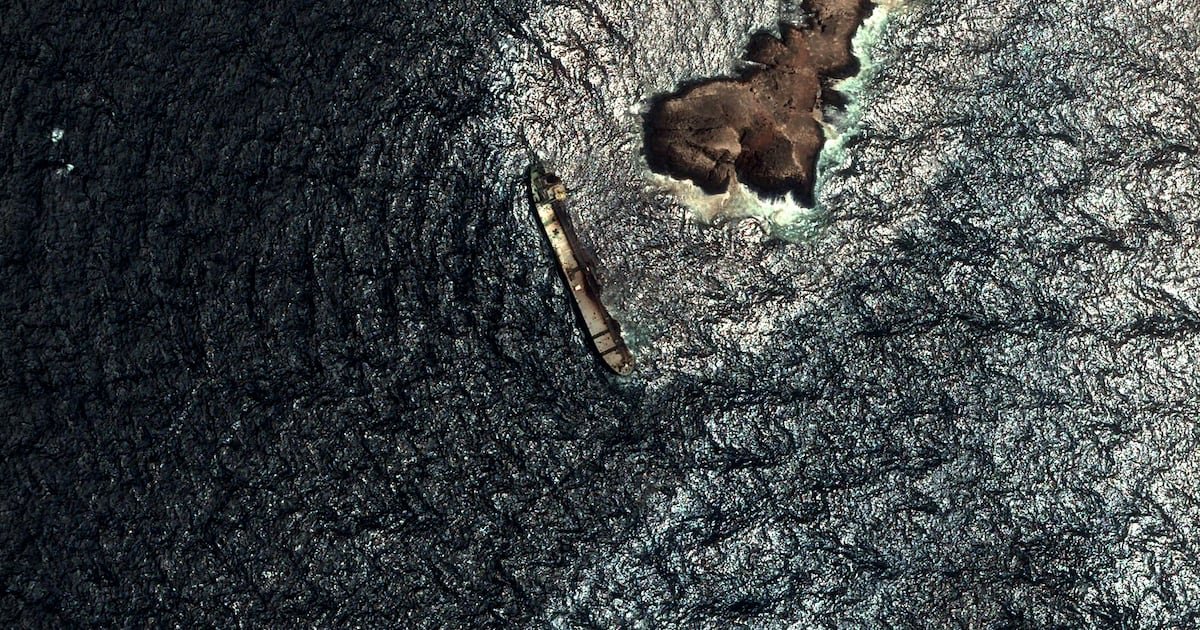
More critically, the Caroline Bezengi tanker, laden with 800,000 barrels of oil, has been adrift near Oman’s biodiverse Hallaniyat islands since a June explosion and fire. This incident has unleashed a massive oil slick, now estimated to cover over 2,000 square kilometres and has tragically reached Oman’s coastline. Reuters reports that concerns are mounting over the potential for further oil release as the damaged vessel continues to break apart. If this occurs, the slick could rival the scale and devastating environmental impact of the 1989 Exxon Valdez disaster in Alaska, which resulted in the deaths of tens of thousands of seabirds and marine animals.
The cause of the Caroline Bezengi explosion remains shrouded in mystery, with unconfirmed speculation suggesting a Ukrainian mine as the culprit. The fate and whereabouts of the crew are also unknown.
Widespread and Long-Term Damage Feared
Doug Weir, Director of the UK-based Conflict and Environment Observatory, highlighted that the Iran conflict has involved “a wide range of attacks on environmentally risky infrastructure.” This includes not only oil facilities in Iran and other regions but also “the bombing of hundreds of industrial sites, small facilities.” Weir acknowledged the difficulty in determining the full extent and longevity of the environmental damage from the war, due to limitations in current knowledge, including reliance on satellite data.
He cautioned that attacks on military installations risk releasing hazardous contaminants, and the targeting of oil infrastructure, such as Israel’s bombing of oil depots near Tehran, poses a direct threat to civilian populations. “If it’s in the desert, people are less likely to be affected. In Tehran we’ve seen strikes in the populated areas,” he explained.
While there have been numerous smaller oil spills and leaks from damaged vessels, Weir noted that “huge spills” on the scale of those seen during the 1990-1991 Gulf War have not yet occurred, though efforts are underway to accurately tally the incidents.
The lingering consequences of past conflicts serve as a grim reminder. Clean-up efforts continue in Kuwait 35 years after Iraqi forces set fire to oil wells in 1991, releasing immense quantities of oil into the environment, much of which contaminated hundreds of kilometres of Saudi Arabia’s coastline.
Cumulative Damage and Water Security at Risk
Farah Al Hattab, a campaigner at Greenpeace Mena, echoed concerns about the “significant” and long-lasting effects of oil slicks from the current conflict. Satellite imagery has already revealed “multiple and larger oil slicks” since the war’s commencement, including persistent leaks around the Strait of Hormuz. These spills threaten “sensitive ecosystems such as mangroves, coral reefs and seagrass habitats, as well as fisheries and coastal livelihoods.”
Critically, Ms. Al Hattab warned that a major spill affecting coastal regions could compromise desalination facilities, which are indispensable for the region’s water security. She emphasized the risk of “cumulative and potentially long-lasting damage,” as oil permeates sediments and marine food chains, particularly in the semi-enclosed and shallow Arabian Gulf, which is inherently vulnerable.
Both Weir and Al Hattab raised concerns about post-conflict clean-up, with Weir noting that “in a post-conflict situation, capabilities to decontaminate affected areas were typically much reduced.” He lamented the lack of accountability for environmental damage, stating, “What we see post-conflict is that there are many competing priorities. Often [environmental damage] is not addressed post-conflict and it can be long-lasting.”
Ms. Al Hattab proposed practical measures, including rapid environmental monitoring and assessment, pollution prevention and containment, safe management of hazardous debris and waste, water resource protection, and remediation of contaminated sites. Ultimately, she stressed, “Above all, a ceasefire and an end to hostilities are the most effective ways to prevent further environmental damage.”
She concluded by urging all parties to the conflict to comply with international humanitarian law, including the obligation to take “all feasible precautions to avoid or minimise damage to the natural environment.” This is especially crucial in a region where environmental impacts can easily transcend borders, leading to protracted consequences for ecosystems, biodiversity, and communities.