





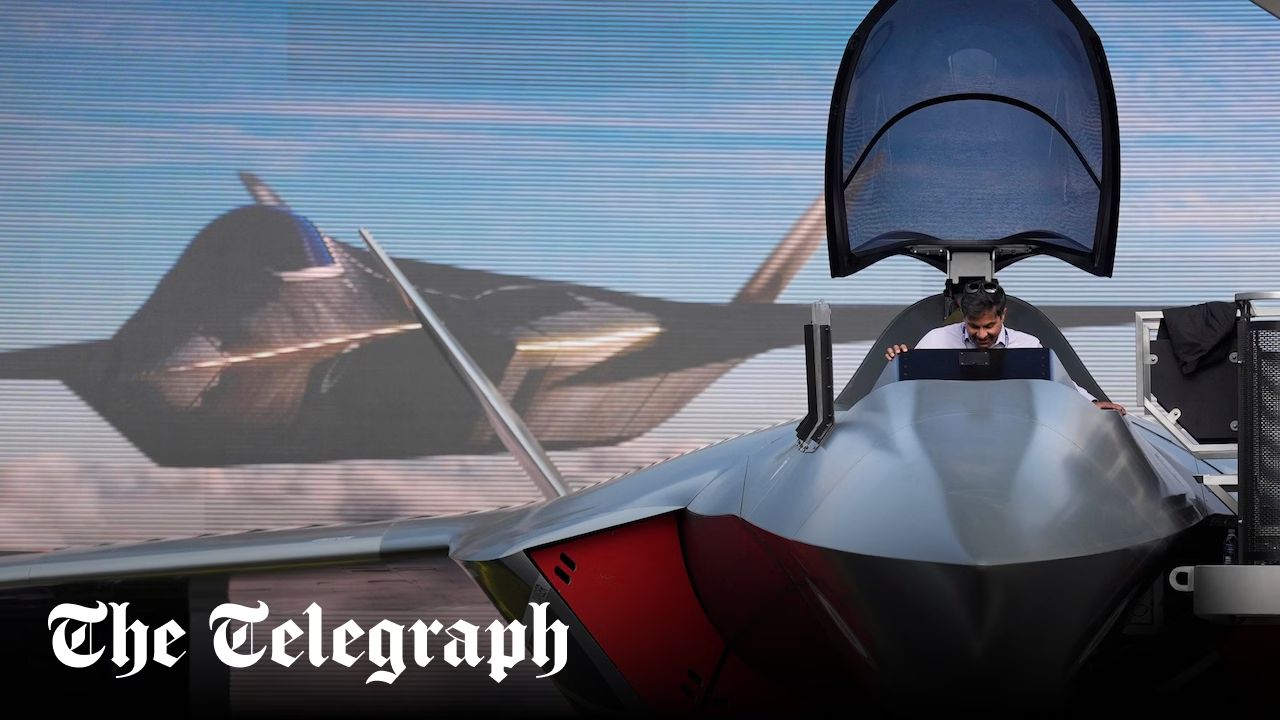
Uncrewed combat aircraft are set to become a regular fixture in British skies starting next year, the head of the Royal Air Force (RAF) has confirmed. In a landmark announcement that signals a fundamental shift in national defense strategy, Air Chief Marshal Sir Richard Knighton revealed that the UK is moving rapidly toward integrating autonomous platforms into everyday airspace alongside commercial and private aviation.
The move marks the end of a long-standing reliance on piloted craft for national security monitoring and signifies the dawn of the “loyal wingman” era. The uncrewed aircraft, which range from sophisticated, high-altitude surveillance drones to rapid-response interceptors, are designed to operate with a level of autonomy previously confined to science fiction.
“We are standing on the precipice of a new aviation reality,” Sir Richard told defense analysts at a briefing in London. “By next year, the sight of uncrewed systems operating within UK-controlled airspace will transition from an occasional test-flight anomaly to a routine operational standard. This is not merely about modernization; it is about maintaining a credible deterrent in an increasingly contested geopolitical landscape.”
The decision follows a series of successful trials conducted in restricted military zones, where autonomous systems demonstrated the ability to navigate complex flight paths and respond to evolving environmental variables without human intervention. Officials emphasize that these systems will be strictly governed by rigorous safety protocols and will integrate with existing air traffic control networks to ensure the safety of civilian air corridors.
Critics, however, have raised concerns regarding both the ethical implications of autonomous technology and the potential for technical failure. Cybersecurity experts have warned that the transition requires a robust, hack-proof infrastructure to prevent interference. In response, the Ministry of Defence has stressed that human oversight will remain the final authority, even as the “intelligence” of the systems increases.
The deployment will likely begin with a focus on border protection and maritime reconnaissance, utilizing long-endurance drones capable of staying aloft for days at a time. Industry experts view the UK’s commitment as a massive boost for the domestic aerospace sector, which is already pivoting to meet the growing demand for autonomous software and hardware.
The shift is also part of a broader push to reduce the risk to human pilots during high-threat scenarios. By deploying uncrewed craft into volatile regions or using them to patrol vast stretches of territory, the RAF aims to optimize its limited personnel resources while maintaining a permanent watch over national interests.
As the UK prepares for this transition, regulatory bodies, including the Civil Aviation Authority, are finalizing the legal framework to manage the integration of these “ghost fleets.” For the British public, the presence of autonomous aircraft will serve as a visible—and constant—reminder that the future of air power is no longer tethered to a cockpit.
Disclaimer: This content is auto-generated for informational purposes only.
Source: Read Original News