





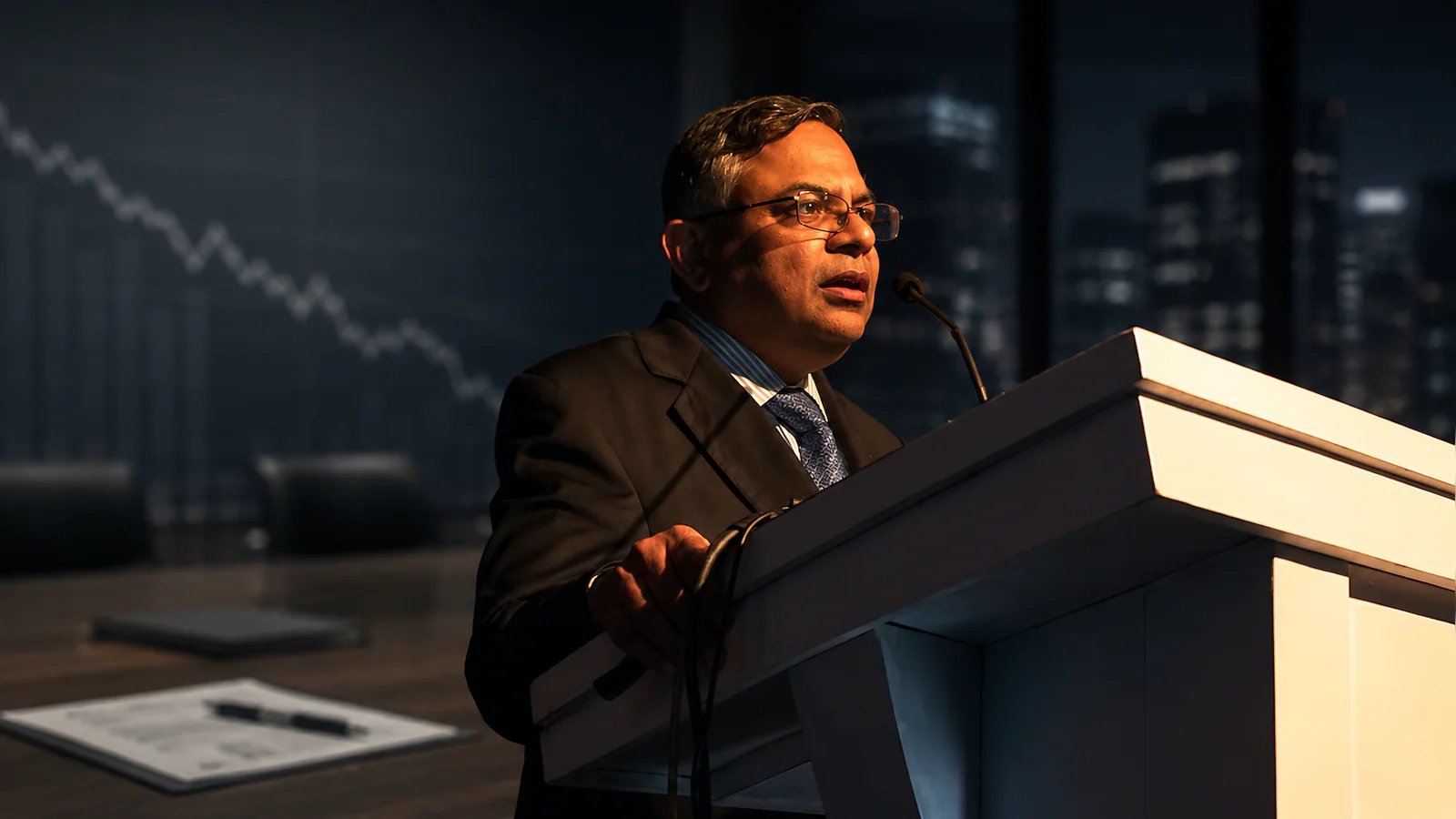
N. Chandrasekaran, chairman of Tata Sons, has announced his resignation after a nearly four-decade career with the Tata Group, including a decade at the helm of its holding company. He will not seek reappointment and is expected to serve until February 2027, when his current term concludes. This decision follows a period of speculation regarding his future with the conglomerate.
Chandrasekaran took on the chairmanship in 2017 after 30 years at Tata Consultancy Services (TCS), inheriting a vast group involved in industries from steel and automobiles to hospitality and information technology. Under his leadership, Tata expanded into several new sectors, including semiconductors, electronics manufacturing, electric vehicles, batteries, digital businesses, aviation, and artificial intelligence.
During his tenure, Tata transformed from a traditional industrial giant into a modern conglomerate. The group ventured into semiconductor manufacturing, with Tata Electronics establishing a 91,000-crore rupee fabrication plant in Dholera, Gujarat, and a 27,000-crore rupee OSAT facility in Assam. Its battery business, Agratas, is developing a 20 GWh cell manufacturing plant in Gujarat. The group also significantly expanded its electric vehicle initiatives. Digitally, Tata Neu, an online shopping platform, was launched by Tata Digital, and the group deepened its involvement in mobile technology and 5G.
A significant move was the acquisition of Air India from the government in 2022. Chandrasekaran orchestrated a major consolidation within the aviation sector, merging Air India with Vistara and bringing Air India Express and AirAsia India together. This ambitious undertaking, however, presented considerable challenges, including substantial investment requirements and widening losses for Air India, as highlighted in Tata Sons’ FY26 results.
Before his role at Tata Sons, Chandrasekaran’s legacy was firmly established at TCS, where he served as CEO from 2009 until 2017. Under his leadership, TCS grew to become India’s most valuable company, significantly expanding its global presence and client relationships, particularly in North America and Europe. Today, TCS employs over 584,000 people and reported FY26 revenue of approximately $30 billion.
Chandrasekaran also championed the “One Tata” philosophy, aiming to foster greater collaboration and optimize capital allocation across the group’s more than 100 companies. This led to strategic consolidations and demergers, such as the formation of Tata Consumer Products from Tata Tea and Tata Chemicals, and the separation of Tata Motors’ passenger vehicle business (including EVs) from its commercial vehicles division.
His technological background also influenced the group’s strategic direction, particularly in artificial intelligence. Chandrasekaran has emphasized integrating AI into manufacturing, automobiles, and other business areas. In his 2026 New Year message, he noted that new Tata factories were being designed with an “AI-first” approach and highlighted Tata Motors’ use of connected-vehicle data for predicting real-world EV range.