








The Pulse of Mumbai Cinema Falls Silent—For Now
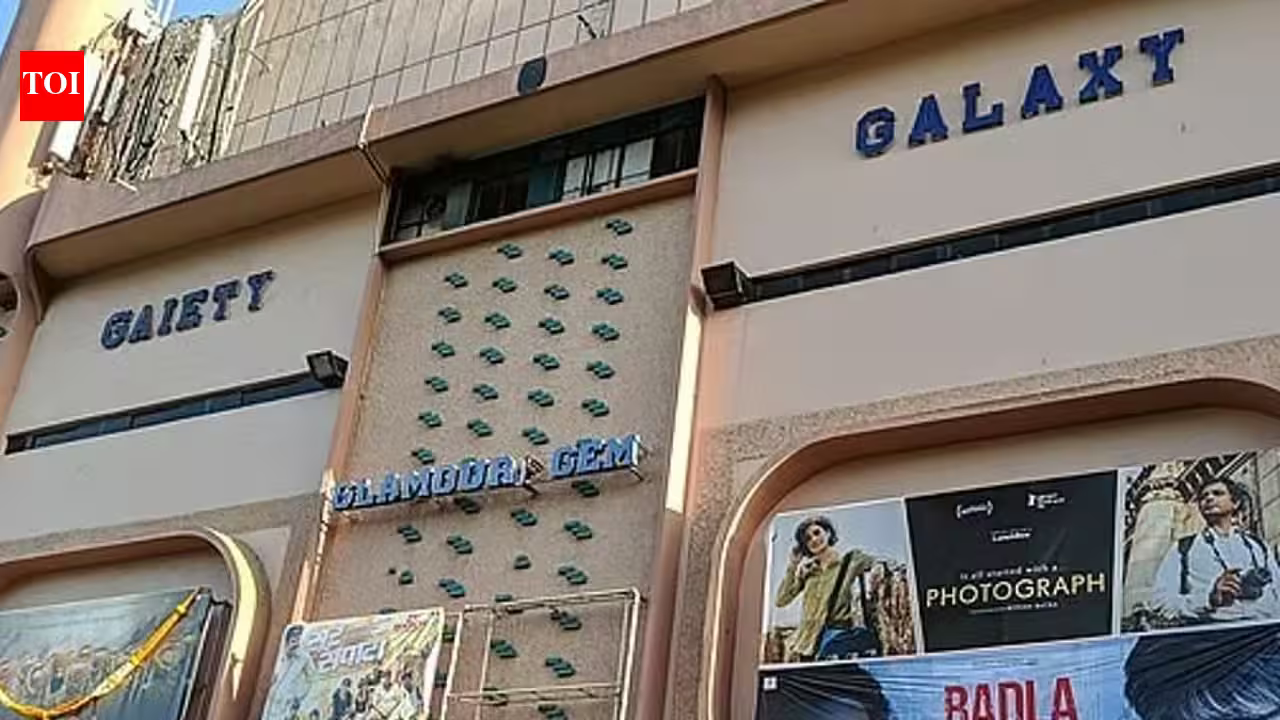
For the millions who call Mumbai home, Bandra’s Gaiety-Galaxy isn’t just a cinema complex; it’s a living, breathing monument to the Indian dream. It is the place where celluloid legends are cemented, where the roar of the crowd can shake the very foundation of the building, and where the “first-day-first-show” isn’t just an event—it’s a rite of passage.
This week, however, the posters were plastered over, the lights were dimmed, and the turnstiles stopped spinning. A notice from the Bandra police, spotted by journalist Narendra Gupta and subsequently plastered across social media, sent a jolt of alarm through the city’s film fraternity. The document explicitly cited the “non-renewal of its licence” as the reason for an immediate, albeit temporary, closure. For a brief moment, it felt as though a piece of Mumbai’s cultural heartbeat had been cut off.
Technical Glitches or Regulatory Hurdles?
In the age of social media, news of the closure spread like wildfire, with fans and industry insiders speculating on the future of the iconic venue. Was this the end of an era for the historic theatre? Was there a deeper bureaucratic crisis?
Stepping into the fray to quell the anxiety, executive director Manoj Desai offered a narrative that shifted the focus from legal drama to simple, grounded logistics. Speaking to the Hindustan Times, Desai maintained that the closure is purely a matter of infrastructure maintenance rather than a failure of paperwork.
“The actual reason is some of the cables in the theatre got burned,” Desai explained. “We have to arrange for new cables from Lohar Chawl, South Mumbai. Till that is arranged, our shows cannot resume. It’s just a technical issue, nothing more than that.”
It is a refreshingly pragmatic explanation for a landmark that usually commands such cinematic gravity. While the police notice pointed toward the complexities of bureaucratic licensing, the man at the helm remains focused on the nuts and bolts—literally—of keeping the projectors running. For a theatre that has weathered over five decades of changing trends, a few scorched wires at a local electrical market feel like a minor speed bump rather than a curtain call.
A Legacy Built on Whistles and Cheers
To understand why the temporary silence of Gaiety-Galaxy resonates so deeply with the public, one must look at its history. Founded by Manoj Desai on November 24, 1972, the complex opened its doors with the premiere of Ramesh Sippy’s Seeta Aur Geeta. What started as a three-screen powerhouse—Gaiety, Galaxy, and Gemini—eventually expanded into a seven-screen empire, adding Glamour, Gem, Gossip, and Grace to its roster.
Over the years, the theatre became the ultimate barometer for a film’s success. If a movie could fill the seats at Gaiety, it was officially a “hit.” It is a theatre defined not by the luxury of its upholstery, but by the sheer intensity of its atmosphere. Here, fans don’t just watch movies; they participate in them. The deafening whistles, the dancing in the aisles, and the collective gasp of a thousand people at a plot twist are the hallmarks of this venue. It is perhaps the last true bastion of “mass” cinema culture in a city increasingly obsessed with boutique multiplex experiences.
From Mirzapur to Memories
The irony of this brief shutdown isn’t lost on the fans, especially considering the venue was electric with energy just 24 hours prior. On September 6, 2026, actor Ali Fazal visited the complex to soak in the audience’s reaction to Mirzapur: The Movie. Seeing his character, the iconic Guddu Pandit, play out on the big screen before a packed, cheering house was a moment that brought the actor to tears.
Fazal’s emotional reaction, captured in a viral video, serves as a testament to the theatre’s enduring power. “Every actor who comes to Mumbai dreams of one thing… seeing their film play to a packed house at Gaiety,” he wrote in a heartfelt post-screening note. “Last night, I stood there and watched it happen. Didn’t mean to get emotional… just love for all of you.”
The actor’s address to the crowd—reminding them that he is a product of their support and that the film belongs to them—perfectly encapsulates the symbiosis between Gaiety-Galaxy and the audience. For Fazal, like so many others, this stage is a validation of the grind, the struggle, and the eventual triumph that defines a career in Hindi cinema.
Waiting for the Lights to Return
As of now, the fans wait. The cables from Lohar Chawl will arrive, the technicians will do their work, and the hum of the projector will eventually return to the hallowed halls of Bandra.
While the police notice remains a point of public record, the resilience of Manoj Desai and the undying support of the Mumbai audience suggest that Gaiety-Galaxy is far from done. The theatre has survived the rise of streaming platforms, the transition from celluloid to digital, and the changing tastes of a modern generation. A few burnt cables are merely a pause in a story that has been running for over fifty years.
Mumbai’s love affair with the “Gaiety experience” is far from over. When the doors swing open again, expect the whistles to be louder, the cheering to be more fervent, and the screen to be as vibrant as it was on that first day in 1972. The lights at Gaiety-Galaxy may be dimmed, but they are certainly not out.
Disclaimer: This content is auto-generated for informational purposes only.
Source: Read Original News