







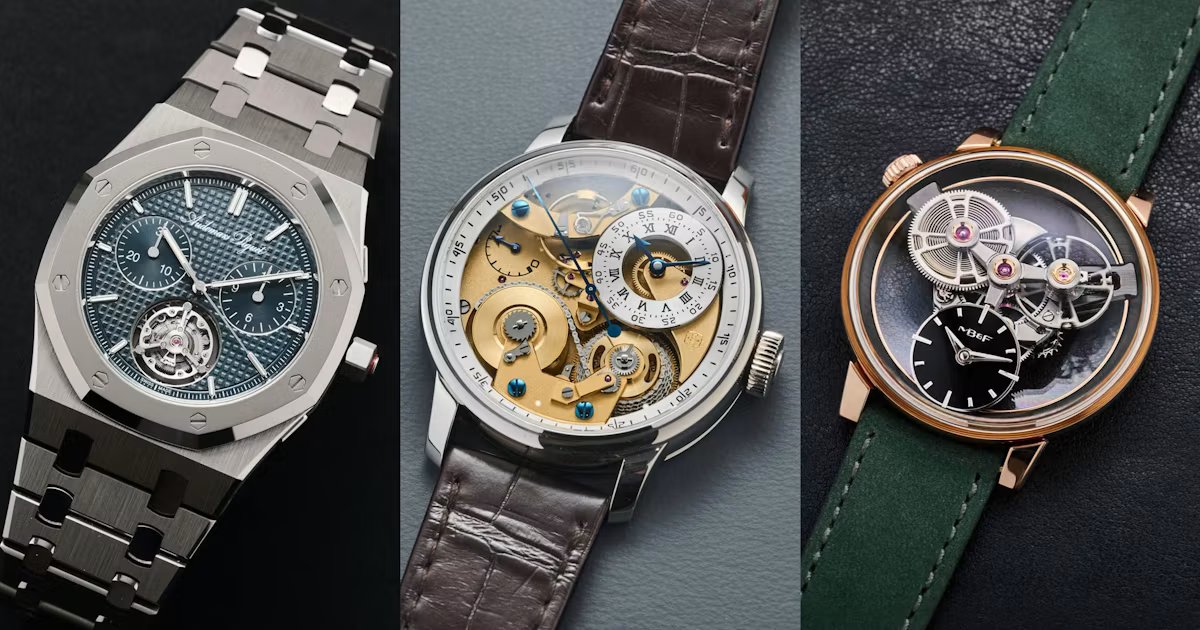
The horological world is currently abuzz as the Grand Prix d’Horlogerie de Genève (GPHG) unveils its selection of finalists, setting the stage for what many consider the “Oscars of Watchmaking.” This year, the selection process carries added weight, as Mark Kauzlarich joins the prestigious jury panel to evaluate the pinnacle of mechanical innovation. While the industry remains steeped in tradition, the integration of modern technology—ranging from digital-assisted design to the looming presence of AI—is fundamentally reshaping how these masterpieces are conceived and judged.
A Shift in Categories and Criteria
The GPHG has introduced subtle but significant changes to its category structure this year, reflecting a broader evolution in consumer tastes and manufacturing priorities. The organizers have refined the definitions of various classifications to better accommodate the “hybrid” nature of modern timepieces. As the lines between classic mechanical engineering and high-tech material science blur, the jury is tasked with balancing heritage against the rapid digitalization of the watchmaking workflow.
Kauzlarich notes that the selection process this year feels more rigorous, particularly regarding how brands justify their entry into specific fields. This shift echoes trends seen in the wider tech sector, where transparency and the “origin story” of a product’s development are becoming just as critical as the end result. Whether it is 3D-printed components or complex, software-modeled escapements, the jury is now looking closer at the intersection of artisanal craft and computational precision.
The Tech Industry’s Influence on Watchmaking
Beyond the springs and gears, the luxury watch industry is increasingly looking toward the tech sector for inspiration. We are witnessing an era where CAD (Computer-Aided Design) and advanced simulation software have become the backbone of new caliber development. Much like how AI is transforming software engineering in Silicon Valley, generative design tools are now allowing watchmakers to optimize movement architectures for weight, friction, and shock resistance in ways that were mathematically impossible a decade ago.
Furthermore, digital connectivity is finding its way into the conversation. While the GPHG remains a bastion of mechanical excellence, the tech industry’s influence is evident in how brands handle after-sales service, traceability via blockchain, and even the marketing of their finalists. The watch industry is no longer an isolated ecosystem; it is becoming a digital-first sector where data-driven feedback loops inform everything from the size of a case to the hue of a dial.
The “Snubs” and the Future of the Jury
One of the most engaging aspects of Kauzlarich’s commentary is his candid reflection on the watches that were noticeably absent from the final list. In a landscape where “hype” can sometimes overshadow technical merit, the jury’s role is to act as a filter for substance. Kauzlarich suggests that several independent creators, who utilize avant-garde manufacturing techniques, deserved a closer look.
This tension between established brands and independent innovators mirrors the current dynamic in the broader tech landscape. Smaller, agile firms often push the boundaries of what is possible, yet the institutions—whether they be major tech conglomerates or the GPHG—are often slow to recognize the disruption until it is fully matured.
As the final awards ceremony approaches, the watchmaking world is essentially performing a public audit of its own relevance in a digital-first century. By inviting experts like Kauzlarich to the table, the GPHG is signaling that it understands the need to evolve. The future of horology will not just be defined by who builds the most accurate movement, but by how well those traditional makers embrace the tools and technological advancements currently dominating the global tech industry. Whether through improved efficiency, sustainable manufacturing, or a commitment to long-term digital transparency, the winners this year will likely be the ones that bridge the gap between yesterday’s craftsmanship and tomorrow’s technological frontier.
Disclaimer: This content is auto-generated for informational purposes only.
Source: Read Original News