








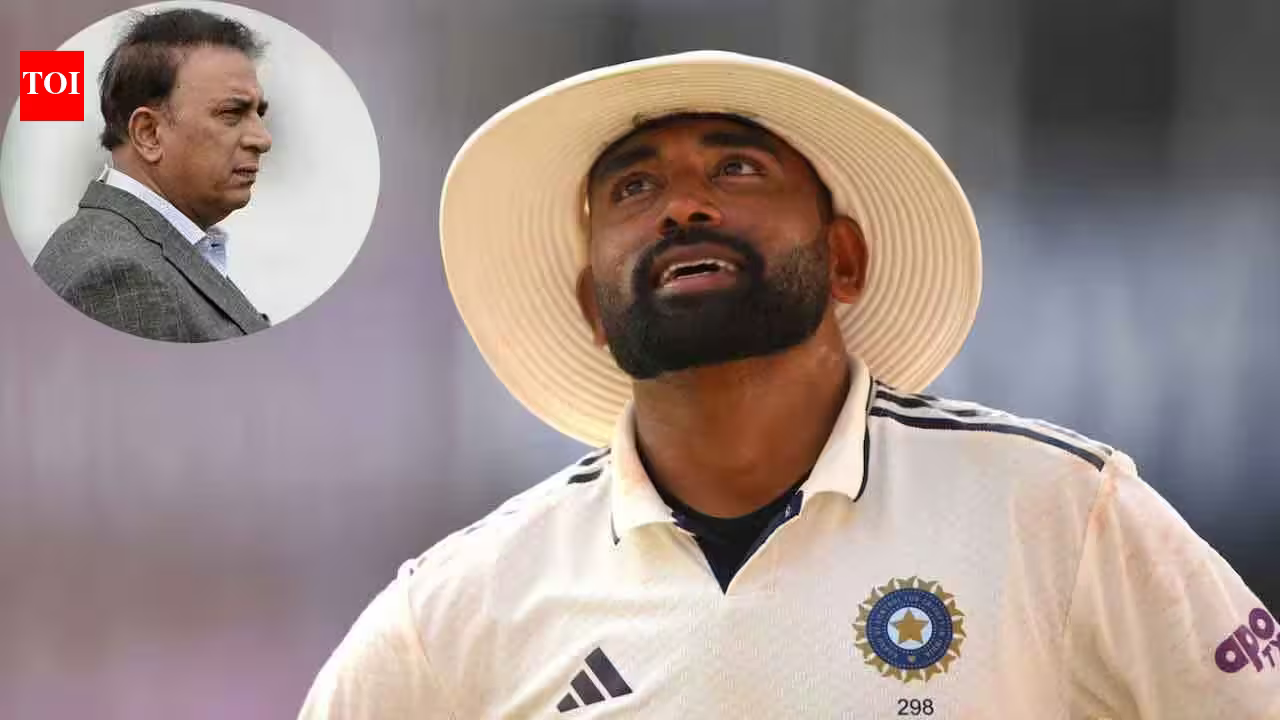
Bafflement and scrutiny have descended upon the Indian team selection process as the opening Test against New Zealand in Wellington sparked a fiery debate over the omission of premier fast bowler Mohammed Siraj. The decision to leave the seasoned speedster on the sidelines has drawn sharp criticism from legendary former captain Sunil Gavaskar, who believes the team management has overlooked a proven match-winner at a critical juncture of the series.
India entered the pivotal contest opting for a pace quartet consisting of spearhead Jasprit Bumrah, Akash Deep, debutant Anshul Kamboj, and the towering Prasidh Krishna. While the selection of Washington Sundar as the spin-bowling all-rounder added a specific tactical dimension, the absence of Siraj left a noticeable void in terms of international experience, a fact that became glaringly apparent as the day progressed.
The Gavaskar Critique: Experience vs. Experimentation
Sunil Gavaskar, known for his incisive analysis and steadfast support for consistent performers, did not mince his words when addressing the selection during the pre-match broadcast on Sony Sports. Observing the side’s composition, the “Little Master” expressed genuine shock that Siraj, who has been a cornerstone of India’s pace attack in recent years, was not deemed one of the top four bowlers currently available.
“There were signs when he did not join the Test squad early. I thought they were going to play him after he featured in the final ODI. But this is a surprise. I don’t think he has let India down. He has never let India down,” Gavaskar stated, echoing the sentiments of many fans who have grown accustomed to Siraj’s high-energy, wicket-taking spells.
Gavaskar emphasized that Siraj’s rhythm and recent form provided no logical justification for his exclusion. “There is nothing wrong with his bowling. His rhythm is good. He has been fine, from what I have observed of the cricket he has played recently. Why he has not been picked is something I don’t know. I only hope the others who have been picked ahead of him deliver.”
Testing Times in Wellington
The scrutiny intensified as the match unfolded on the field. After a promising start that saw the Indian attack reduce the hosts to 60 for 4 in the opening session, the New Zealand middle-order mounted a disciplined and aggressive recovery. By the close of the 70th over, the Black Caps had clawed their way to 214 for 5, anchored by a masterful century from Henry Nicholls and a dangerous cameo from Glenn Phillips.
While Jasprit Bumrah continued to lead from the front, claiming three vital wickets, the supporting cast faced a difficult afternoon. Anshul Kamboj and Akash Deep managed to chip in with a wicket apiece, but Prasidh Krishna endured a wicketless spell, failing to contain the scoring as effectively as the situation demanded.
Gavaskar returned to the discussion after the second session, doubling down on his stance that the lack of experience in the bowling unit allowed the hosts to consolidate. He drew a sharp contrast between Siraj’s international tenure and the relative infancy of the bowlers chosen ahead of him.
“Anshul Kamboj and Prasidh Krishna started playing Tests only a year or two ago. On the other hand, Mohammed Siraj, one of your experienced bowlers, was available and you haven’t picked him,” Gavaskar noted. “For me, to think Siraj is not among your top four bowlers is a little hard to get over.”
A Question of Control and Killing the Contest
Beyond just individual statistics, Gavaskar argued that the lack of experience impacted the team’s ability to drive home an advantage. While he acknowledged that the young bowlers maintained a respectable economy rate—often bowling wide of the stumps to invite the batter to leave—he argued that a more experienced hand might have applied the “finishing touch” when the Kiwis were reeling.
“They did very well in the first session, but if they had got more wickets immediately after that, it would have been a different story,” Gavaskar remarked. The implication was clear: the modern approach of economy-led containment, while mathematically sound, sometimes lacks the predatory instinct required to dismantle a Test match lineup when they are vulnerable.
Looking Ahead
As the Wellington Test progresses, the decision to omit Siraj will remain a focal point of the narrative. For the Indian team management, the selection represents a gamble on youth and specific conditions, but in the unforgiving arena of Test cricket, the absence of a bowler with Siraj’s pedigree—a man who has thrived under pressure in Australia, England, and South Africa—is a high-stakes bet.
With the series on the line and the pitch expected to offer variable movement, India will be hoping that their younger charges find their rhythm quickly. However, the voice of Sunil Gavaskar serves as a stark reminder: in the hunt for wickets, experience is a currency that cannot be easily replaced, and leaving it in the dugout is a luxury most teams cannot afford. All eyes will now be on the remainder of the Test to see if the management’s faith in their fresh pace options pays dividends, or if the lack of Siraj’s fiery presence continues to haunt the Indian bowling effort.
Disclaimer: This content is auto-generated for informational purposes only.
Source: Read Original News