





NEW YORK — The race to select the next United Nations Secretary-General has hit a precarious stalemate, as five rounds of informal voting have failed to produce a clear consensus. With time rapidly running out before the end of the year, the Security Council remains deeply divided, casting doubt on its ability to appoint a successor to Antonio Guterres by his December 31 departure.
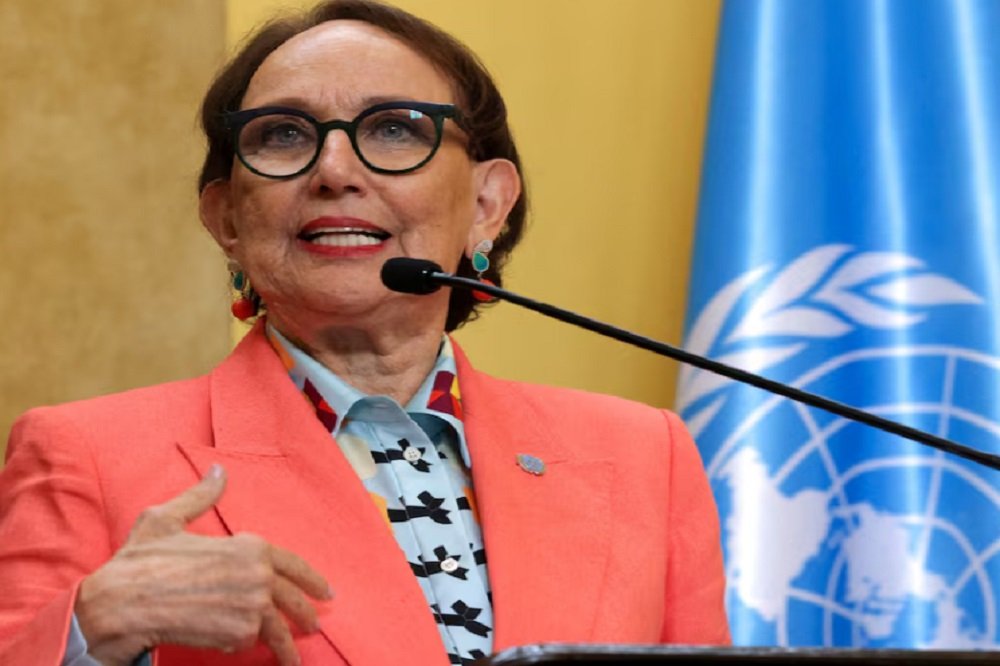
Former UN trade agency head Rebeca Grynspan continues to lead the field, though her hold on the front-runner position has shown signs of softening. In the most recent straw poll conducted on October 7, Grynspan secured nine “encourage” votes—a drop from the 10 she received previously—while accumulating six “discourage” votes. Following her are Argentina’s Rafael Grossi and Guyana’s Carolyn Rodrigues-Birkett, though both face significant hurdles as their support fluctuates among council members.
Daniel Forti, an analyst at the International Crisis Group, suggests the current impasse reflects a broader climate of geopolitical volatility. “Rebeca Grynspan has maintained a slim but noticeable separation from the other candidates,” Forti noted. “But she clearly has not separated herself enough from the pack to leave council members and the wider UN membership certain she will be the next Secretary-General.”
The struggle to find a candidate who satisfies all five permanent members of the Security Council (the P5) is becoming a defining feature of this selection cycle. Unlike the processes that propelled Ban Ki-Moon and Antonio Guterres to the post, the current council appears reluctant to fully commit to any of the remaining seven contenders.
“Some of the permanent members have shown they may like some of the candidates, most notably Grynspan, but they aren’t in love with any of them,” Forti observed.
The next critical phase of the process will involve the introduction of color-coded ballots. This shift is designed to distinguish between votes cast by permanent members—who hold veto power—and those of the elected members. While a “discourage” vote is not automatically fatal to a candidacy, it signals potential opposition that could force candidates to negotiate tactical concessions. Historically, such tactics have been used by permanent members to influence the direction of the Secretariat, as seen during the selection of Kofi Annan.
The gridlock has fueled speculation that a “dark horse” candidate could emerge to break the deadlock. While experts believe it is unlikely a new challenger would enter the fray before the first color-coded poll, the window for such a move is opening as the calendar moves into November.
Despite concerns in UN corridors regarding the possibility of entering 2027 without a leadership mandate, analysts caution against extreme pessimism. For now, the pressure is mounting on the P5 to compromise on a candidate they can collectively tolerate, preventing a institutional crisis as the deadline for the transition looms.
Disclaimer: This content is auto-generated for informational purposes only.
Source: Read Original News