









A New Paradigm for Collaborative AI Agents
Google has introduced a significant evolution for its experimental artificial intelligence platform, previously known as CC. Originally debuted in late 2023 as a personal productivity tool, the project has undergone a strategic pivot following user feedback. Google is now positioning CC as a dedicated agentic platform designed specifically for families and small groups. By functioning as a collaborative entity with its own distinct Google account, the AI acts as a centralized nexus for shared information, scheduling, and logistical coordination.
The fundamental architecture of this update addresses the common struggle of managing fragmented household data. In the current digital landscape, family logistics—such as school schedules, medical appointments, and grocery requirements—are typically scattered across disparate emails, text threads, and private calendars. CC functions by providing a shared digital space where up to six members can aggregate this information, allowing the agent to synthesize, organize, and act upon the collective data.
Granular Control over Data Integration
Privacy and data autonomy remain central to the design of the CC platform. Unlike standard AI models that may ingest massive datasets, CC operates on a “pull” rather than a “push” model regarding personal information. Each participating member maintains agency over what data they feed into the collective agent. Users can share individual emails manually on an as-needed basis or configure specific email addresses to automatically forward correspondence to the CC account.
This compartmentalization ensures that while the agent is capable of facilitating group tasks, it does not gain unfettered access to the private correspondence of individual users. The technical limitations imposed by Google are strict: the agent cannot search or retrieve data from a member’s private inbox, nor can it modify the membership structure of the group. By keeping these boundaries intact, the platform balances the convenience of automated organization with the necessity of personal data security.
Operational Features and Daily Synthesis
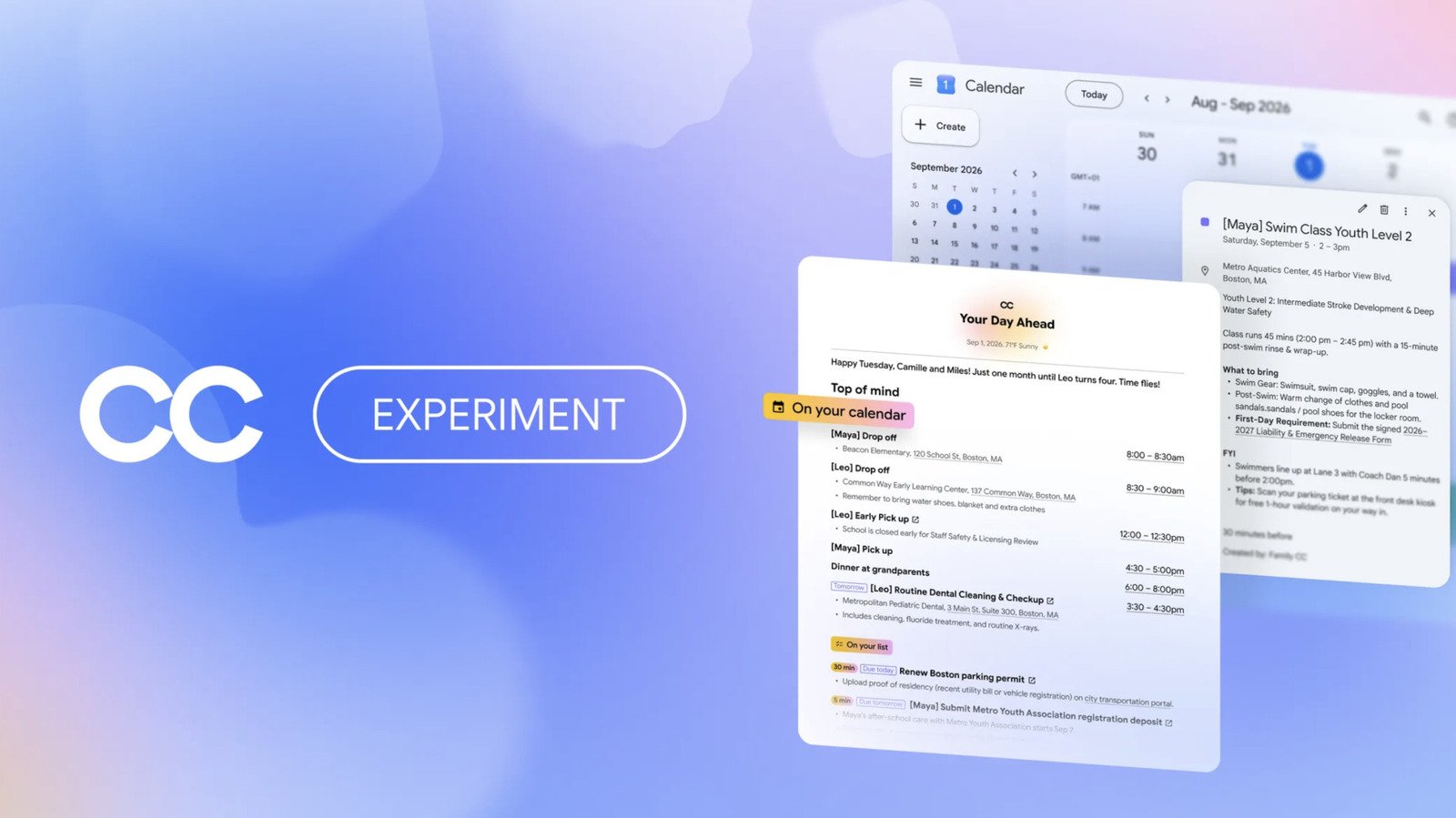
The primary utility of the CC agent lies in its ability to translate raw data into actionable intelligence. Once information is shared with the agent, it populates a unified calendar and a consolidated task list. This transformation of unstructured data—such as a messy email thread about a weekend soccer game or a school permission slip—into structured, readable formats is the core value proposition of the system.
Each morning, the agent generates a daily briefing sent to all group members. This report acts as a summary of the immediate future, highlighting upcoming deadlines, pending logistics, and scheduled events. Beyond mere notification, the agent is designed to assist with substantive tasks, such as drafting responses for registration forms or compiling dynamic shopping lists. Critically, to prevent the autonomous execution of unwanted actions, the system is hardcoded to request explicit user authorization before performing any high-level task that involves external interaction or final submission of documentation.
Integration with the Google Ecosystem
For users already embedded within the Google workspace, CC functions as an extension of familiar tools. The agent can be granted access to specific Google Drive folders, enabling it to track, manage, or summarize documents relevant to the group. Interactions with the agent occur through a dedicated Google Chat window, providing a conversational interface that mirrors how families might coordinate in existing messaging apps.
This integration allows the AI to stay updated in real time. If a file is added to a shared folder or an update is shared via a chat message, the agent processes the change immediately and updates the collective task list accordingly. By utilizing existing infrastructure, Google minimizes the friction of adoption, allowing users to leverage the power of agentic AI within the context of the applications they already utilize daily.
The Future of Agentic Collaboration
The transition of CC from a solo productivity tool to a group-based agent marks a broader industry trend toward multi-user AI systems. By shifting from a single-player experience to a shared framework, Google is testing the viability of AI as a mediator for human groups. The project is currently in the experimental phase through Google Labs, with existing users receiving prompts to transition their accounts to this new functional model.
For those interested in adopting this technology, access is managed through a waitlist system. As development progresses, the focus will likely remain on refining the permission-based interaction models and expanding the agent’s ability to navigate complex, multi-party planning scenarios. The success of this experiment will depend largely on whether the platform can prove its utility while maintaining the delicate balance between helpful automation and the preservation of individual privacy within a domestic or small-group setting. As families continue to digitize their daily lives, tools like CC represent an attempt to simplify the modern administrative burden through intelligent, collaborative software.
Disclaimer: This content is auto-generated for informational purposes only.
Source: Read Original News