








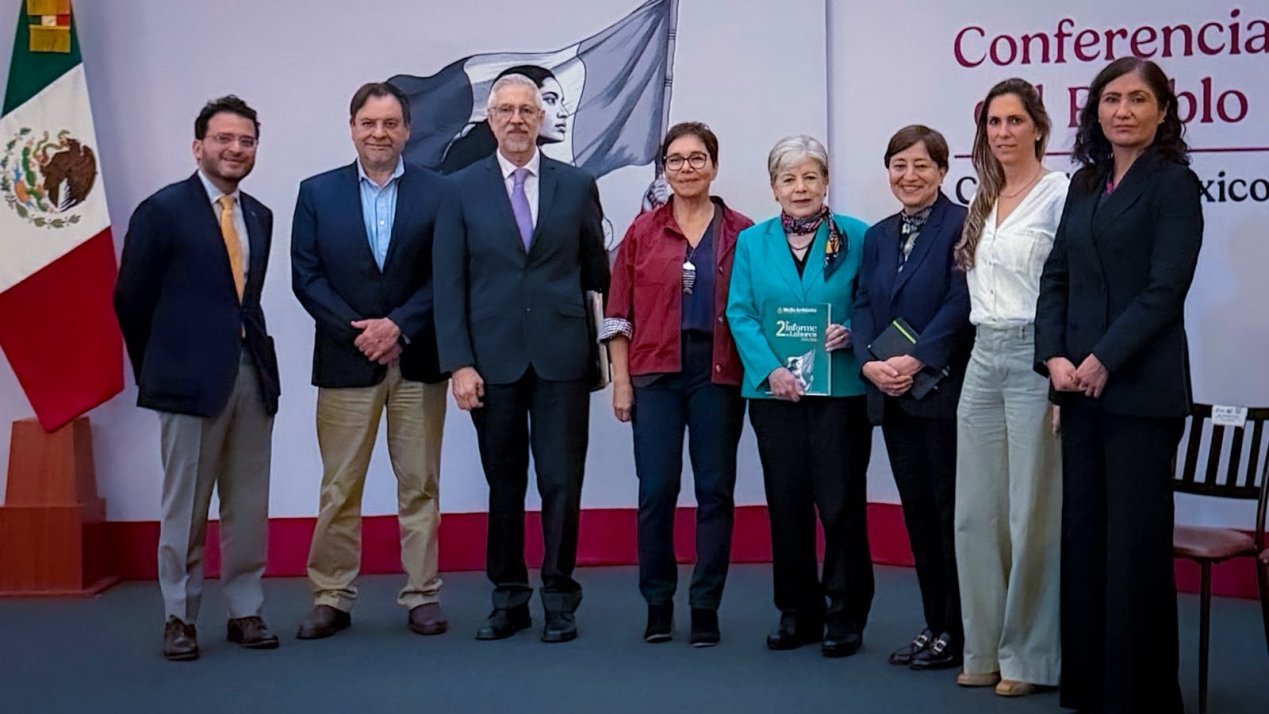
Mexico’s Ministry of Environment and Natural Resources (SEMARNAT) has unveiled a comprehensive two-year progress report, marking a significant push toward ecological modernization under President Claudia Sheinbaum’s administration. Minister Alicia Bárcena emphasized a “historic investment” strategy, centered on massive water infrastructure projects, ambitious climate targets, and a renewed legal framework for forest and animal protection.
The administration’s environmental strategy is currently being bolstered by data-driven oversight, utilizing digital monitoring tools to track everything from reforestation progress in the Sembrando Vida program to the health of river basins across the country.
Revolutionizing Water Management and Sustainability
At the core of the government’s agenda is a staggering MX$180 billion investment aimed at stabilizing Mexico’s water security. According to Efraín Morales, head of the National Water Commission (CONAGUA), the government has successfully reorganized water concessions, recovering 5 billion cubic meters—a volume sufficient to supply 90 million people annually.
Modernization efforts are not limited to policy reform; they are powered by heavy investment in physical infrastructure, including the restoration of key rivers like the Lerma-Santiago and Atoyac. By integrating satellite imagery and automated monitoring systems, the ministry is improving the efficiency of water distribution across 2,183 municipalities. Furthermore, the sanitation efforts—supported by a memorandum of understanding with the United States—demonstrate a commitment to cross-border environmental cooperation, particularly in the Tijuana sanitation projects.
Advancing Climate Goals and Digital Forestry
During the update at COP30, Mexico reaffirmed its commitment to reducing greenhouse gas emissions by 35% by 2030, with a target of deriving 38% of its energy from renewable sources. To reach these goals, the administration is leveraging a mix of public and private investment totaling MX$170 billion.
Central to these efforts is the National Agreement for Forests, Jungles, and Mangroves. This initiative empowers 16,953 communities and ejidos to manage their resources sustainably. Tech-enabled land management is helping the ministry enforce deforestation-free production chains, while the Sembrando Vida program uses geospatial data to track the health and survival rate of the 75 million plants added this year, which are projected to sequester 6 million tons of carbon. As Minister Bárcena noted, the government is shifting from reactive environmental policies to proactive, AI-assisted strategies that allow for better management of forest fires and illegal logging detection.
Biodiversity, Circular Economy, and Future Challenges
The ministry’s report also highlights a significant transition toward a circular economy. With 140,000 tons of daily waste generation, Mexico has launched 12 dedicated waste separation projects and three major recycling hubs. These facilities represent the first step in a larger plan to modernize Mexico’s waste management infrastructure through smart logistical frameworks that reduce landfill dependency.
On the front of wildlife protection, the government has moved aggressively to standardize animal welfare via the newly approved General Law on Animal Welfare, Care, and Protection. This law extends legal recognition to domestic, production, and wild animals, marking a cultural shift in how the nation views its ecological heritage.
Despite these technological and policy advancements, the path ahead remains complex. According to the Environmental Justice Atlas, over 300 active environmental conflicts persist throughout the country, primarily regarding water rights and industrial expansion. While Minister Bárcena’s office has cleared procedural hurdles for MX$6.6 trillion in development projects, the government faces the dual challenge of sustaining national economic growth while addressing the grassroots demands of local communities fighting for environmental justice. As Mexico aligns its environmental policies with global climate standards, the reliance on transparent data and community inclusion will be critical to resolving these long-standing tensions.
Disclaimer: This content is auto-generated for informational purposes only.
Source: Read Original News