








The vast, jagged expanse of Baffin Island in the Canadian Arctic serves as one of the world’s most unforgiving testing grounds for human endurance and technical apparel. In May 2026, a nine-person expedition led by veteran climber Leo Houlding pushed into this remote wilderness, undertaking a complex multi-disciplinary journey that combined snowkiting, ski touring, paragliding, and high-altitude mountaineering.
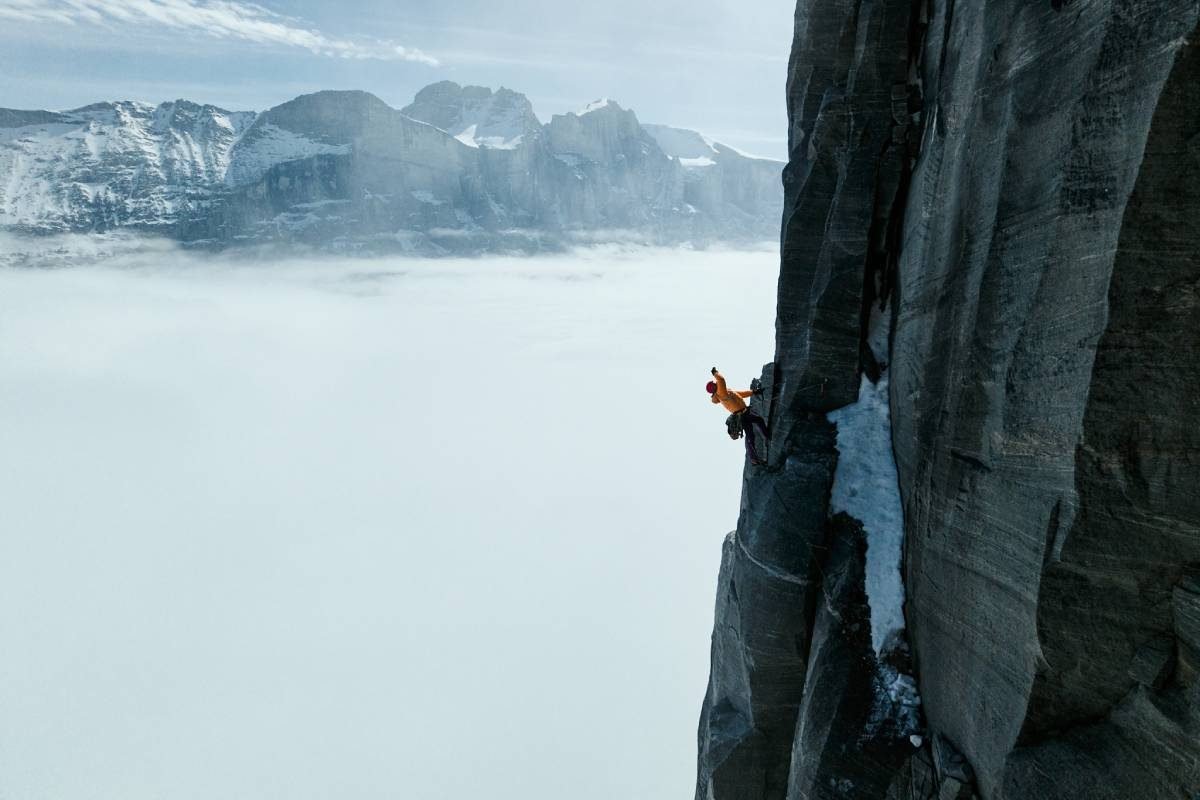
The expedition, which sought to challenge both team limits and equipment performance in extreme conditions, culminated in a significant mountaineering feat: the first ascent of “The Beak.” This imposing 700-meter monolith of rock had remained unclimbed until Houlding and fellow climber Eric Boomer navigated its treacherous face.
The environment of Baffin Island is defined by its volatile and lethal climate. Throughout their ten-day ascent of The Beak, the climbers contended with relentless environmental stressors, including winds gusting up to 60mph and temperatures that plummeted to -27°C. Perhaps most disorienting to the human circadian rhythm, the team operated under the “midnight sun,” a phenomenon where the sun remains above the horizon, eliminating the traditional cycle of day and night.
For five of those nights, the pair was suspended on a hanging portaledge—a temporary, narrow platform anchored to the cliffside. The geological instability of the formation added a secondary layer of danger to the already taxing atmospheric conditions. Houlding, a seasoned climber with decades of experience, described the rock as the “loosest” he has ever encountered, presenting a constant risk of rockfall and structural instability while they navigated the vertical terrain.
Beyond the climbing objectives, the expedition functioned as a rigorous field-testing environment for technical gear. As a long-standing ambassador for the brand Berghaus, Houlding utilized the journey to trial the company’s AW26 Extrem range. The gear was subjected to the extreme thermal demands of the Arctic, where even minor equipment failures can lead to rapid-onset frostbite and hypothermia. In a landscape where exposed skin is at immediate risk due to the combination of sub-zero temperatures and high-velocity wind chill, the reliability of synthetic insulation and protective layering becomes a critical component of survival.
Team member Marta Misztal emphasized the holistic nature of the expedition, noting the diverse logistical challenges involved. “Baffin Island was a proper adventure—from snowkiting and ski touring to climbing, paragliding and sleeping in our own igloo,” Misztal said. “Surrounded by an incredible frozen landscape, sharing it with such a brilliant team made it a trip I’ll never forget.”
The successful navigation of Baffin Island’s interior highlights the ongoing intersection between elite exploration and high-performance material science. While the team successfully conquered The Beak, the expedition serves as a stark reminder of the fragile balance required to operate in one of Earth’s final frontiers. As climate patterns in the Arctic continue to shift, remote regions like Baffin Island remain vital, albeit increasingly difficult, laboratories for understanding the limits of human resilience against the backdrop of an uncompromising, frozen wilderness. By pushing into these desolate sectors, Houlding’s team continues a tradition of exploration that prioritizes the documentation of remote geography while refining the tools necessary to survive within it.
Disclaimer: This content is auto-generated for informational purposes only.
Source: Read Original News