








Ladakh Administration Urges Consensus Amid Growing Demands for Liquor Prohibition
SRINAGAR: The Union Territory of Ladakh is currently navigating a complex social debate as a massive movement, led largely by women’s organizations, intensifies its campaign to transform the region into a dry territory. The protests, which have drawn support from diverse religious and social groups including the Ladakh Buddhist Association (LBA), Anjuman Imamia, Anjuman Moin-ul-Islam, and the Christian community, have prompted the administration to initiate high-level dialogue to address the growing public outcry.
Seeking a Middle Ground
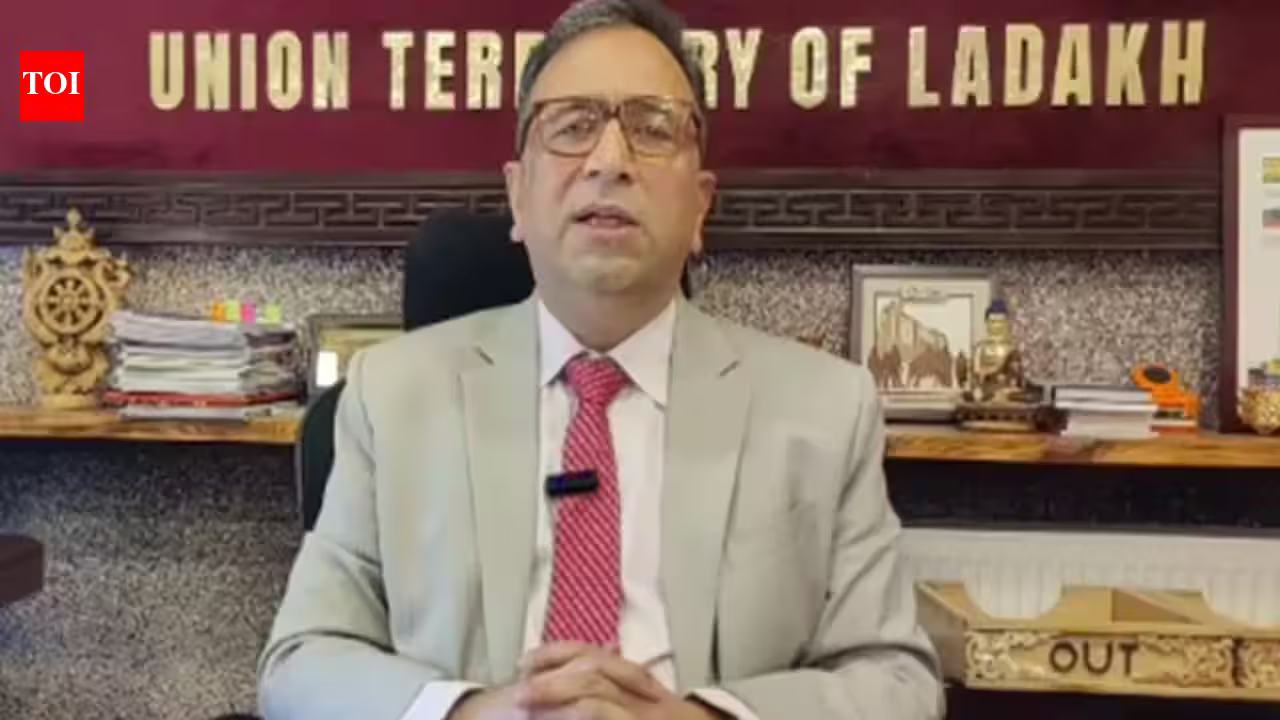
In an effort to manage the escalating situation, Ladakh’s Chief Secretary, Ashish Kundra, chaired a crucial meeting on Tuesday with representatives from the women’s wings of several religious organizations. The meeting also included stakeholders from the local tourism industry, reflecting the tension between the region’s social preservation and its economic pillars.
During the discussions, the administration urged the activists to facilitate wider consultations across the region. The goal, officials stated, is to move past polarized stances and reach a consensus that considers the long-term implications for the territory. The administration acknowledged the validity of the women’s concerns, signaling that the government is open to exploring a middle ground rather than enforcing a blanket rejection of the demands.
Balancing Social Concerns and Economic Reality
The government provided a factual overview of the current liquor licensing landscape in Ladakh to provide context to the protests. Data shared during the meeting revealed that while the number of independent retail liquor outlets has dropped to just one this year from two in the previous year, the number of bars attached to licensed restaurants has risen. Specifically, there are now 40 functional bars operating in the region, following the issuance of 17 new licenses.
Chief Secretary Kundra underscored the gravity of implementing a complete prohibition, noting that such a decision would have far-reaching socio-economic repercussions. Drawing from the experiences of states like Bihar and Haryana, he highlighted the risks associated with total bans, particularly the potential surge in the illicit trade of spurious liquor and a secondary rise in drug abuse.
“There are also issues of employment, tourism, and economic activity,” a government spokesperson noted. “Consultation with the hotel industry is also crucial, particularly when tourism is the primary economic activity in the territory.”
The Path Forward
The meeting concluded with a mutual agreement that the demand for a dry status is a sensitive policy matter that requires a multi-stakeholder approach. By involving religious leaders, women’s rights advocates, and the tourism sector, the administration hopes to avoid the pitfalls of a reactive decision.
As the protests continue to gain momentum, the Ladakh administration is positioning itself as a facilitator of dialogue. The focus remains on finding a balanced regulatory framework that addresses the moral and social concerns of the community while safeguarding the economic stability of a region that relies heavily on its flourishing tourism sector. Whether a compromise can be reached—perhaps through stricter regulation rather than a total ban—remains the central question for Ladakh’s policy planners in the coming weeks.
Disclaimer: This content is auto-generated for informational purposes only.
Source: Read Original News