









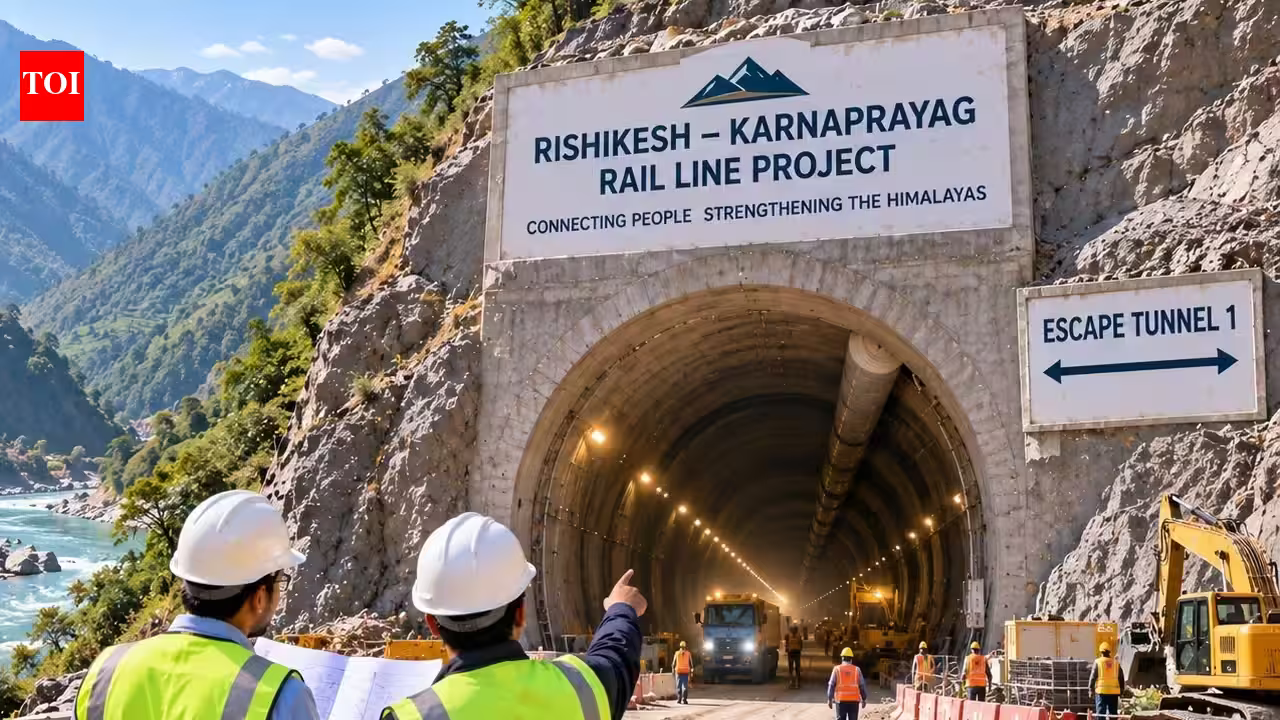
Engineering Resilience in the Himalayan Terrain
The infrastructure landscape in India is undergoing a transformative phase, characterized by the pursuit of engineering feats that were previously deemed impossible. At the forefront of this evolution is the Rishikesh-Karnaprayag rail line, a project that serves as a testament to the sophistication of modern Indian civil engineering. The recent milestone—the final breakthrough of Escape Tunnel 1, spanning 10.847 kilometers—represents not just a technical victory, but a fundamental shift in how the nation approaches the logistical challenges of high-altitude, seismically active terrain.
The Himalayan region presents a formidable obstacle for any transit infrastructure. The geological composition of this area is defined by highly tectonized rock formations, extensive folding, and layers of crushed, unstable material. The proximity of the rail alignment to the Main Boundary Thrust (MBT) introduces constant structural uncertainty. For Rail Vikas Nigam Limited (RVNL), the implementing agency, the challenge has been to neutralize these risks through precision drilling and innovative containment strategies. The completion of 41 tunnel breakthroughs to date highlights a systematic approach to overcoming environmental unpredictability. By successfully managing the thick mylonite zones—areas prone to sudden shifts and collapses—the project team has set a new benchmark for deep-tunneling operations in India.
Strategic Importance of the Chardham Connectivity
The Rishikesh-Karnaprayag railway line is far more than a civil engineering project; it is a critical artery for the socio-economic development of Uttarakhand. Historically, the Chardham circuit, which attracts millions of pilgrims and tourists annually, has relied on mountainous road networks. These roads, while iconic, are susceptible to frequent landslides, traffic bottlenecks, and seasonal closures that hinder both personal mobility and economic flow.
By providing a reliable, all-weather rail alternative, the government aims to decouple travel safety from the volatile weather patterns of the Himalayas. The shift from road-based logistics to a robust rail network offers substantial benefits in terms of carbon emissions reduction, travel time efficiency, and transport capacity. For the districts of Dehradun, Tehri Garhwal, Pauri Garhwal, Rudraprayag, and Chamoli, this rail link promises to be a catalyst for local commerce. Improved connectivity will likely streamline the movement of goods and services, reducing the cost of living for mountain communities and providing a more stable environment for tourism-dependent businesses to thrive.
Technical Complexity and Project Scale
The sheer scale of the tunneling component of this project is unparalleled in the Indian railway sector. With 16 main-line tunnels covering 104 kilometers and 12 escape tunnels extending nearly 98 kilometers, the project is effectively building a “subterranean highway” through the mountains. The use of eight adits—horizontal access tunnels designed to provide additional entry points for excavation—has been a strategic masterstroke, allowing for parallel progress across multiple fronts.
This multi-pronged approach is essential for managing the project timeline, which is inherently sensitive to external factors. Factors such as forest clearances, complex land acquisition processes, and the strict seasonal limitations of high-altitude construction cycles require meticulous planning. The project’s ability to sustain progress despite these constraints speaks to the enhanced project management capabilities within Indian public sector enterprises. The fact that over 100 kilometers of main-line tunneling have already been achieved indicates that the most labor-intensive and technically demanding phases are being systematically addressed, with the remaining five breakthroughs projected for completion within the next twelve months.
Economic and Logistical Implications for India
The successful execution of the Rishikesh-Karnaprayag line serves as a blueprint for future infrastructure expansion in northern India. The government’s intent to extend similar rail connectivity to Gangotri, Yamunotri, Kedarnath, and Badrinath demonstrates a long-term commitment to integrating these high-altitude regions into the national grid. However, as noted by government officials, these future extensions will traverse even more seismically active regions, requiring the lessons learned from the Rishikesh-Karnaprayag line to be rigorously documented and analyzed.
From an economic perspective, this project aligns with India’s broader “Gati Shakti” vision, which emphasizes integrated infrastructure development. By reducing dependence on road transport for such high-traffic religious and tourist routes, the national exchequer stands to gain from long-term maintenance efficiencies. Roadways in the Himalayas are notoriously expensive to maintain due to constant geological instability; a rail-based transport model, while requiring higher initial capital expenditure, offers a more predictable and durable long-term asset. This shift not only protects the environment by minimizing road expansion-related deforestation but also provides a more comfortable and dignified travel experience for the millions who rely on these routes for spiritual and professional purposes.
Future Outlook and Risk Mitigation
As the Rishikesh-Karnaprayag project moves toward its final stages, the focus will transition from excavation to rail-system integration, including electrification, signaling, and the completion of the remaining major bridges. The project currently stands as a model for how the public sector can execute large-scale, high-risk infrastructure projects under challenging conditions.
However, the path forward is not without challenges. As the rail line approaches its completion, the focus must shift to operational safety and disaster management. Given the fragile nature of the Himalayan environment, the implementation of world-class monitoring systems to detect seismic activity and slope stability will be essential for the long-term viability of the line. Furthermore, the economic success of the project will depend on effective last-mile connectivity at the terminal stations, ensuring that pilgrims and tourists can transition smoothly from the rail head to their final destinations.
The completion of the 10.847-km Escape Tunnel 1 is a significant milestone that signifies the maturing of India’s heavy infrastructure capabilities. By successfully bridging the distance between the national capital and the heart of the Himalayas, the project demonstrates that the country is ready to invest in the technical rigor required to conquer its most challenging topographies. As India continues to grow, the integration of such remote regions through modern engineering will remain a cornerstone of national development, fostering both regional stability and national unity. The Rishikesh-Karnaprayag railway is not merely a path through the mountains; it is a vital step toward a more connected, efficient, and resilient future for the entire nation.
Disclaimer: This content is auto-generated for informational purposes only.
Source: Read Original News