





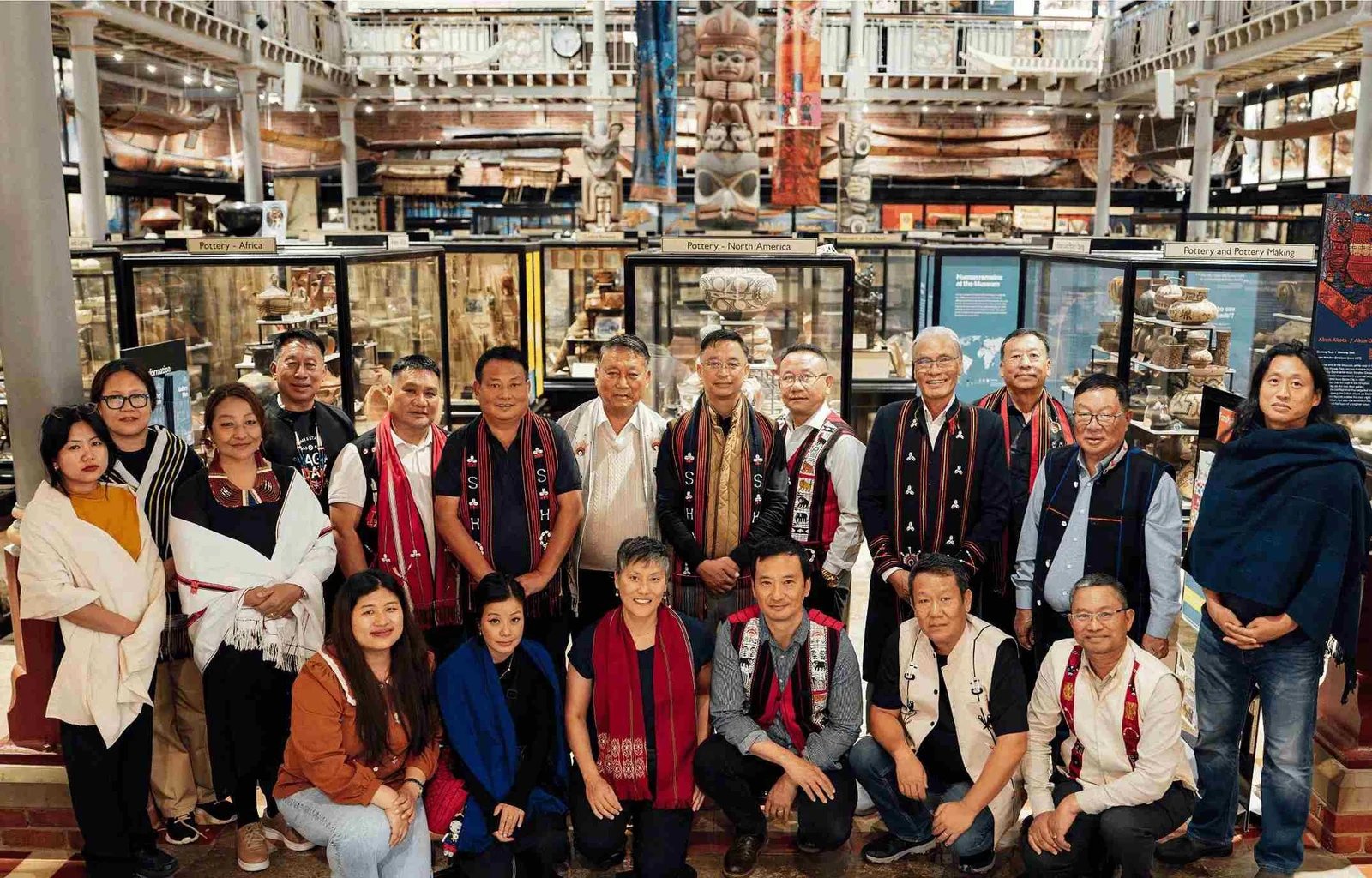
In a landmark decision that resonates across global corridors of history and ethics, the Pitt Rivers Museum at the University of Oxford has officially committed to the repatriation of ancestral Naga human remains. The announcement, first reported by The New York Times on September 5, 2026, marks the culmination of a rigorous six-year diplomatic and moral endeavor led by the Forum for Naga Reconciliation (FNR).
This homecoming, described by the museum’s director, Dr. Laura Van Broekhoven, as a “Naga-wide movement of healing and unification,” signals a profound paradigm shift in how Western institutions address the scars of colonialism. For decades, these remains—taken without consent during the colonial era—were held as “specimens” and categorized under derogatory labels such as “savages” and “head hunters.” By returning them to their rightful homeland, the museum is moving to dismantle these colonial frameworks, acknowledging that the displacement was not merely a physical act but a profound violation of human dignity.
The repatriation process was facilitated by the FNR’s “Recover, Restore and Decolonize” (RRaD) team, which served as a vital bridge between the Naga people and the museum. Professor Van Broekhoven, in a formal apology, condemned the past treatment of these ancestors, noting that the remains had been “away from their homeland for far too long.”
The significance of the event has drawn international attention, with outlets including the BBC, The Guardian, CBS, and Times of India framing the move as a critical step in a wider global effort to decolonize museum collections. For the Naga people, however, the significance transcends political symbolism. In Naga cosmology, ancestors are not objects of anthropological study but living presences. Their displacement represented a rupture in the sacred order, and their return is a “sacramental” rite—an essential step toward restoring peace to spirits displaced for generations.
Beyond the spiritual homecoming, the repatriation is viewed as a foundational act of internal reconciliation. The FNR has emphasized that this process provides a unique opportunity to address not only the external trauma of colonial violence but also the internal fractures caused by decades of militarization and inter-group conflict within Naga society. By reclaiming their ancestors, the Naga people are setting a course for a new shared future, moving from fragmented tribal histories toward a more unified national identity grounded in healing.
“This is not merely an administrative act of restitution,” observers noted following the announcement. “It is a profound moral, cultural, and theological moment that reverberates across generations.”
As the 39 ancestral remains prepare to return to their soil, the repatriation stands as a testament to the power of resolve and imagination. It marks the beginning of a new era where history bends toward justice, restoring the autonomy of indigenous voices and ensuring that the dignity of the dead is finally, and permanently, upheld.
Disclaimer: This content is auto-generated for informational purposes only.
Source: Read Original News