







India and Uzbekistan Target $5 Billion Trade Goal with Renewed Focus on Uranium Partnership
TASHKENT – In a significant move to bolster economic and energy ties, the leaders of India and Uzbekistan have announced an ambitious roadmap to increase bilateral trade to USD 5 billion annually by 2030. At the heart of this deepening strategic partnership is a move toward a long-term agreement for the supply of uranium, a critical component for India’s rapidly expanding nuclear energy sector.
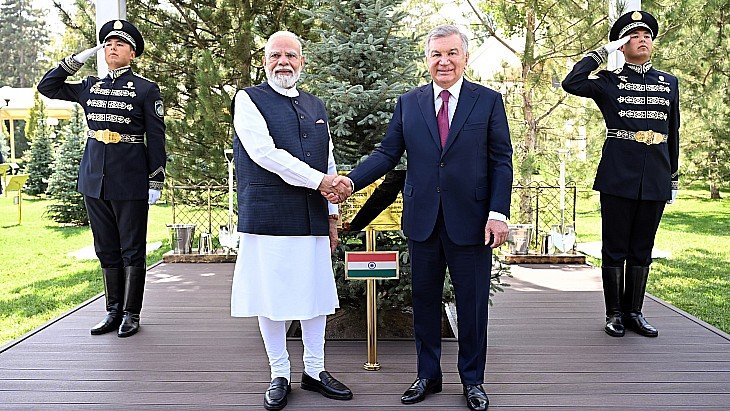
Following a high-level state visit to Tashkent, Indian Prime Minister Narendra Modi and Uzbekistan’s President Shavkat Mirziyoyev conducted extensive discussions covering the breadth of their bilateral strategic partnership. The dialogue culminated in a commitment to diversify cooperation, with a particular emphasis on geology, mining, and the development of critical minerals.
Securing the Fuel Cycle
The potential for a sustained uranium supply arrangement remains a focal point of the diplomatic outreach. Siby George, Secretary (West) at India’s Ministry of External Affairs, confirmed that negotiations are in the final stages. “Positive discussions have happened on [the] long-term arrangement of supply of uranium to India,” George told the Hindustan Times, noting that an official agreement is expected to be signed shortly.
Uzbekistan, the world’s fifth-largest producer of the mineral, is a vital partner for India. With a 2024 estimated output of 4,000 tU, Tashkent is well-positioned to help India meet the demands of its growing fleet of reactors.
Scaling Nuclear Ambitions
India currently operates 24 nuclear power plants with a combined capacity of approximately 7,900 MW. However, the government has set a massive target to reach 100 GW of nuclear energy capacity by 2047. To achieve this, India has been aggressively securing its fuel supply chain, recently finalizing agreements with suppliers in Australia and Canada, including a major deal with Cameco.
While international procurement remains the primary driver for fueling India’s reactors, a recent parliamentary committee report highlighted the urgent need to accelerate domestic uranium mining projects to bolster energy security alongside international imports.
Beyond Energy: A Broader Economic Vision
The move to hit the USD 5 billion trade mark—a significant leap from the USD 1 billion recorded last year—will rely on cooperation that extends beyond fuel. The joint statement released after the summit detailed plans for collaborative industrial projects, including the processing of mineral resources, the production of value-added goods, and joint recycling initiatives.
“They also expressed interest in encouraging Indian companies to participate in the development of prospective mineral deposits in Uzbekistan and Uzbek enterprises for joint collaboration in India,” the statement read.
As both nations look toward 2030, the partnership signals a shift toward a more integrated approach to industrial and energy security, moving beyond simple trade to long-term collaborative investment.