








Beyond Servers: India’s Data Centre Boom Transforms the Real Estate Landscape
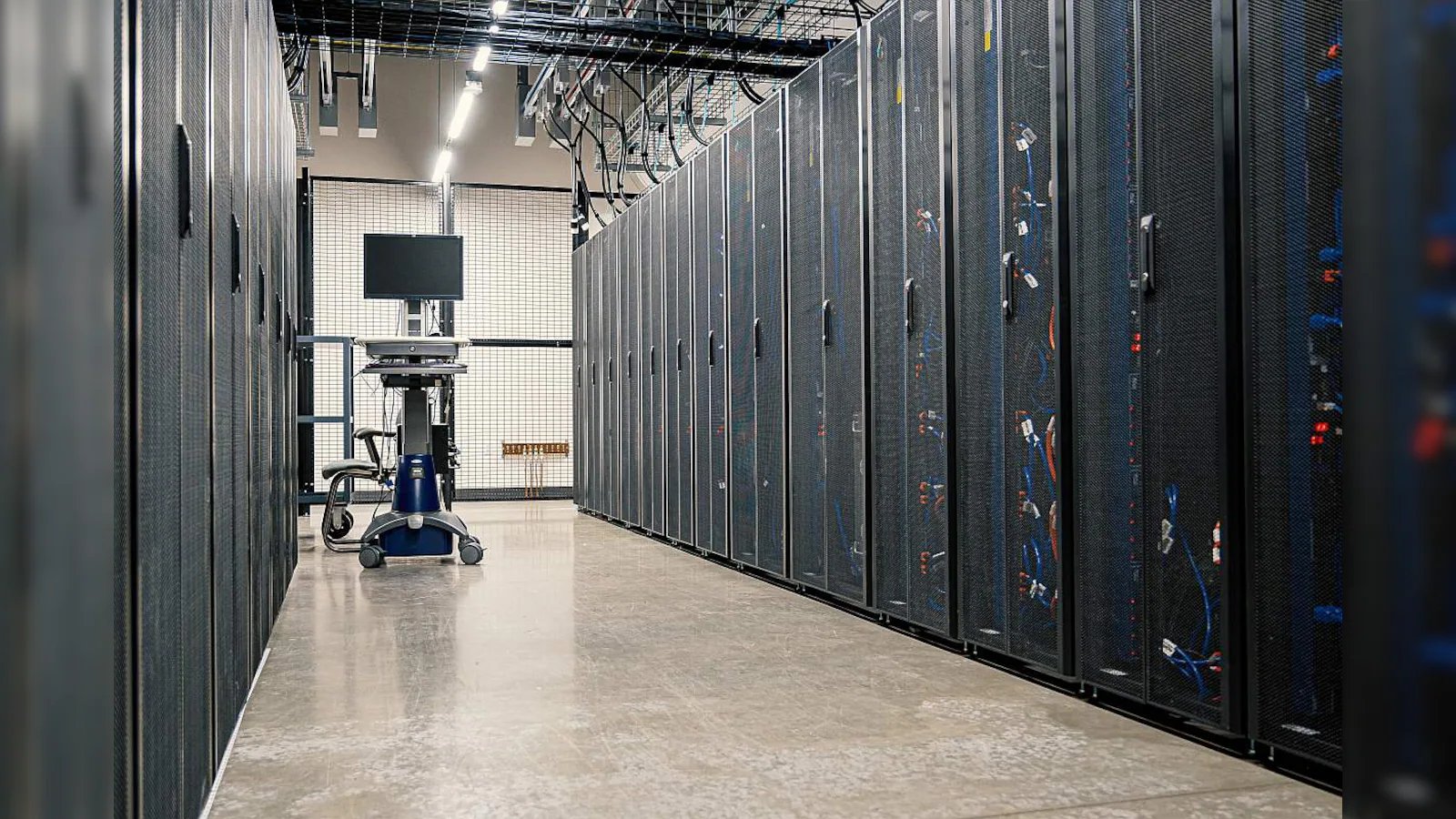
India’s digital evolution has reached a tipping point where the narrative is no longer confined to server racks and storage capacity—it has fundamentally become a real estate story. According to a new report by Anarock Capital, India’s data centre footprint is projected to surge to over 101 million square feet by 2030, a monumental jump from the 27 million square feet recorded in the first half of 2026. This exponential growth represents a massive evolution for a sector that occupied a mere 0.6 million square feet as recently as 2007.
While more than $300 billion in investment commitments are expected to fuel this expansion, industry experts emphasize that the path forward is complex. Building a modern data centre requires far more than just acquiring a large plot of land; it demands a sophisticated ecosystem of reliable power, water access, high-speed connectivity, and an increasing reliance on renewable energy.
A New Class of Real Estate
For developers, the rise of the data centre has introduced a competitive tension in the property market. Data centres must now vie for land against more traditional, high-yield assets like luxury residential developments, commercial office spaces, malls, and hotels.
Binitha Dalal, Founder and Managing Director of Mt K Kapital, points out that India lacks a dedicated regulatory category for data centre land. “There are no dedicated data centre lands; in India, it is still an upcoming asset class,” Dalal noted. Consequently, developers are forced to perform a delicate balancing act, weighing the long-term potential of digital infrastructure against the immediate, often higher, margins offered by conventional real estate.
This reality is creating a shift in how land is valued. In regions where data centres are already approved and hyperscalers are present, land specifically suited for this infrastructure now commands a premium over agricultural or standard commercial plots. The value of a site is increasingly defined by its ability to support the rigorous demands of the digital economy.
The AI Catalyst: Training vs. Inference
The primary engine behind this unprecedented demand is the rapid adoption of India’s data centre boom, driven largely by artificial intelligence.
However, experts suggest the market is shifting its focus beyond mere model training. Gurleen Khurana, Co-Founder of SimplifyGenAI, highlights the nuance of “inference”—the process of AI models executing tasks in real-time. “Enterprise AI is moving from pilots to production, and production workloads never switch off,” Khurana explained.
Unlike training, which requires massive, centralized clusters, inference workloads require capacity closer to the end-user to minimize latency and ensure round-the-clock energy efficiency. This requirement is forcing developers to move beyond simple square footage to build highly specialized, distributed capacity.
Shifting Geographic Hubs
While Mumbai remains the undisputed nerve center of India’s data infrastructure, the map is expanding. Proximity to reliable power grids, renewable energy sources, and large enterprise hubs is turning cities like Chennai, Bengaluru, Delhi-NCR, and Hyderabad into critical clusters.
With India’s installed capacity having already crossed 1.8 GW in the first half of 2026, the development pipeline is aggressive. Projections suggest the total capacity could exceed 6.7 GW by the end of the decade. As this infrastructure takes root, it promises to stimulate far more than just real estate; it is setting the stage for a massive ripple effect across engineering, fibre connectivity, and power infrastructure, cementing India’s role as a cornerstone of the global digital economy.