








Beyond the Frugal Myth: New Study Challenges India’s Status as a Low-Cost Space Power
As India commemorates its third National Space Day—a milestone marked by the historic success of Chandrayaan-3 and the nation’s growing stature in orbit—a provocative academic study has emerged that threatens to upend one of the most cherished narratives in modern Indian history.
For decades, the Indian Space Research Organisation (ISRO) has been celebrated globally for its "frugal engineering," a reputation built on achieving complex interplanetary missions at a fraction of the cost incurred by Western agencies. However, a peer-reviewed paper published in the Elsevier journal Economics Letters by economists Alessio Terzi (University of Cambridge) and Francesco Nicoli (Politecnico di Torino) suggests that when it comes to the raw economics of rocket launches, the reality is far more sobering.
The Cost Per Kilogram Discrepancy
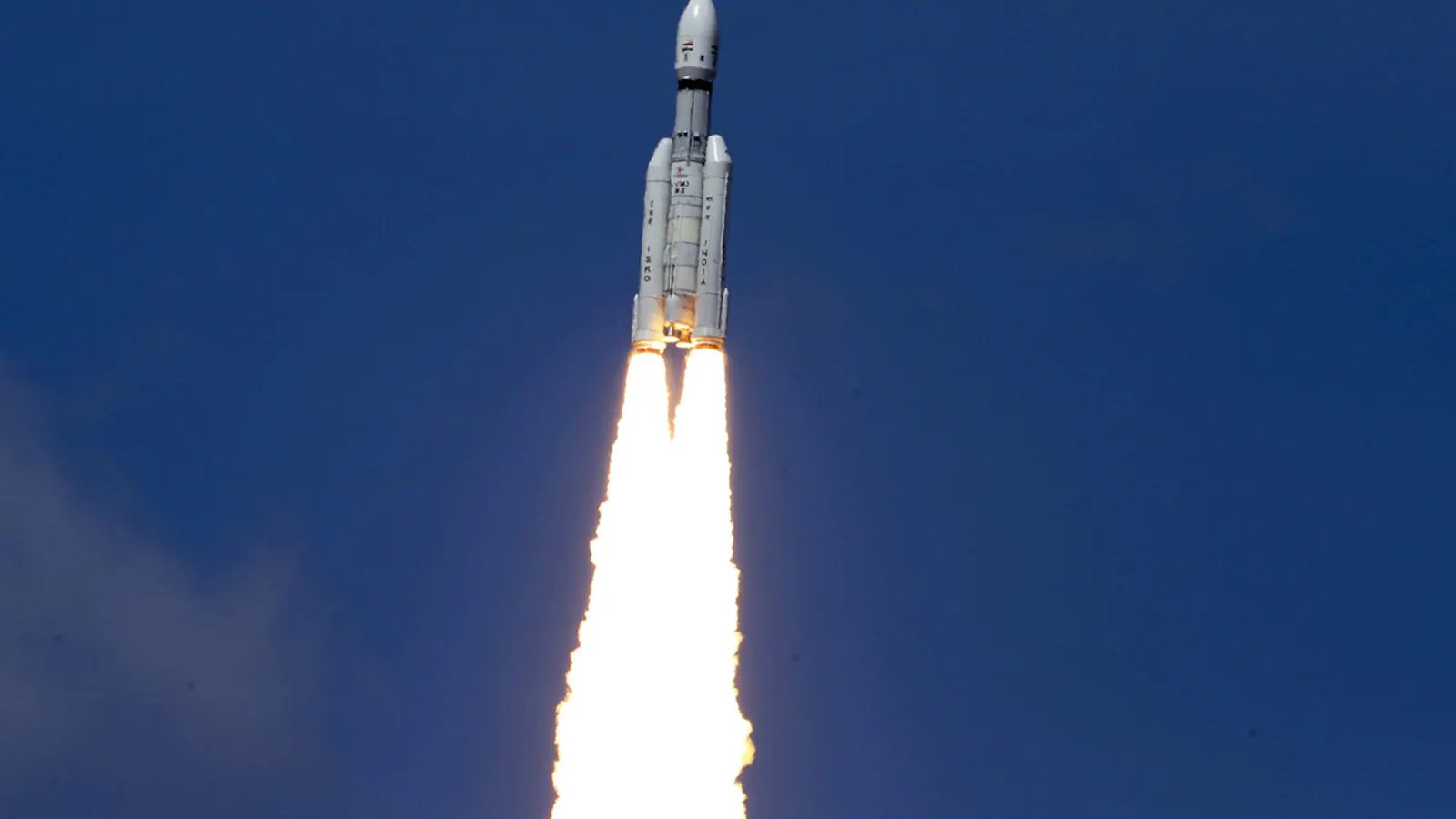
Analyzing a novel database of over 6,740 rocket launches spanning from 1960 to 2025, the researchers reached a counterintuitive conclusion: India’s average cost of delivering one kilogram of payload to Low Earth Orbit (LEO) reached approximately $13,302 in 2025. This figure stands as the highest among major spacefaring nations, nearly four times the cost recorded by the United States, which averaged $3,225 per kilogram.
The study indicates that Japan, China, Russia, and Europe follow, with costs ranging between $5,000 and $10,000 per kilogram. The authors argue that India’s high cost-per-kilogram is largely a function of rocket size and launch cadence; because India’s launch vehicles often carry smaller payloads, the high fixed costs of infrastructure and research are distributed across significantly fewer kilograms.
A Challenge to the "Frugal" Narrative
The findings directly clash with the public image of ISRO as the world’s cheapest launch provider. This perception was famously underscored in 2014 by Prime Minister Narendra Modi, who praised the Mangalyaan mission for costing less per kilometer than an auto-rickshaw ride in Ahmedabad.
ISRO leadership has been quick to push back. Dr. V. Narayanan, Chairman of ISRO, dismissed the study’s findings, claiming the research utilized "wrong data." Similarly, former ISRO Chairman Dr. S. Somanath argued that a simple "cost-per-kilogram" metric is deceptive. He noted that SpaceX’s lower costs are a product of massive internal scale and that, in market reality, India’s launch services remain competitive.
The SpaceX Factor and Global Dominance
The Cambridge study highlights a seismic shift in the space industry, driven largely by the rise of SpaceX. With a launch cadence that dwarfs that of national space agencies, SpaceX has utilized reusable rocket technology to redefine the economics of access to space.
The researchers warn that this dominance has deeper geopolitical implications. In a related paper, Alessio Terzi cautioned that the reliance on a single private American entity—which was responsible for roughly 75% of global payload sent to orbit in 2025—could eventually serve as a strategic bargaining chip for U.S. policymakers. This concentration of power serves as a stark reminder for nations like India, which prioritize strategic autonomy in their national space programs.
The Path Forward
While India has made strides in developing Reusable Launch Vehicle (RLV) technologies, it has yet to deploy an orbital reusable rocket. As the government aims to expand the Indian space economy from its current $8–$9 billion valuation to $45 billion within the next decade, the study serves as a critical wake-up call.
For an institution that has long prided itself on doing more with less, the shift in global market dynamics is clear: to remain a Tier-1 space power, the future of the Indian space industry will likely require more than just ingenuity—it will require a fundamental overhaul of its industrial scale, launch frequency, and commitment to reusability. Amidst these shifting tides, India’s rocket launches remain a focal point of intense debate as the country seeks to reconcile its legendary frugality with the high-stakes, high-efficiency demands of the 21st-century space race.