






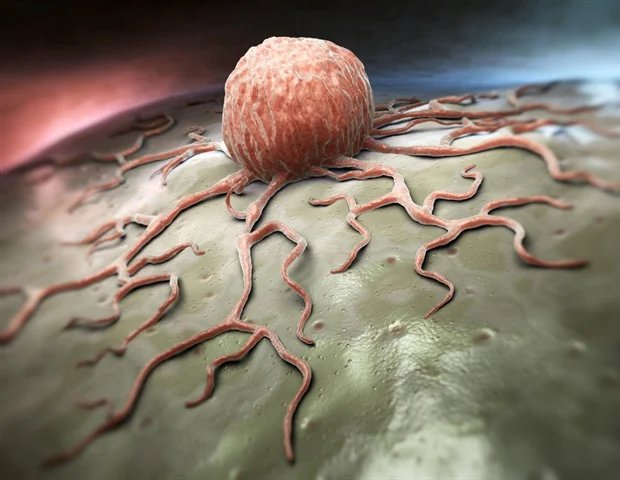
New research conducted by an interdisciplinary team at the Institute of Science and Technology Austria (ISTA) has unveiled a critical, previously overlooked factor in cancer metastasis: the physical geometry of the tumor’s surroundings. While cancer research has long focused on genetic mutations as the primary driver of tumor spread, this new study, published in Science Advances, suggests that the “chaotic” environment surrounding cancer cells acts as a silent partner in the progression of malignancy.
Tumors typically originate as a cohesive collective of cells. Metastasis occurs when individual cells detach from this group, migrate, and invade healthy tissue, eventually spreading to distant organs like the lungs or liver. Scientists at ISTA, collaborating with the Francis Crick Institute, sought to determine why these cells break away from the collective with such lethal efficiency.
To isolate the role of the environment, the researchers utilized microfluidic chips—sophisticated laboratory devices that allow for precise control over the physical space in which cells reside. The team created a microscopic obstacle course using a “forest of pillars” arranged in two distinct configurations: one perfectly ordered and homogeneous, and the other intentionally irregular and heterogeneous.
The results were striking. When tumor cell collectives were placed in the heterogeneous, disordered environment, they showed a significantly higher propensity to break apart. More individual cells detached from the collective compared to those in the ordered setting.
To decode the mechanics behind this behavior, the biologists teamed up with theoretical physicists from the group of ISTA Professor Edouard Hannezo. Through computer simulations, the researchers discovered that the cells are not merely reacting to their immediate surroundings; they possess a form of “collective memory.” As cells navigate through a series of irregular constrictions and obstacles, the tumor collective experiences a cumulative effect. The environment effectively “primes” the tumor, causing its outer edges to become increasingly rough and develop finger-like protrusions. Over time, this cumulative stress reaches a critical threshold, rendering the collective unstable and facilitating the detachment of individual, invasive cells.
From a physics perspective, this finding illustrates the concept of “universality”—a principle where complex systems exhibit identical patterns across entirely different contexts. The mathematical framework describing how a tumor collective breaks apart in a disordered environment mirrors the physics behind the spreading edge of a drying coffee stain or the progression of a forest fire.
“In a disordered environment, a cell does not simply encounter disorder at one moment,” explained Professor Hannezo. “It has already moved repeatedly through chaotic regions. As a result, the entire boundary of the cell collective changes.”
This study marks a significant step forward in shifting the paradigm of cancer research. While genetic and epigenetic factors remain central to our understanding of oncology, the ISTA team argues that the microenvironment—comprising connective tissue, immune cells, and physical geometry—is equally vital to the progression of malignancy. None of these elements exist in isolation; rather, they interact in a complex dance that dictates a tumor’s aggressiveness.
The researchers intend for this theoretical model to serve as a catalyst for future clinical and laboratory studies. By establishing that geometry and environmental disorder can “prime” cancer cells for invasion, the team has provided a new framework for cancer biologists to explore. The next frontier, according to the ISTA professors, will be to apply these findings to real-world tumor tissues, potentially opening new avenues for understanding how to stabilize these collectives and hinder the metastatic process at its earliest stages.
Disclaimer: This content is auto-generated for informational purposes only.
Source: Read Original News