









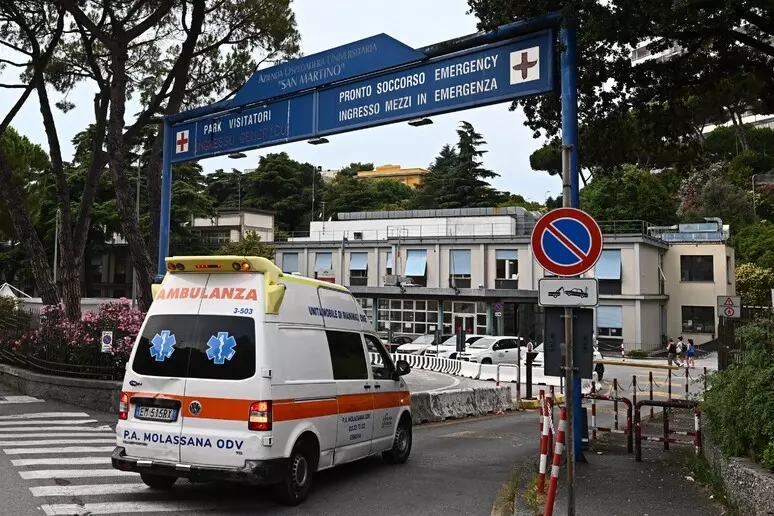
Italy is currently grappling with a severe heatwave, placing multiple cities under maximum heat alerts due to extreme temperatures.
Italy is experiencing a significant heatwave, leading to an increase in the number of cities placed under maximum alert. As of Monday, 22 cities were designated as being in a state of red alert, with reports indicating that this number will rise to 25 by Tuesday. This situation is being monitored by the Italian news agency Adnkronos.
Record temperatures have gripped not only Italy but also much of Europe. Forecasts do suggest possible thunderstorms and a drop in temperatures starting from Wednesday, July 1. However, the current heat remains a concern across the country. According to the latest bulletin from the Ministry of Health, cities affected by the red alert include Ancona, Bari, Bologna, Bolzano, Brescia, Campobasso, Civitavecchia, Florence, Frosinone, Genoa, Latina, Milan, Naples, Palermo, Perugia, Pescara, Rieti, Rome, Turin, Venice, Verona, and Viterbo.
The red alert, classified as level 3, signifies emergency conditions, which could pose health risks not just to vulnerable populations, including the elderly and young children, but also to generally healthy individuals. By Tuesday, additional cities such as Cagliari, Catania, and Trieste will join the list under red alert status.
The extreme weather conditions are not limited to Italy. Several countries in Europe, including Germany, the Czech Republic, Poland, and Hungary, have reported temperatures surpassing 40 degrees Celsius. More than 191 million people across Europe are currently dealing with temperatures of at least 35 degrees Celsius, prompting extreme heat alerts throughout the continent.
Recent reports reveal that temperatures have soared to levels between 10 to 20 degrees Celsius above historical averages, with Paris experiencing a peak of 40 degrees Celsius in recent days. The World Health Organisation (WHO) has stated that since June 21, more than 1,300 deaths across Europe have been linked to the unprecedented heat. WHO Director-General Tedros Adhanom Ghebreyesus noted on X, mentioning that Europe is warming at a rate that is double the global average.
Despite the current weather challenges, relief may be on the horizon. Forecasts predict a transition starting with strong thunderstorms that can potentially lower temperatures to more typical summer levels. Authorities have warned of the possibility of hailstorms, triggered by the accumulated thermal energy from the heatwave.
A disturbed weather front descending from Northern Europe is expected to impact Italy soon. The interaction between these cooler air currents and the warm, humid Mediterranean air may lead to severe weather, including intense thunderstorms and strong downdraft winds.
Regions in northern Italy are anticipated to be the first to experience this wave of adverse weather, which may extend to central-southern areas subsequently. Following this period of instability, the hot air typical of the subtropical African anticyclone is likely to return, reinstating the heat to Italy’s summer climate.