









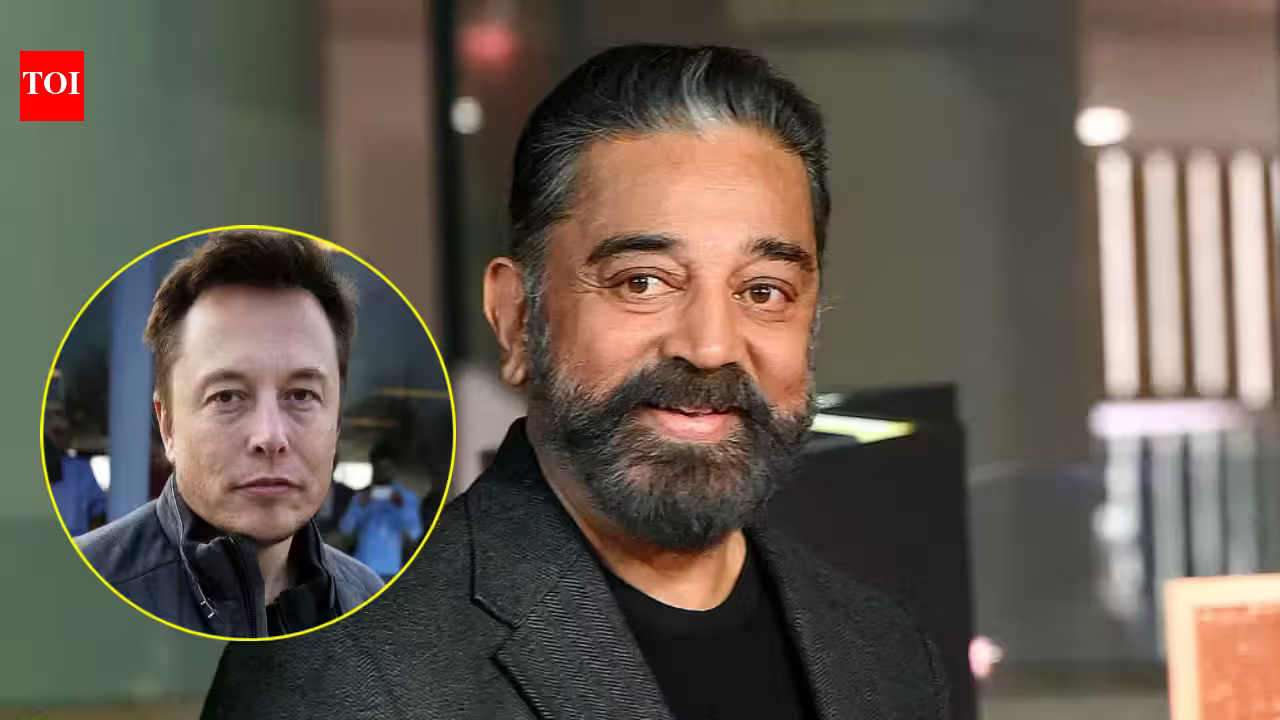
In an era where the lines between global tech diplomacy and national sovereignty are increasingly blurred, the intersection of space-age internet connectivity and Indian domestic politics has ignited a fiery public exchange. At the center of this storm stands none other than the legendary Kamal Haasan, the multi-hyphenate icon who has effortlessly transitioned from the silver screen to the Rajya Sabha, proving that his voice carries as much weight in the halls of governance as it does in the cultural zeitgeist.
The latest firestorm erupted following Elon Musk’s inflammatory commentary regarding Starlink’s delayed entry into the Indian market. The Tesla and SpaceX CEO, never one to shy away from digital provocation, directed his ire at the status quo of India’s telecommunications sector. Musk suggested that Starlink’s path has been effectively “blocked by certain oligarchs,” implying a monopolistic stranglehold on the country’s digital infrastructure. With a jab that name-dropped Mukesh Ambani and questioned the power dynamics of the world’s largest democracy, Musk effectively threw down the gauntlet.
### A Measured Retort from a Political Heavyweight
Kamal Haasan’s response was not merely that of an actor, but of a statesman articulating a vision for a developing nation navigating the demands of Western corporate giants. Taking to X (formerly Twitter) on Friday, Haasan dismantled the narrative that India is an unruly or unfair marketplace.
“Mr. Musk, yes, no billionaire should dictate a nation’s policy—Indian or American,” Haasan stated, setting a tone that was firm yet measured. He emphasized that while India must be open to competition and global providers, the focus should remain on “the most practical and affordable last-mile solution.” For Haasan, the core issue isn’t just about regulatory approval; it is about the socioeconomic reality of the Indian consumer. He warned that exorbitant equipment costs and high subscription fees threaten to widen the digital divide rather than bridge it, effectively gatekeeping progress for the wealthy while leaving the rural population behind.
### The Hypocrisy of Protectionism
Perhaps the most potent aspect of Haasan’s critique was his dismantling of the “double standards” often exhibited by Western entities when dealing with emerging markets. He didn’t just defend India; he held a mirror up to the United States.
Pointing to the US imposition of a 100% tariff on Chinese electric vehicles—a move ostensibly designed to protect domestic manufacturers—Haasan highlighted the obvious: every nation is entitled to protect its own industrial interests. He noted that the US and India have both moved to restrict firms like Huawei due to genuine security concerns, underscoring that infrastructure is not merely a commercial commodity but a strategic national asset. “One cannot demand a level playing field from others only when it suits its own agenda,” he observed, effectively neutralizing Musk’s claim of an unfair, anti-competitive environment.
### Accountability Beyond the Billionaire’s Rhetoric
While Haasan stood firmly against the external pressure exerted by Musk, he simultaneously displayed the hallmark of a true democrat: the ability to hold his own government accountable. He did not issue a blanket defense of the status quo. Instead, he turned his gaze toward the BharatNet program, questioning the efficacy of the massive capital expenditure invested in the project.
By highlighting the CAG’s 2026 audit report, which revealed that only 33.2% of service-ready Gram Panchayats were operational despite a staggering spend of nearly ₹40,000 crore, Haasan proved that he is not a mouthpiece for any administration. He praised the success of Indian telecom regulations that have made data some of the most affordable in the world, yet demanded the same level of operational excellence from the government that he expects from global tech titans.
### Sovereignty in the Age of Satellite Internet
The core of the dispute ultimately boils down to who holds the keys to the future of the Indian internet. Starlink, armed with its GMPCS license, remains in a state of purgatory as it awaits final security clearances and spectrum assignment. Meanwhile, the Ministry of Communications has refuted Musk’s allegations of discrimination, labeling them “baseless and misconceived” and insisting that India’s regulatory framework is fair, non-discriminatory, and fully compliant with global standards.
For Kamal Haasan, the path forward is clear: India is a participant in the global economy, not a vassal state awaiting the grace of Silicon Valley. His declaration—”India is a democracy, not a colony”—echoed through the digital landscape, resonating with a populace that values its agency.
### The Bottom Line: Who Decides the Future?
The conflict between Starlink and the Indian establishment is a preview of the struggles that will define the next decade of technology regulation. As satellite internet providers look toward the vast, untapped markets of the Global South, they will find that the rules of engagement are changing.
Kamal Haasan’s intervention serves as a reminder that Indian policy will be shaped by the needs of its people, the integrity of its security infrastructure, and the necessity of internal accountability. Whether or not Musk finds his way into the Indian market, one thing is certain: he will have to negotiate with the reality that India is no longer looking for a savior—be it in the form of a tech entrepreneur or a foreign corporation. As Haasan put it, the Indian people will decide their own future, and they aren’t looking for a “boss” to dictate the terms.
Disclaimer: This content is auto-generated for informational purposes only.
Source: Read Original News