









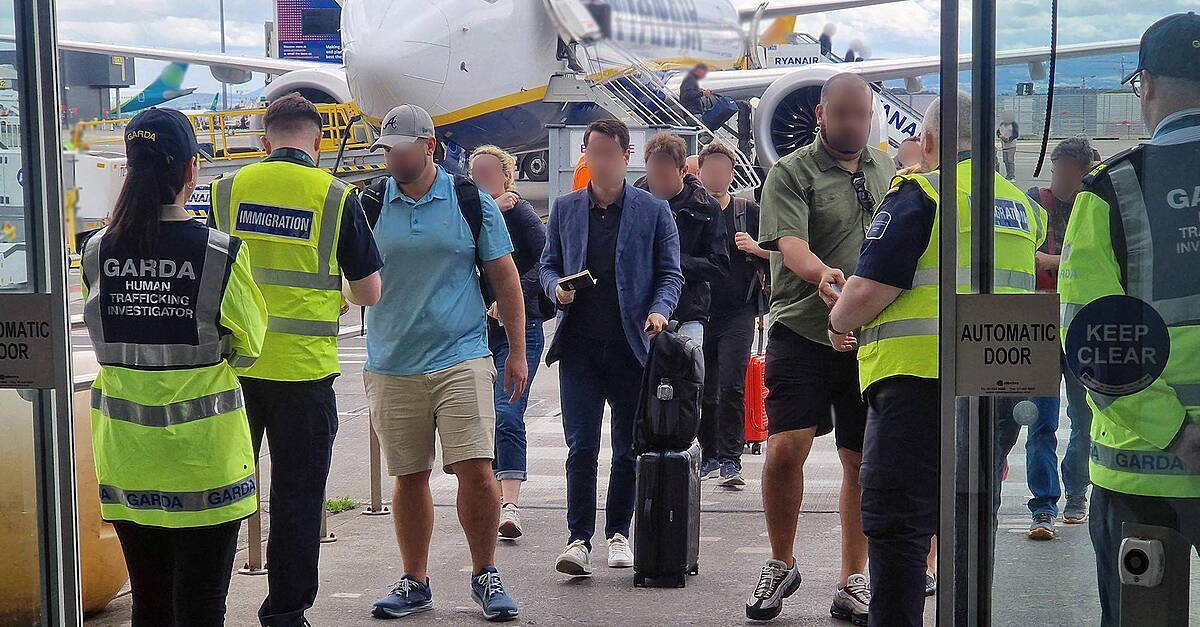
An Irish human rights barrister is set to deliver a stinging critique of the European Union’s new Migration and Asylum Pact at an international conference this Tuesday, warning that the legislative framework risks stripping away vital protections for victims of human trafficking.
The barrister, who has spent years representing vulnerable migrants in the Irish court system, is expected to argue that the pact’s accelerated border procedures prioritize rapid processing and deportation over the fundamental human rights of those exploited by criminal networks. The address comes as EU member states continue to implement the sweeping reforms, which aim to streamline asylum applications and tighten external border controls across the bloc.
According to the barrister, the core issue lies in the “mandatory border procedures” introduced by the pact. Under these new rules, individuals arriving at the EU’s external frontiers are subject to stricter detention protocols and expedited screening. The concern is that these measures create an environment where victims of trafficking—who are often traumatized, coerced, and fearful of their abusers—are processed as standard irregular migrants rather than being identified as victims of a serious crime.
“By prioritizing speed and containment, the pact inadvertently creates a ‘fast-track to failure’ for the most vulnerable,” a source close to the barrister’s legal team said ahead of the conference. “Victims of trafficking are rarely in a position to disclose their exploitation during an initial, high-pressure border interview. When the system is designed to expedite removal, these individuals fall through the cracks and are often deported back to the very networks that trafficked them.”
The critique highlights a growing tension between European policy goals—which are heavily focused on curbing unauthorized entries—and the bloc’s stated commitment to human rights and international law. Critics of the pact have long argued that by tightening the net around migration, Europe is inadvertently criminalizing those who have been forced into exploitative situations, including forced labor and sexual exploitation.
The barrister’s presentation is expected to call for an urgent review of the identification protocols embedded within the pact. Specifically, the address will advocate for the inclusion of specialized “trafficking rapporteurs” at all reception centers to ensure that signs of coercion are identified before an asylum claim is processed or a removal order is issued.
As the conference gathers legal experts, policy makers, and human rights advocates from across the continent, the barrister’s intervention serves as a high-stakes challenge to the EU’s current trajectory. With the implementation of the pact already underway in several member states, the pressure is mounting on Brussels to clarify how it intends to reconcile its new border security infrastructure with its legal obligations to protect those caught in the web of human trafficking. The barrister’s testimony is likely to spark renewed debate in the European Parliament regarding the necessity of a dedicated “humanitarian safeguard” within the new migration framework.
Disclaimer: This content is auto-generated for informational purposes only.
Source: Read Original News