







The Strategic Shift Toward Graded Penalty Systems
The Indian Ministry of Road, Transport and Highways is embarking on a structural transformation regarding road safety, moving beyond conventional monetary fines toward a comprehensive, data-driven accountability framework. By introducing a graded, points-based system for driving licences, the government aims to recalibrate driver behavior through long-term consequence management. This shift represents a significant evolution in national policy, transitioning from a transaction-based penalty model—where fines are often viewed as a “cost of doing business” by repeat offenders—to a performance-based regulatory environment.
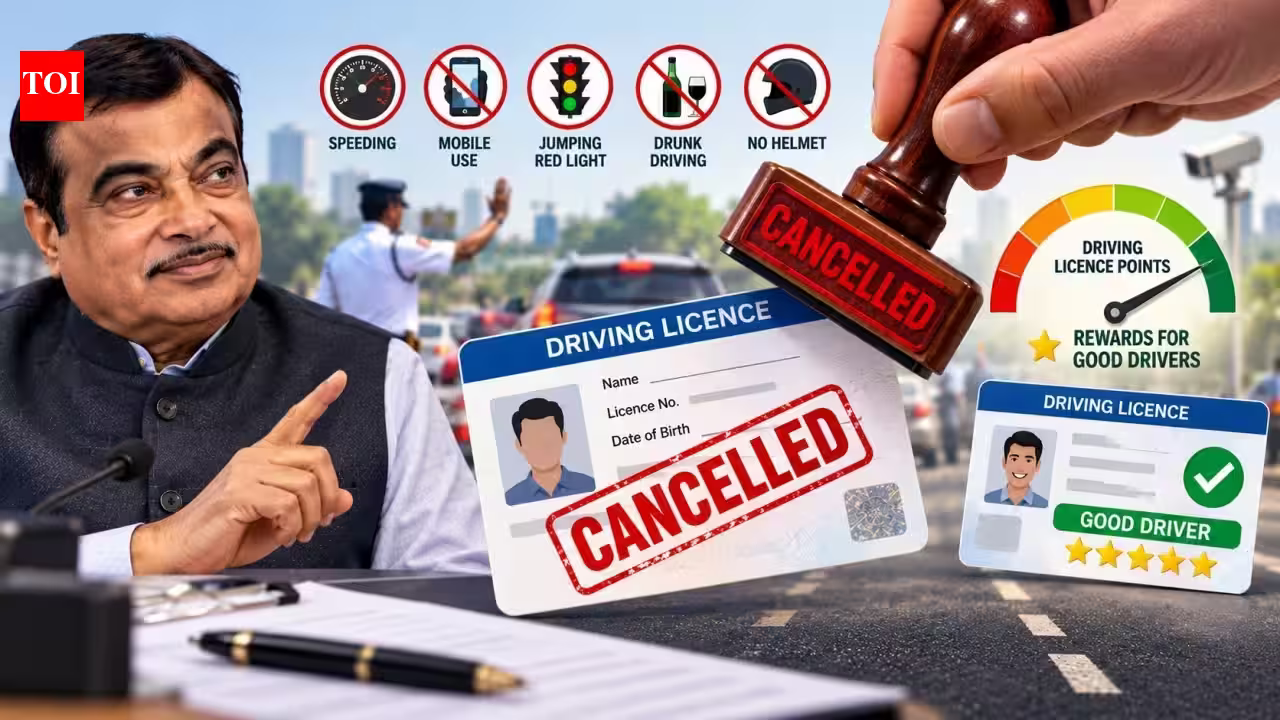
Under this proposed system, every traffic violation will accrue penalty points against a motorist’s digital licence profile. The accumulation of these points will serve as a dynamic indicator of driving competence and safety compliance. Once a driver hits specific thresholds, the regulatory mechanism will trigger automatic penalties, ranging from mandatory retraining to the suspension or permanent revocation of driving privileges. This methodology is designed to isolate habitual offenders, ensuring that those who pose a consistent danger to public safety are systematically removed from the transport ecosystem. By digitizing this record, the government establishes a robust trail of accountability that persists across state lines, closing loopholes that previously allowed bad drivers to operate under the radar.
Leveraging Incentives for Responsible Driving
A critical component of this initiative is the integration of positive reinforcement for safe road conduct. The ministry envisions a system where motorists maintaining a clean record are rewarded with tangible benefits. By collaborating with the insurance sector and other stakeholders, the government intends to incentivize safe driving through premium discounts and preferential policy terms. This commercial integration is vital for the policy’s success, as it aligns the interests of private insurance firms with national road safety objectives.
For insurance companies, the implementation of a national point system provides a granular dataset for risk assessment. Currently, car insurance premiums in India are often based on broad demographic and vehicle-specific data. With access to a standardized point system, insurers can offer personalized, merit-based premiums. This effectively creates a market-driven incentive for motorists to adhere to traffic laws, as safer driving directly translates into lower recurring costs. This financial mechanism encourages a cultural shift, moving the perception of traffic laws from a punitive state mandate to a personal asset management requirement.
Infrastructure and Skill Development
Technology and policy represent only half of the solution; infrastructure development remains the fundamental pillar of the government’s safety agenda. Recognizing that formal driver training is currently fragmented, the ministry is aggressively expanding its network of training centres. With a target of 1,600 facilities nationwide, the strategy is to institutionalize standardized driving education. This initiative addresses the chronic issue of informal, low-quality training that has historically contributed to erratic driving behavior on Indian roads.
By focusing on the capacity building of these centres, the ministry aims to professionalize the driving population. The training modules are expected to incorporate modern defensive driving techniques and a deeper understanding of road safety etiquette, rather than simple vehicle operation skills. This structured approach is essential for a country that is currently the world’s third-largest passenger vehicle market. As vehicle ownership continues to surge, the ability to scale high-quality training becomes a strategic economic requirement to prevent road safety from becoming a bottleneck to national growth.
Bharat NCAP and the Evolution of Vehicle Safety
Parallel to the behavioral interventions, the government is intensifying its focus on the physical safety architecture of vehicles through the Bharat New Car Assessment Program (Bharat NCAP). By 2027, the scope of this program is set to expand significantly, moving from individual car testing to an evaluation of the entire vehicle safety value chain. This evolution marks a transition toward a holistic safety standard where manufacturers, technology providers, and startups are encouraged to integrate advanced safety features as a competitive differentiator.
The cost-effectiveness of this testing regime in India is a major competitive advantage. While international standards such as the global NCAP often involve high capital expenditure for crash testing, the localized Bharat NCAP framework provides a more affordable, high-impact assessment model. By leveraging domestic expertise and encouraging innovation from Indian startups, the ministry is building a self-sustaining safety ecosystem. This initiative not only protects citizens but also pushes Indian manufacturers to design vehicles that meet global standards, potentially boosting the export competitiveness of the domestic automobile sector.
The Socio-Economic Necessity of Road Safety
The urgency behind these policy shifts is driven by stark demographic data. With approximately five lakh road accidents and 1.80 lakh fatalities annually, the current safety crisis represents a massive loss of human capital. Alarmingly, the demographic most impacted by these accidents consists of individuals between the ages of 18 and 36—the prime productive years of the workforce. For the Indian economy, this loss is not merely a public health crisis but a significant developmental challenge that undermines long-term productivity and prosperity.
The government’s comprehensive approach, which combines emission control, vehicle safety ratings, and rigorous driver accountability, reflects a sophisticated understanding of systemic risk. By introducing low-cost emission retrofitment options for older vehicles alongside the new penalty system, the administration is addressing both environmental and safety concerns simultaneously. This integrated strategy aims to modernize the existing vehicle fleet rather than forcing premature replacement, which balances industrial growth with environmental and safety mandates.
Future Outlook and Implementation Challenges
As the government moves toward the 2027 implementation targets, the focus will inevitably shift toward the efficacy of enforcement mechanisms and data integration. The success of the graded points system relies heavily on the seamless digitization of traffic enforcement across all jurisdictions. If the technology for tracking violations and linking them to individual licences is not synchronized effectively, the policy risk is that implementation could become uneven. Furthermore, the collaboration with insurance providers will require a standardized regulatory framework to ensure that premium reductions are applied fairly and transparently.
Ultimately, the transformation of Indian road safety is a multi-year project that requires high levels of inter-departmental coordination and sustained public cooperation. If executed successfully, the combination of a points-based licensing system, institutionalized training, and advanced vehicle safety standards will position India as a leader in emerging-market transport policy. This regulatory rigor is an essential step in maturing the nation’s transportation sector, ensuring that as the country continues to grow its vehicle population, it does so in a manner that prioritizes the lives and well-being of its citizens. The transition from a culture of traffic violation to one of safety-conscious stewardship is no longer just a policy goal—it is a fundamental requirement for India’s continued economic ascent.
Disclaimer: This content is auto-generated for informational purposes only.
Source: Read Original News