







Rationalizing India’s LPG Distribution Infrastructure
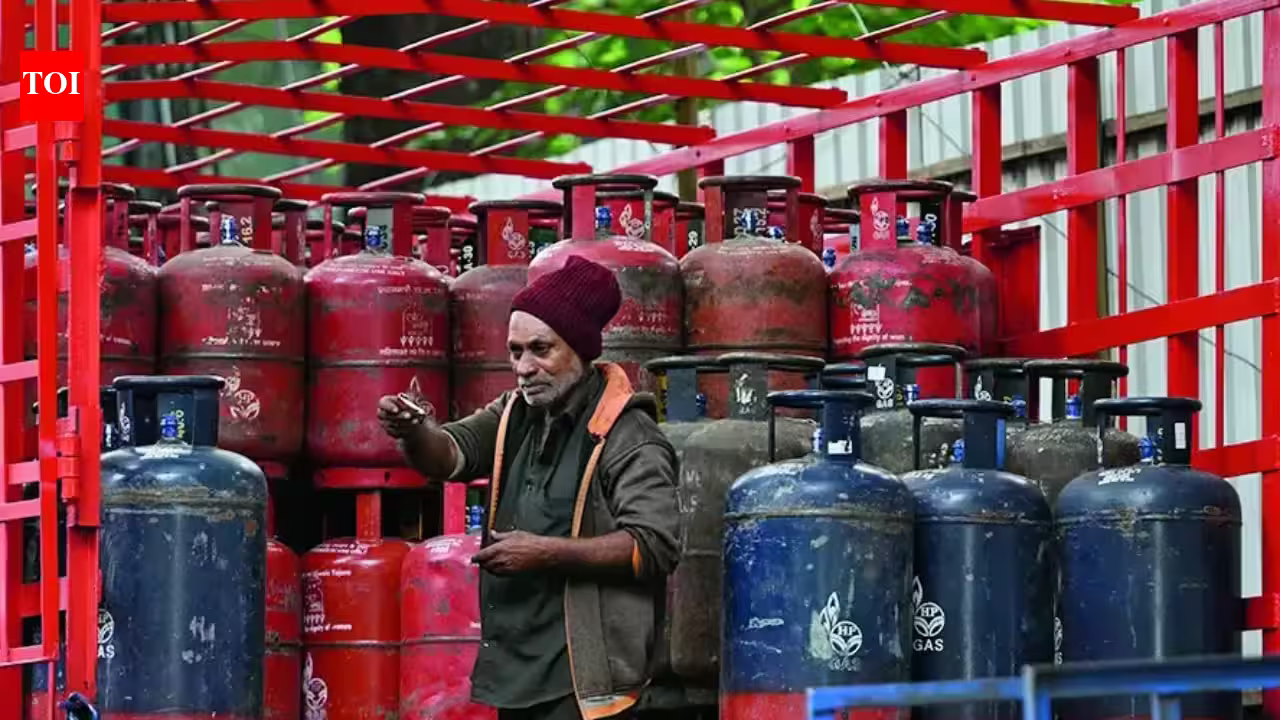
The recent directive from the Ministry of Petroleum and Natural Gas, mandating a uniform 25-day refill booking interval for domestic LPG cylinders across both urban and rural India, represents a significant recalibration of the nation’s energy logistics. By removing the 45-day restriction previously imposed on rural consumers, the government has signaled that the supply chain constraints, which necessitated temporary demand management in early 2024, have effectively dissipated.
This policy shift is more than an administrative adjustment; it is a testament to the resilience of India’s state-run Oil Marketing Companies (OMCs)—Indian Oil Corporation (IOCL), Bharat Petroleum (BPCL), and Hindustan Petroleum (HPCL). When the Middle Eastern conflict introduced geopolitical uncertainty, the resulting supply chain disruptions threatened the continuity of fuel delivery. The implementation of differential booking windows was a strategic buffer to prevent panic buying and localized stock-outs. Returning to a uniform 25-day interval demonstrates that the logistical bottlenecks have been overcome, allowing for a return to standard service levels regardless of geographical location.
Supply Chain Resilience and Global Market Dynamics
The journey to stabilizing domestic LPG availability has been complex. India remains heavily reliant on imported liquefied petroleum gas, making it acutely sensitive to price fluctuations and shipping volatility in the Middle East. Earlier this year, as supply risks mounted, OMCs faced a difficult challenge: maintaining service continuity while balancing a sudden surge in inventory demand. The 45-day window for rural areas served as a mechanism to stretch existing inventories, ensuring that low-margin rural distribution networks were not overwhelmed by logistical strain.
The decision to revert to a 25-day booking interval suggests that OMCs have successfully diversified their procurement strategies and improved domestic storage capacity. By aligning the booking cycles, the government is essentially declaring that the “demand-management” phase is over. This is a crucial metric for the Indian economy, as domestic cooking fuel is a primary household expenditure. Consistency in supply allows families to plan their consumption cycles without the anxiety of artificial delays, which often lead to higher black-market activity or unauthorized cylinder hoarding.
Impact on Consumer Behavior and Household Economics
For the end-user, particularly in rural and semi-urban India, the restoration of the 25-day window is a significant convenience. The previous 45-day limit was a source of friction for larger households whose consumption patterns naturally exceeded this arbitrary timeframe. Under the previous regime, families that depleted their fuel before the 45-day threshold were forced to seek alternative, often more expensive or hazardous, fuel sources like biomass or unregulated charcoal.
By standardizing the refill gap, the Ministry of Petroleum and Natural Gas is normalizing household energy access. From an economic standpoint, this reduces the “hidden” cost of energy for rural citizens. When access to subsidized or regulated LPG is hindered by arbitrary time limits, the indirect costs—measured in time spent searching for fuel or the health implications of burning traditional biofuels—are significant. The restoration of shorter booking intervals supports the government’s broader objective of ensuring that the benefits of the Ujjwala scheme and general LPG penetration are not undermined by distribution bottlenecks.
Operational Implications for Oil Marketing Companies
For the OMCs, the move to a uniform 25-day window is an operational milestone that validates their investment in last-mile connectivity. Managing a logistics chain that reaches into the furthest corners of India requires precise demand forecasting. During periods of scarcity, the 45-day window acted as a demand-side control measure, effectively “smoothing” the spikes in order volume.
Returning to a 25-day window will inevitably increase the frequency of required deliveries. This places a greater burden on the existing distributor network. However, it also signifies that these companies are now operating with enough safety stock and streamlined distribution routes to handle higher throughput. This transition is expected to improve the inventory turnover ratio for distributors, as cylinders will circulate more rapidly through the system. Efficient circulation is vital for OMCs, as it reduces the capital tied up in dormant inventory at the warehouse level. Furthermore, as global prices stabilize, the return to normalized booking frequencies will allow OMCs to focus on operational efficiency rather than crisis management.
The Broader Energy Security Strategy
The standardization of LPG refill intervals is a quiet but critical component of India’s long-term energy security strategy. As the country transitions toward cleaner cooking fuels, the reliability of the supply chain becomes as important as the cost of the commodity. A government that can ensure consistent delivery, even during times of international turmoil, builds greater consumer trust in formal energy distribution channels.
This policy evolution also highlights the importance of data-driven governance. The Ministry’s ability to track refill backlogs in real-time allowed them to identify exactly when to lift the restrictions. As India integrates more advanced tracking for cylinder distribution—often linked to Aadhaar-based authentication—the ability to manage supply shocks will only become more sophisticated. The current directive serves as a reminder that demand-management measures should be transient by design. Prolonged restrictions can inadvertently stifle consumption and discourage potential users from switching to formal LPG connections. By removing these hurdles, the government is ensuring that the momentum toward universal clean fuel access remains uninterrupted.
Future Outlook and Digital Integration
Looking ahead, the digitization of the LPG booking process will play a pivotal role in maintaining this supply equilibrium. As the country moves toward increased penetration of mobile-based booking applications and automated SMS alerts, the margin for error in the supply chain narrows. The government’s move to make the 25-day rule uniform suggests a confidence in digital oversight.
For the rural consumer, this shift brings urban-standard convenience. For the government, it represents the successful management of a volatile external environment. While global geopolitical tensions remain a latent threat to energy prices, the local infrastructure now appears robust enough to support standard consumer behavior. As India continues to expand its pipeline infrastructure and storage capacity, the reliance on such “temporary measures” is likely to decrease. In the coming years, the focus of the petroleum ministry will shift from crisis-responsive regulation to enhancing the quality of service, potentially introducing more flexible delivery schedules that cater to individual household consumption data rather than static, one-size-fits-all time intervals. For now, the harmonization of the refill window is a welcome step toward normalizing the Indian energy market.
Disclaimer: This content is auto-generated for informational purposes only.
Source: Read Original News