






The Unlikely Double Life of Michael Polansky: Bridging AI, Biology, and Celebrity
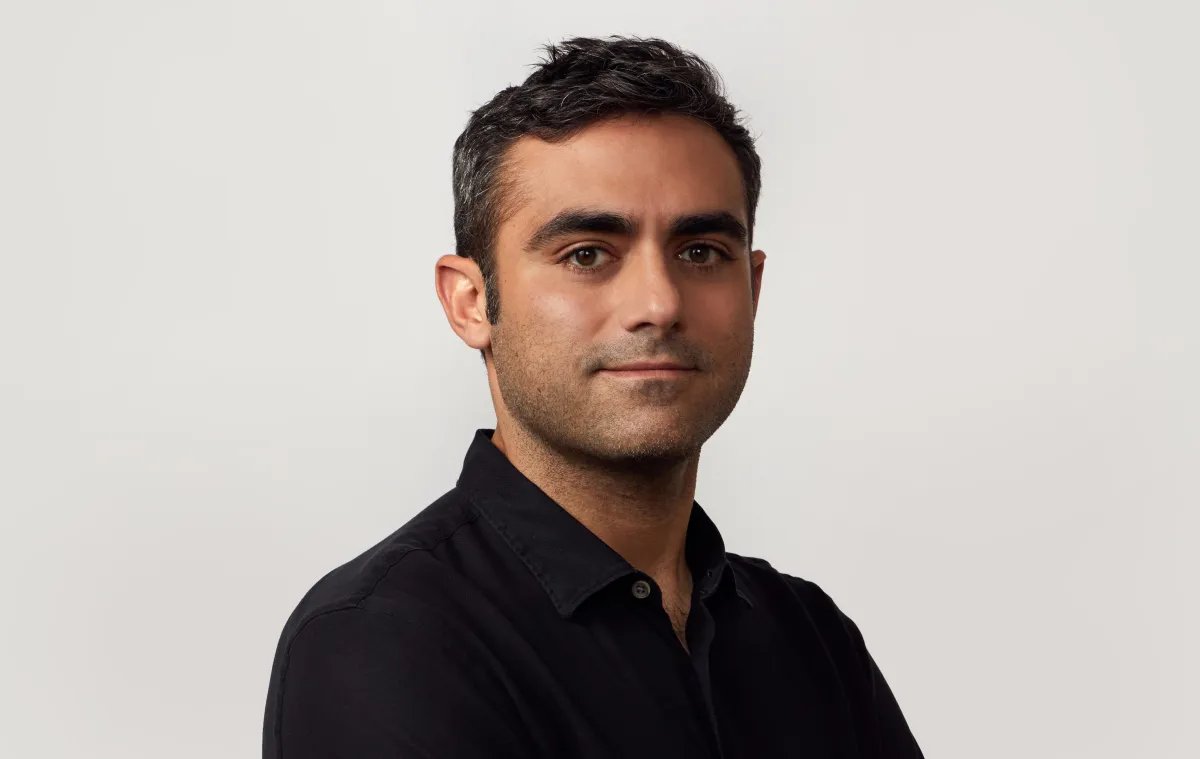
Michael Polansky is an anomaly in the high-octane world of Silicon Valley. Seated at a quiet Mill Valley bakery, the bespectacled entrepreneur possesses the understated demeanor of an academic, a stark contrast to the outsize egos that typically dominate the tech landscape. Yet, his resume is anything but ordinary: he is a former hedge fund operator, a key player in the worlds of cancer immunotherapy and high-stakes celebrity management, and now, the co-founder of a revolutionary biotech startup.
Polansky’s professional life is a study in juxtaposition. While he is widely recognized as the creative and business partner to global superstar Lady Gaga, he has spent the last several years operating in total silence to build Outer Biosciences, a startup leveraging artificial intelligence to unlock the secrets of living human tissue.
From Bridgewater to the Born This Way Foundation
Polansky’s path to innovation began in Minnesota and led to a degree in applied mathematics and computer science from Harvard. Following a stint at the hedge fund Bridgewater Associates, he pivoted to the West Coast after connecting with Napster co-founder Sean Parker.
For years, Polansky managed Parker’s family office and helped scale the Parker Institute for Cancer Immunotherapy. It was during this period, at a 2019 birthday party, that he met Stefani Germanotta—Lady Gaga. The introduction was orchestrated by her mother, Cynthia Germanotta, whom Polansky had befriended through his philanthropic efforts.
Today, the couple functions as a professional power unit. Beyond their personal life, Polansky plays an active role in Germanotta’s ventures, including the management of her massive, globe-spanning world tours and her thriving cosmetics brand, Haus Labs.
Disrupting Dermatology with AI
While his life intersects with global entertainment, Polansky’s primary focus is the "accidental" career he carved out in the life sciences. Outer Biosciences, co-founded in 2022, was born from a realization: biological innovation is hampered by the fact that there is no ethical way to test substances on living humans, and current models—such as animal testing or simplified lab cultures—fail to replicate human organ behavior accurately.
Outer Biosciences has engineered a workaround. The company sources human skin—discarded following plastic surgery—and, through proprietary support systems, keeps the tissue alive and metabolically active for up to a month. This extended viability allows researchers to study long-term biological processes, such as barrier repair or collagen remodeling, which traditional lab methods cannot track.
The startup’s secret sauce is its closed-loop AI system. The team induces stress—such as UVB-induced sunburn—in the living tissue, tracks the molecular response over weeks, and feeds that data into an AI model. The AI then predicts which chemical compounds will yield specific results, tests them on the tissue, and learns from the outcome to refine future predictions.
A New Era of Discovery
Polansky notes that the beauty industry has relied on a remarkably small pool of active ingredients—roughly 200 that are backed by rigorous research. Outer Biosciences is accelerating this discovery process, generating new candidates every six weeks.
Instead of building a consumer-facing brand, the company plans to license its proprietary ingredients to beauty and pharmaceutical giants. This strategy is already yielding results; the firm is currently collaborating on research into the side effects of cancer drugs and has four active leads slated for potential commercialization.
Despite the emergence of well-funded competitors like the Philadelphia-based Vivodyne, Polansky remains undeterred. He believes the startup’s strength lies in its unique, proprietary data and its commitment to keeping its AI operations off the cloud to ensure security.
After years of working in the shadows, Polansky is ready to step into the light. With $23 million in funding and a growing pipeline of discovery, he sees this as the beginning of a new chapter. "I think it’s going to be fun," he says, "to have people know that this is what we’ve been doing."