








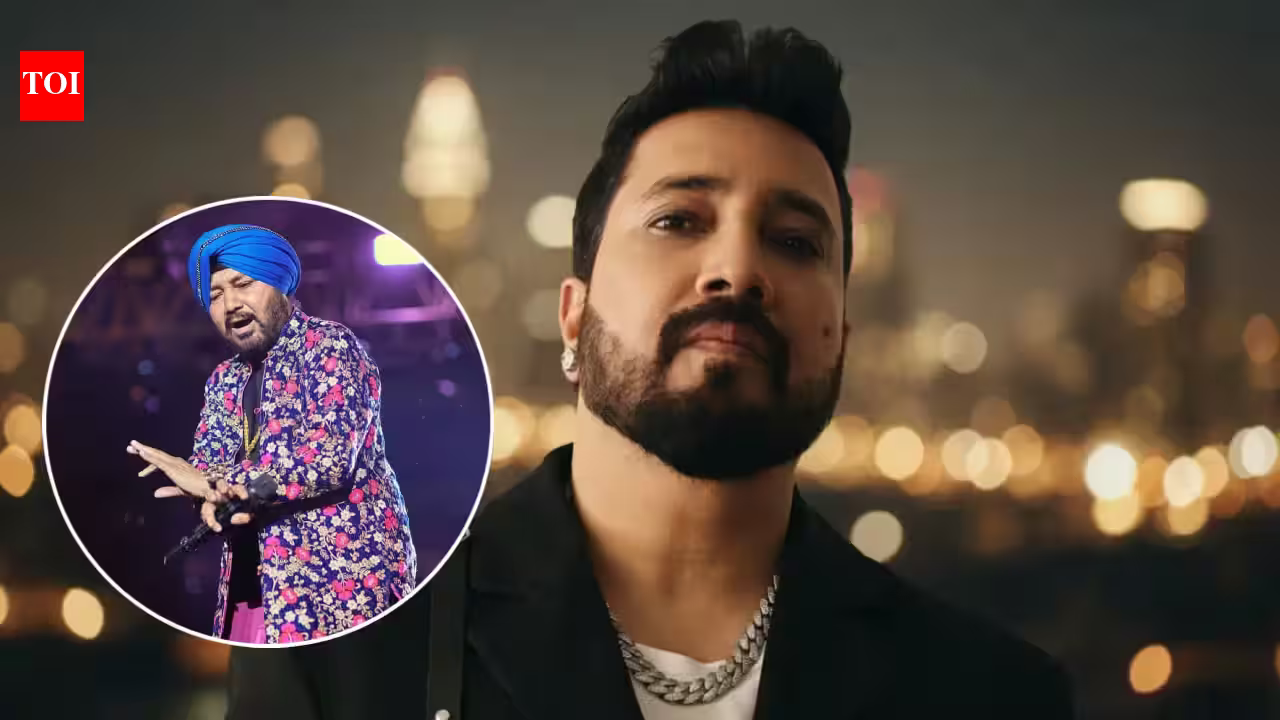
The world of live entertainment is built on a delicate social contract: the artist provides the magic, and the host provides the stage. However, that contract was shredded in a public spectacle at the Siddhpeeth Maa Kunjapuri Tourism and Development Fair in New Tehri this week. What was supposed to be a night of celebration turned into a volatile confrontation between Uttarakhand Cabinet Minister Subodh Uniyal and legendary Punjabi singer Daler Mehndi.
The fallout from the incident has been swift, with none other than Mika Singh leading the charge against the minister. In a blistering rebuke posted to X (formerly Twitter), Mika has demanded a public apology, arguing that the treatment meted out to Mehndi was not just unprofessional, but a dangerous precedent for how artists are treated in the country.
## The Viral Moment That Sparked Outrage
The controversy erupted when a video surfaced of the event, showing Minister Subodh Uniyal storming onto the stage mid-performance to halt Daler Mehndi’s set. The tension was palpable. In front of a crowd of thousands, the minister didn’t just critique the performance; he launched an aggressive personal attack.
Uniyal was recorded telling the crowd, “Yahan aapse pehle Manindar Buttar pit ke gaya tha. Itna pita tha ki ab uska baap bhi nahi aa sakta yahan se.” (Before you, someone got beaten up here and in such a way that even his father cannot come here again). The comment—which effectively served as an on-stage threat—left the audience and the artist in a state of shock. The minister further insulted the singer by questioning his sobriety, flatly stating, “You cannot even speak, so how are you going to sing?”
## Mika Singh: A Voice for Artist Dignity
Mika Singh, often known for his candid and unfiltered personality, took this as a personal slight against the fraternity of performers. His post on X was not merely a critique; it was a wake-up call regarding the power dynamics between elected officials and cultural icons.
“Is this really the language a minister should use for artists?” Mika questioned in his post. He emphasized that performers travel across the country to honour commitments and bring joy to the masses, often under grueling conditions. To be subjected to public humiliation is, according to Mika, a betrayal of the hospitality a host should provide.
Mika’s demand for an apology carries weight because he is addressing the broader implications. He warned that if public officials continue to treat entertainers with such disdain, it will inevitably lead to a situation where artists become wary of visiting states like Uttarakhand. “Artists come to perform, entertain people, and honour their commitments. They deserve respect, not humiliation from a public platform,” Mika wrote.
## The Minister’s Defense: Disenchantment or Power Trip?
When pressed by media outlets like ANI to explain his conduct, Subodh Uniyal did not walk back his sentiments. Instead, he doubled down on his frustration. The minister justified his intervention by claiming that Daler Mehndi was failing his audience.
“He is a big artist,” Uniyal stated. “If a big artist doesn’t do justice to their art… He seemed disoriented on stage and didn’t seem to be able to even keep standing. Besides this, he was only lip-syncing to his songs.” Uniyal went on to highlight the financial aspect, noting that the singer had been paid a significant sum—reportedly ₹35 lakh—to be there. By the minister’s logic, the payment granted him the authority to police the quality of the performance in real-time, regardless of the decorum required at a public event.
Critics of the minister, however, argue that even if an artist is underperforming or suspected of being intoxicated, a public official has no business engaging in an aggressive on-stage confrontation. The consensus among many in the industry is that if there was a grievance regarding contract fulfillment, it should have been addressed through legal or administrative channels behind closed doors, not by taking the microphone to bully a performer in front of a live audience.
## The Thin Line Between Quality Control and Harassment
This incident has reignited a long-standing debate about the treatment of artists in India. Are performers considered service providers who are subject to the whims of their high-profile hosts, or are they cultural figures entitled to a baseline level of professional respect?
The minister’s defense leans heavily on the idea that the audience was being cheated by a sub-par performance. Yet, the method of intervention speaks to a larger systemic issue: the lack of a clear boundary between an official’s duty to the public and the abuse of their authority. By invoking threats of physical violence—referencing past artists being “beaten”—the minister shifted the narrative from a quality-control complaint to one of intimidation.
## A Call for Accountability and Humility
Mika Singh’s appeal to the minister was rooted in the concept of humility. He reminded Uniyal that his position is one of public service, entrusted to him by the citizens, and that such power carries the weight of responsibility.
As of now, the call for an apology remains unanswered. Whether the incident will blow over or serve as a catalyst for a change in how artists are treated at state-sponsored events remains to be seen. What is clear, however, is that the entertainment industry is watching. In an era where digital footprints are permanent, the spectacle in New Tehri has left a sour taste, not just for Daler Mehndi, but for the entire community of performers who now find themselves questioning: is the stage still a safe place for them to stand?
For now, the silence from the minister’s office is speaking louder than any stage performance. The industry is waiting to see if this incident serves as a moment of reflection or a harbinger of more friction to come between the worlds of politics and the arts.
Disclaimer: This content is auto-generated for informational purposes only.
Source: Read Original News