








The Rise of The Blood of Dawnwalker
The release of The Blood of Dawnwalker, a new open-world role-playing game developed by Rebel Wolves, has captured significant attention within the gaming community. Formed by a collective of veteran developers previously instrumental in the creation of The Witcher 3, the studio has sought to deliver a complex, systems-driven experience. The game places players in the role of a vampire warrior, navigating a world that demands strategic navigation of time-based cycles.
The game is built upon a foundation of mechanical constraints. Players must manage their activities across day and night cycles, as time serves as a persistent currency that dictates the progress of the world’s calendar. This temporal mechanic influences everything from combat effectiveness to the viability of specific quests and character development. By integrating these limitations, Rebel Wolves aimed to create a high-stakes environment where every decision carries the weight of limited time, forcing players to prioritize their objectives carefully.
The Emergence of Community-Driven Modifications
Despite the deliberate design choices implemented by the development team, a substantial portion of the player base on PC has opted to bypass these constraints through external modifications. The Nexus Mods platform has become a central hub for this activity, where users are sharing scripts and files that alter the game’s core parameters.
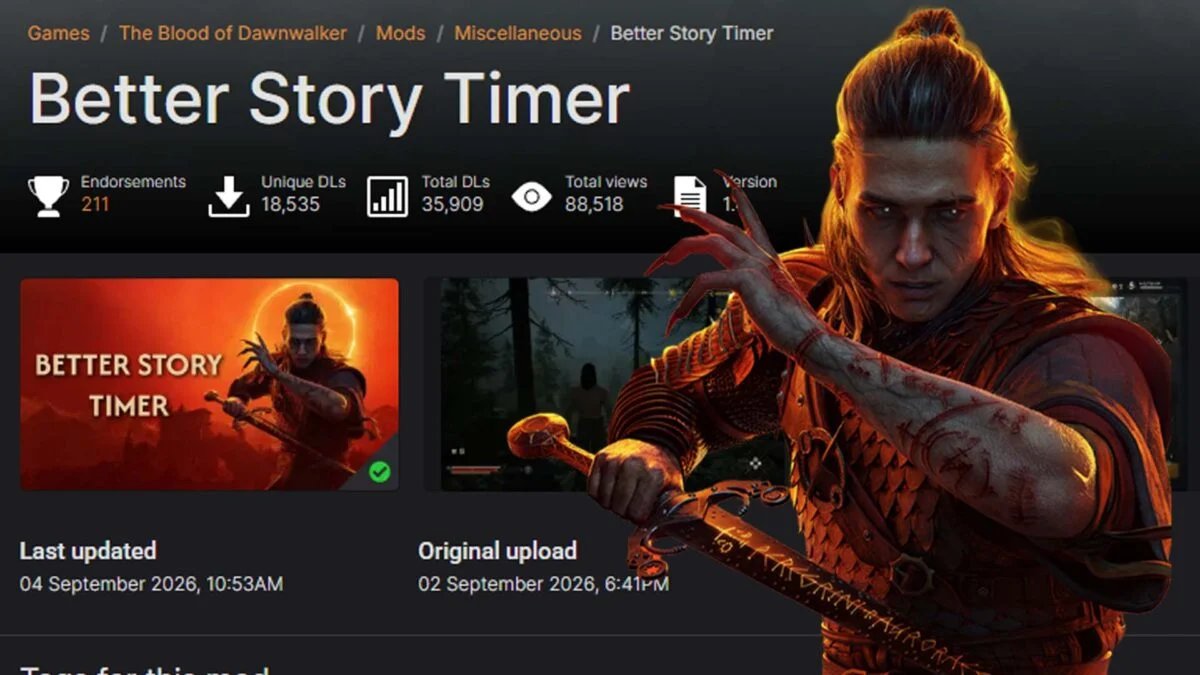
The most prominent example is a modification titled Better Story Timer, which has seen over 36,000 downloads shortly after its release. This mod allows players to extend the duration of the in-game calendar cycles or remove the temporal pressure entirely. The popularity of this tool underscores a growing trend in the PC gaming landscape: the shift toward user-defined difficulty and pacing. While the developers intended for time management to be a central challenge, a significant segment of the audience prefers to decouple narrative progression from these strict mechanical barriers.
Technical Friction and Inventory Constraints
Beyond the controversial time management systems, the community has also targeted other aspects of the game’s design that impose limitations on player agency. Modifications addressing inventory capacity, loot drops, and leveling speed have gained traction alongside the timer-related tools.
For many players, the friction inherent in restricted carrying capacity is viewed as a hurdle rather than a feature. By deploying mods that artificially increase inventory space or accelerate experience point acquisition, players are effectively rebalancing the game to suit their personal preferences for progression speed and resource management. These tweaks allow users to focus more on the exploration and combat elements of the title while minimizing the time spent navigating menus or managing inventory weight. This behavior highlights a clear division between designers, who favor scarcity as a tool for creating tension, and players, who often prioritize fluidity and convenience.
The Philosophy of Open-World Design
The existence of these modifications brings to the forefront a long-standing debate regarding player agency in single-player experiences. The developers of The Blood of Dawnwalker crafted a specific vision where survival and efficiency are central to the role-playing experience. In this view, the “limitation” is the game. If the timer is removed, the impact of the vampire narrative might be significantly altered, as the urgency of the nocturnal cycle is intended to be a defining feature of the player’s journey.
Conversely, the success of these mods demonstrates the necessity for accessibility in game design. When a title provides a singular, rigid path for progression, players will inevitably seek external methods to modify that path. By enabling the removal of these constraints, the PC modding scene acts as a bridge between the developer’s specific vision and the diverse expectations of a global audience. It allows the game to function as a customizable platform rather than a fixed narrative, ensuring that players who might otherwise abandon the game due to its restrictive nature remain engaged.
Impact on the Broader Gaming Ecosystem
While the PC community enjoys the freedom to customize their software, console players remain bound by the base parameters of the game as delivered by the studio. This disparity highlights the increasing technical divide between gaming platforms. As developers continue to build highly specific, challenging systems, the lack of robust, built-in customization settings often leads to a diminished experience for those on consoles who do not have access to the modding ecosystem.
Ultimately, the phenomenon surrounding The Blood of Dawnwalker serves as a case study in modern game balance. It proves that even when a team of seasoned professionals designs a cohesive, interconnected system, the end-user experience remains subjective. The demand for these mods does not necessarily suggest a failure of design on the part of Rebel Wolves, but rather a reflection of the wide variance in how players define an engaging experience. As the industry moves forward, the ability to fine-tune these variables through in-game settings—rather than external mods—may become a standard requirement for developers looking to satisfy a broader range of playstyles. For now, the modifications for The Blood of Dawnwalker stand as a testament to the community’s desire for autonomy in the digital worlds they inhabit.
Disclaimer: This content is auto-generated for informational purposes only.
Source: Read Original News