








The “covered-up” image of a nude artefact has been withdrawn from an Indian school textbook after it sparked a massive backlash from historians and educationists.
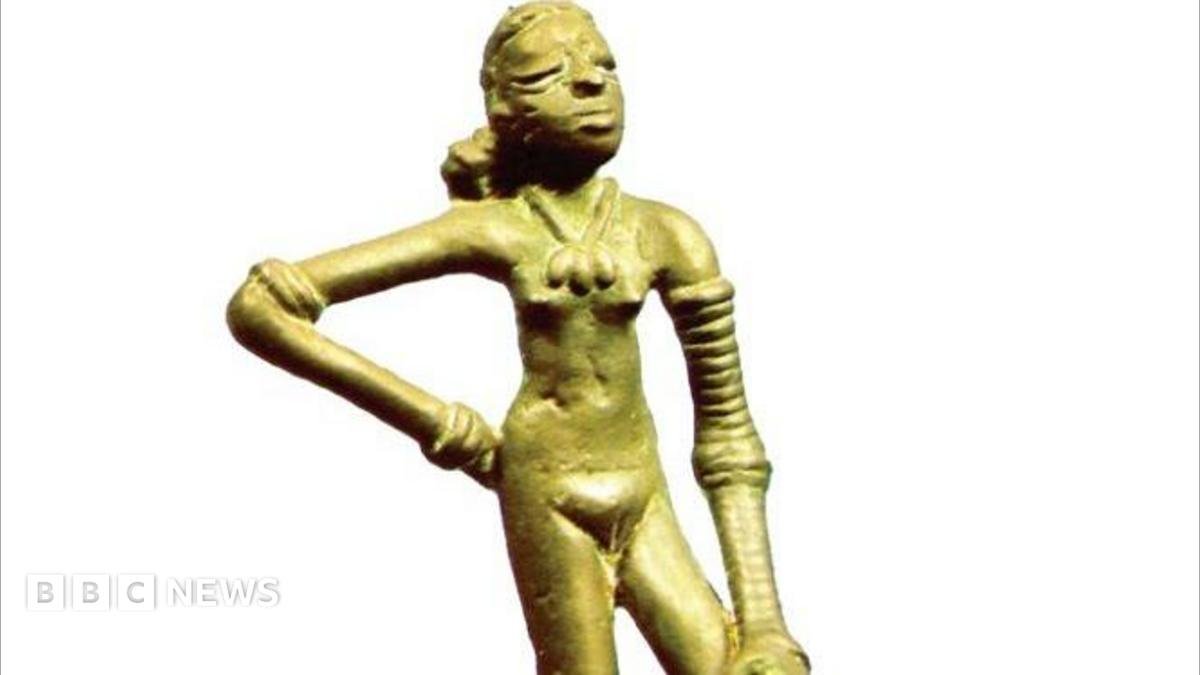
The bronze sculpture – known as the Dancing girl from Mohenjo-daro – shows a girl standing with one hand on her hip and is one of the most recognisable artefacts from the Indus Valley civilisation.
But in a newly released grade nine textbook, the figurine’s torso was covered with dark shading, hiding its anatomical features.
After it created an uproar, officials said that the original image has been restored in the digital version of the book and that new print editions would also carry the unedited photo of the bronze sculpture.
After news broke of the inclusion of the modified image, historians had accused the National Council of Educational Research and Training (NCERT) – which drafted the textbook – of disfiguring the iconic artefact.
The NCERT, an autonomous organisation under the federal education ministry, oversees syllabus changes and textbook content for children taking exams under the government-run Central Board of Secondary Education (CBSE).
NCERT director Dinesh Saklani told reporters that the modified image would be withdrawn from the textbook.
“Following consultations with experts, the department is replacing the image of the Dancing Girl with its original version,” Saklani told, external ANI news agency.
The BBC has contacted Saklani for comment.
A chapter on the Indus Valley has been a staple in Indian school curriculum, and though the Dancing Girl sculpture has appeared in textbooks for decades – including in earlier versions of NCERT textbooks – its torso has never been censored in any way.
The NCERT has not yet shared a reason for introducing the modified image but media reports have speculated that it could be due to concerns over nudity.