








India and Israel Stand Alone: Nations Oppose UN Draft on Regional Arms Control
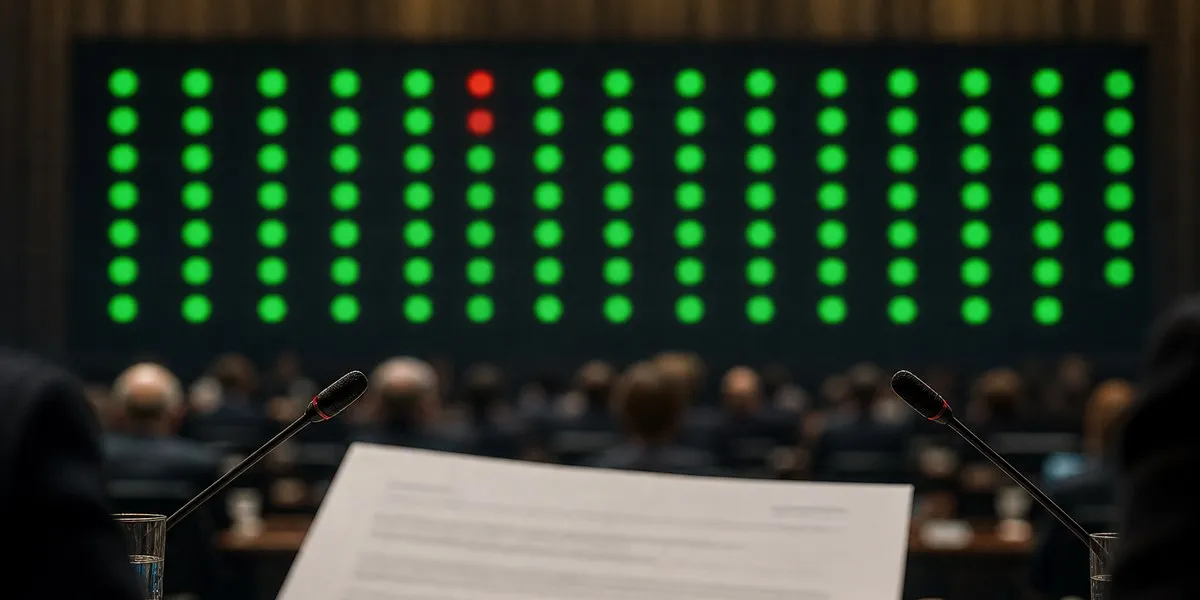
In a notable divergence from the international consensus, India and Israel cast the only dissenting votes against a recent UN General Assembly draft resolution concerning the regulation of conventional arms at regional and subregional levels. The resolution, which was championed by Pakistan and Belarus, was passed by the UN General Assembly’s First Committee on November 2, securing support from 180 member states with zero abstentions.
India’s Strategic Dissent
The opposition voiced by New Delhi underscores a fundamental disagreement regarding the framework of global disarmament. Speaking on behalf of India, Anmol Sher Bedi, First Secretary at India’s Permanent Mission to the UN, articulated that conventional arms control is inherently a global security challenge. He argued that shifting the focus primarily toward regional and subregional mechanisms is both impractical and misaligned with the nature of the issue.
India’s delegation further questioned the resolution’s directive for the UN Disarmament Commission to draft new principles for regional agreements. According to Bedi, this mandate is redundant. He pointed out that the Commission has already established a comprehensive body of work through consensus-based documents adopted in 1993, 1999, and 2017, which cover regional disarmament and practical confidence-building measures. For India, creating new frameworks while ignoring existing, time-tested agreements risks diluting the efficacy of established disarmament protocols.
Contentious Provisions and Regional Context
The resolution, which emphasizes that post-Cold War security threats predominantly emerge within local regions or subregions, advocates for localized control of conventional armaments. It calls for countries possessing significant military power to take on a “special responsibility” in facilitating these regional security agreements.
India’s opposition was particularly sharp regarding a specific paragraph of the document that attempted to apply conventional arms control proposals specifically to the context of South Asia. By singling out South Asia, the resolution encroached upon sensitive regional dynamics, a move that New Delhi has historically resisted in favor of broader, multilateral security discussions.
A Diplomatic Standoff
The vote results present a striking image of diplomatic isolation for India and Israel, who found themselves in the minority against an overwhelming majority of the 193-member body. However, analysts suggest that India’s vote is less about avoiding disarmament and more about protecting its strategic autonomy. By rejecting the draft, India signaled its refusal to engage in regional security processes that it perceives as attempts to constrain its defensive capabilities or impose frameworks that disregard its specific security environment.
As the international community continues to deliberate on disarmament, the divide highlights the ongoing tension between globalist security architectures and regional initiatives. While the resolution seeks to decentralize the approach to conventional arms, India remains firm in its belief that global threats require global solutions, rather than fragmented, regional-centric approaches that may be used to exert pressure on specific sovereign states.
Disclaimer: This content is auto-generated for informational purposes only.
Source: Read Original News