







UK Officials Advised Against Formal Ties with Ambani’s Vantara Zoo Amid Global Scrutiny
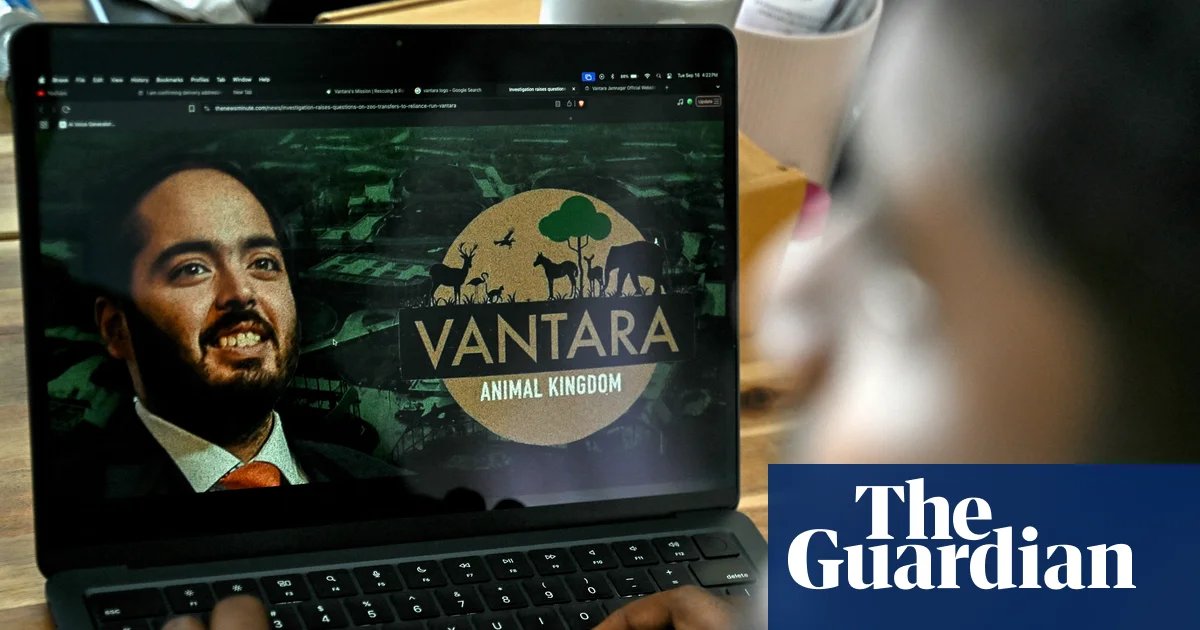
The British government has instructed its ministers to avoid formal engagement with Vantara, the sprawling private animal sanctuary owned by Anant Ambani, the youngest son of India’s wealthiest man, Mukesh Ambani. This directive follows a flurry of lobbying efforts by the facility’s representatives ahead of a pivotal United Nations committee meeting in Geneva focused on the trade of endangered species.
The UK is currently chairing a meeting of CITES (Convention on International Trade in Endangered Species of Wild Fauna and Flora), a 32-country committee tasked with reviewing India’s adherence to international animal import regulations. Documents unearthed via the UK’s Freedom of Information Act reveal that Vantara’s team sought to influence British officials in the lead-up to these proceedings.
Lobbying Efforts and Diplomatic Distance
Records indicate that representatives from Vantara, supported by the US-based lobbying firm Checkmate Government Relations—founded by a close associate of Donald Trump Jr.—engaged with the UK’s Department for Environment, Food and Rural Affairs (Defra) earlier this year. During these interactions, lobbyists attempted to shift the UK’s perspective on how India monitors the legality of imported wildlife.
When Vantara representatives extended invitations for British officials to visit their 3,500-acre Gujarat facility, the UK government declined. Ministers were warned that accepting such invitations would compromise the impartiality required for the UK’s role as the chair of the CITES committee. Subsequent attempts by another lobbying firm, Atlas Strategy, to secure engagement with high-ranking officials—including the former secretary of state, Emma Reynolds—resulted in formal guidance being issued to ministers to maintain a distance from the organization.
Concerns Over Rapid Expansion
Vantara has gained significant global attention for its rapid scale, having amassed over 150,000 animals since its inception in 2022. While the facility markets itself as a world-class center for conservation, featuring high-end amenities such as hydrotherapy pools and Ayurvedic massage for elephants, international conservationists remain skeptical.
A 2025 CITES fact-finding mission expressed concern regarding the sheer volume of species arriving at the facility, warning that such massive imports risk creating a market demand that could inadvertently facilitate the trade of illegally sourced animals. Although India’s Supreme Court previously cleared the facility of wrongdoing, the international oversight body has kept the zoo under a microscope.
Vantara’s Response and Future Outlook
In an effort to address mounting criticism, Vantara has voluntarily hit the “pause” button on animal imports for one year and has appointed former CITES chief John Scanlon to oversee its operations. Ambani has maintained that his actions are driven by a lifelong passion for animal welfare, citing successful rescues of hippos from South African hunting lodges and penguins from shopping malls.
Despite the controversies, Ambani remains a polarizing figure in the conservation space. His profile grew further when Newcastle University recently awarded him a professorship of practice in sustainability—a move that triggered significant backlash from academic and conservation circles.
As the CITES committee continues its deliberations in Geneva, the UK government remains firm on its stance. A Defra spokesperson emphasized that every wildlife trade application is assessed individually against rigorous international and domestic standards to ensure that the trade of endangered species remains both legal and sustainable.
Disclaimer: This content is auto-generated for informational purposes only.
Source: Read Original News