







India Proposes Three-Point Framework to De-escalate Russia-Ukraine Conflict
New Delhi has intensified its diplomatic engagement to foster peace in the ongoing Russia-Ukraine conflict, formally proposing a three-point framework aimed at establishing immediate confidence-building measures between the warring nations. The proposal comes at a critical juncture as trilateral discussions involving Russia, Ukraine, and the United States are currently underway in Abu Dhabi.
Ministry of External Affairs (MEA) spokesperson Randhir Jaiswal confirmed the development on Tuesday, emphasizing India’s unwavering position that the path to stability lies in dialogue rather than prolonged military hostility.
The Three-Point Humanitarian Framework
India’s proposed framework focuses on stabilizing critical supply chains and preventing further deterioration of the humanitarian situation. The three pillars of the proposal include:
- Securing the Black Sea: Guaranteeing the safety of commercial shipping lanes to prevent maritime insecurity in the region.
- Addressing Export Concerns: Prioritizing the immediate requirements of both Moscow and Kyiv regarding the flow of grain and energy resources to the global market.
- Non-Aggression Pacts: Establishing agreements to prevent further escalation and ensuring the protection of critical infrastructure from strikes.
Jaiswal noted that India remains in continuous contact with both sides, as well as with key international stakeholders, to promote a shift toward sustained diplomatic discourse.
High-Level Diplomatic Momentum
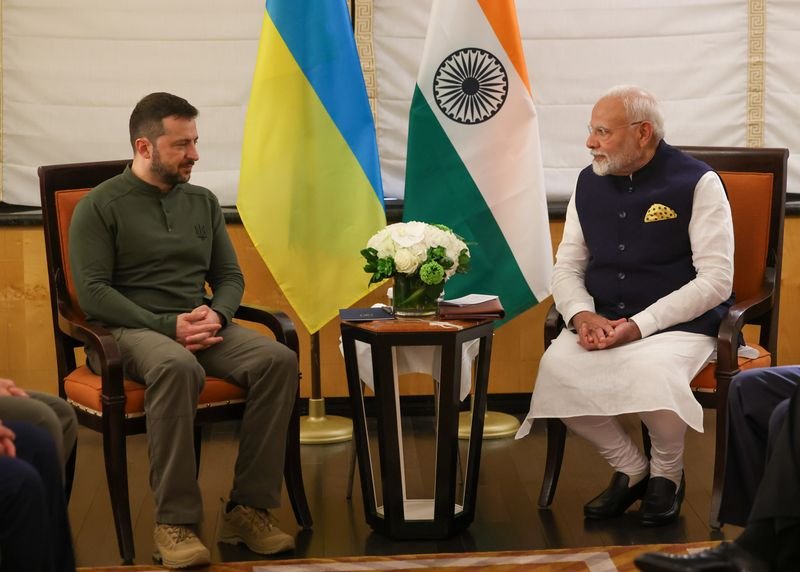
The proposal follows a flurry of high-level diplomatic activity involving Prime Minister Narendra Modi and External Affairs Minister S. Jaishankar. On Monday, Prime Minister Modi held a significant conversation with Ukrainian President Volodymyr Zelenskyy, during which he reaffirmed India’s willingness to contribute to any credible initiative aimed at securing a peaceful resolution.
Following this call, Minister Jaishankar engaged in talks with his Russian counterpart, Sergey Lavrov. Their discussion concentrated on practical mechanisms to keep essential trade routes, particularly the Black Sea food corridor, functional. By coordinating with both powers, New Delhi is positioning itself as a pragmatic mediator capable of bridging the gap between conflicting interests.
Global Hopes for Mediation
President Zelenskyy acknowledged the importance of India’s active involvement following his call with PM Modi. In a statement posted on social media, the Ukrainian leader highlighted food security as a primary area where India’s influence could prove decisive.
“We discussed Russia’s blocking of grain exports via the Black Sea. India is ready to mediate in establishing food corridors, and we are counting on these efforts to continue,” Zelenskyy remarked. He further noted that he and the Prime Minister discussed steps India could take to engage with other global leaders to facilitate a sustainable end to the war.
As the talks in Abu Dhabi progress, the global community is closely watching how these humanitarian-focused measures might serve as a foundation for broader peace negotiations. For New Delhi, the priority remains clear: leveraging its diplomatic stature to prevent further escalation and ensuring that the global economy—specifically those nations dependent on food and energy imports—is shielded from the fallout of the conflict.
The Ministry of External Affairs maintained that India would continue to pursue “practical measures” to reduce tensions, reflecting its broader foreign policy commitment to a rules-based international order.
Disclaimer: This content is auto-generated for informational purposes only.
Source: Read Original News