







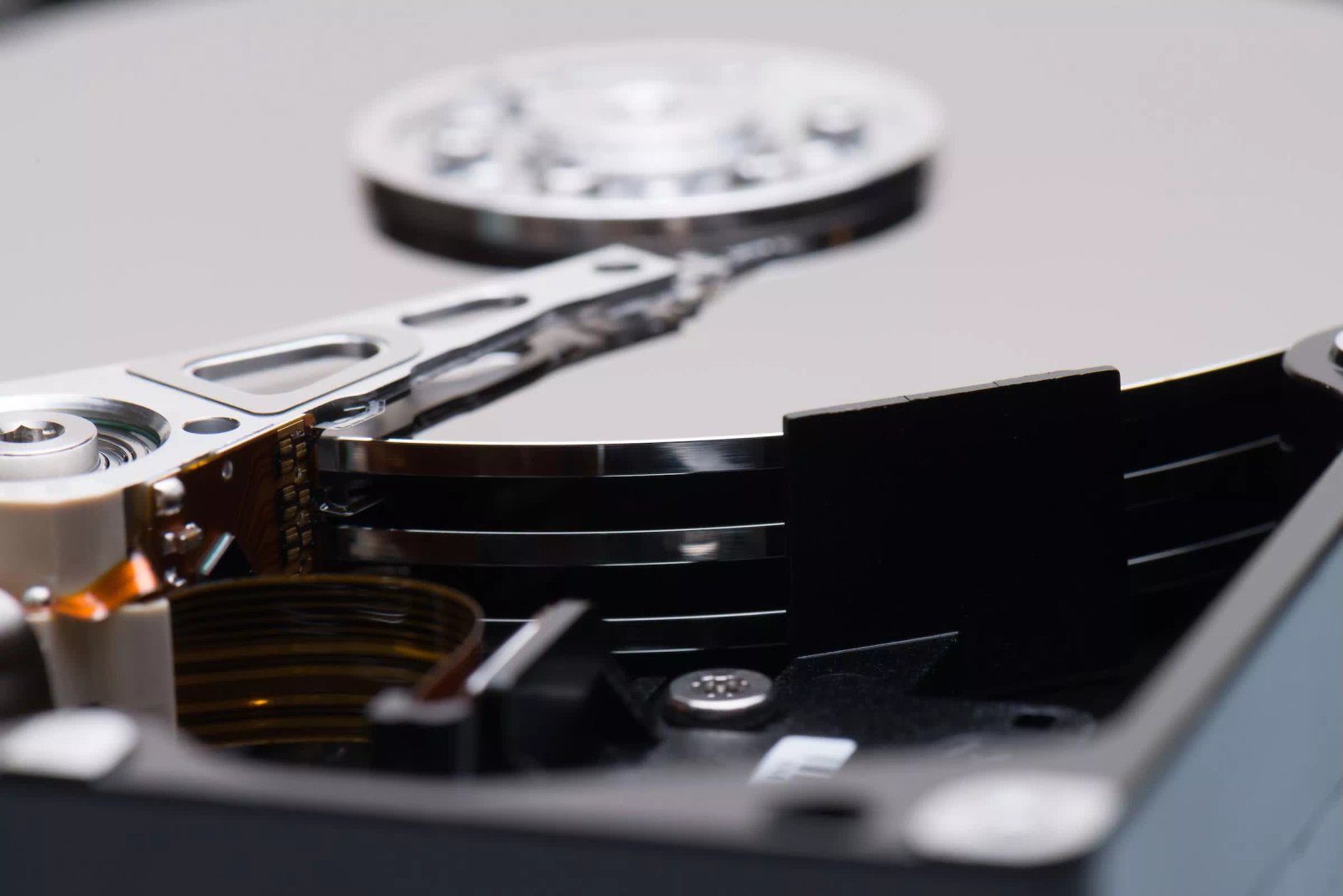
A recent comprehensive study analyzing the extensive hard drive fleet operated by Backblaze has unveiled critical insights into device reliability, demonstrating that HGST and Western Digital drives exhibit significantly lower failure rates compared to their counterparts from Seagate and Toshiba. This conclusion was reached after meticulously adjusting for several influential variables, including the age of the drives, their storage capacity, operational temperature, and physical form factor. The findings highlight a crucial aspect often overlooked in raw failure statistics: that merely comparing fleet-wide failure figures can be misleading, as they might obscure genuine reliability differences between manufacturers whose products are at varying stages of their operational lifecycles.
The peer-reviewed research, published by IEEE, was spearheaded by Christoph Siemroth from the University of Essex and Yeomyung Park from Sungkyunkwan University. Their investigation delved into an enormous dataset encompassing 443,156 drives utilized within Backblaze’s data centers, spanning from 2013 through the second quarter of 2025. This vast sample represented over 1.66 million “drive-years” of operational data, offering an unprecedented depth of analysis.
The researchers determined that HGST drives failed at approximately 41% of the rate observed for Seagate drives when evaluated under comparable conditions. Western Digital (WD) drives performed similarly well, failing at roughly 52% of Seagate’s rate. In contrast, Toshiba drives showed a higher failure incidence, with a rate equivalent to 107% of Seagate’s.
HGST emerged as the top performer in this rigorous analysis, though it’s important to note that HGST is no longer marketed as a distinct brand for new drive purchases. Western Digital acquired HGST in 2012 and subsequently integrated the brand, eventually phasing it out.
This study distinguishes itself from Backblaze’s conventional quarterly reliability reports. Those reports typically compare drives currently active in the company’s storage infrastructure at a specific moment. The authors of this new research argue that such an approach can lead to imprecise comparisons because the composition and average age of the drive fleets from different manufacturers are often not uniform.
Indeed, the distribution of hard drive installations by Backblaze has varied considerably over time. HGST drives constituted a significant portion of new installations in 2014, while Seagate was the predominant supplier from 2015 to 2020. More recently, Toshiba led in new installations in 2023, with WD taking the lead in 2024. Consequently, unadjusted failure rates might inadvertently compare older Seagate and HGST models with much newer Toshiba and WD units, thereby skewing the perception of long-term reliability.
To counteract these discrepancies, the researchers meticulously adjusted their analysis. They also mitigated bias introduced by drives being decommissioned before failing. Approximately 146,943 drives, representing 31% of the total sample, were removed from Backblaze’s dataset without a recorded failure. The primary reason for such removals was typically the company’s upgrade to higher-capacity hardware, rather than drive malfunction.
A notable finding concerned Toshiba drives, which exhibited a distinct change in failure behavior as they aged. Their monthly failure rate more than quadrupled after 60 months of service. Between 50 and 100 months of operation, Toshiba drives experienced failure rates of five to six per 1,000 drives each month. Over the same period, the other three brands generally maintained failure rates at or below 2.5 per 1,000 drives per month.
While Seagate drives initially had the highest failure rate among newer drives in the study, their failure rate did not escalate as sharply with age as Toshiba’s did. Backblaze’s prior reports have consistently indicated that a substantial number of drive failures occur within the first three years of operation.
Operational temperature also proved to be a significant factor. The study revealed that each 1-degree Celsius increase in a drive’s average temperature corresponded to a 2.1% rise in its failure rate. Compounded, a 10-degree Celsius increase would lead to an approximate 23% increase in the failure rate.
Conversely, higher-capacity drives demonstrated superior performance within the model. Each additional terabyte of storage capacity was associated with a 3.4% reduction in failure rates. The researchers speculate that this trend might be partly attributed to advancements in newer drive designs, such as helium-filled enclosures and refined head manufacturing techniques.
It’s crucial to acknowledge that these results may not directly translate to hard drives used in consumer PCs or typical home storage setups. Backblaze exclusively operates enterprise-grade drives within highly controlled data center environments, and the dataset lacks comparable workload data across different manufacturers.
Furthermore, the analysis is predominantly weighted towards shorter service periods. A mere 0.52% of the drives included in the study remained in operation for over a decade. This characteristic makes the findings more pertinent for evaluating reliability during a drive’s initial and middle years of service, rather than for estimating its full potential lifespan.
In the adjusted rankings, WD and HGST finished closely together, a result that the authors suggest could be indicative of technology sharing following Western Digital’s acquisition of HGST. Backblaze’s most recent annual report recorded the company’s overall annualized drive failure rate at 1.36% in 2025. For more insights into technology trends and developments, readers can explore our tech section.