









The Market Impact of Corporate Leadership Continuity
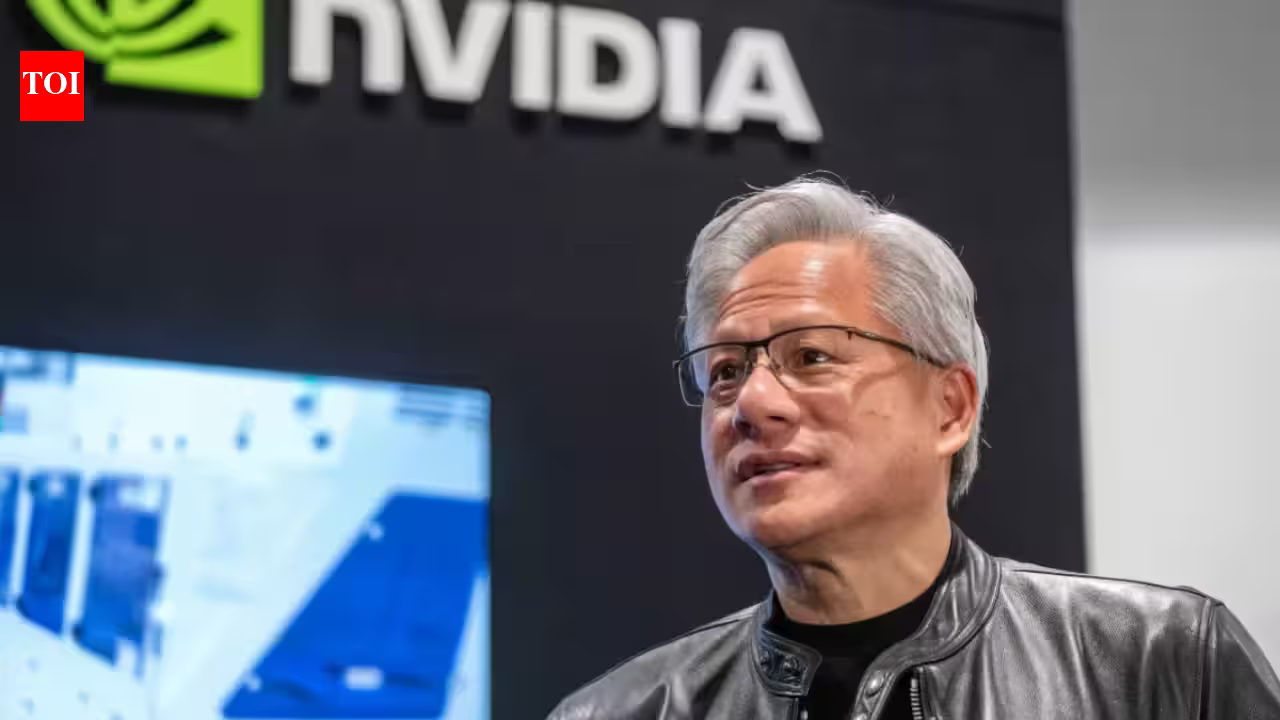
The recent volatility in the global technology sector has reached a new apex with the dramatic reinstatement of Jensen Huang as CEO of Nvidia. Following a brief 11-day hiatus necessitated by personal controversies, Huang’s return sparked a historic 31.48% single-day surge in Nvidia’s share price. Adding nearly $1 trillion to its market capitalization in a single trading session, this event serves as a profound case study in how modern capital markets perceive the intrinsic link between visionary leadership and corporate valuation, especially within the high-stakes realm of artificial intelligence.
For institutional investors and retail stakeholders alike, the market’s reaction highlights a distinct reality: in the era of generative AI, human capital is often the primary driver of enterprise value. Nvidia is not merely a hardware company; it is the fundamental infrastructure provider for the current AI revolution. When the market perceived a vacuum in leadership, the lack of strategic certainty created a sell-off. Conversely, the reinstatement, facilitated by an unconventional intervention from the highest levels of the US political establishment, signaled to the market that Nvidia’s strategic trajectory—and its dominance in the global semiconductor landscape—remains tethered to its co-founder.
The Intersection of Geopolitics and Corporate Governance
The involvement of US President Donald Trump in the reinstatement process marks a rare convergence of corporate governance and national policy. The direct intervention to restore a CEO to a private firm is unprecedented in recent history and underscores the strategic importance of Nvidia to US national interests. As the world’s primary supplier of high-end graphics processing units (GPUs), Nvidia acts as the backbone for both commercial AI development and military-grade computational capacity.
This situation reflects a broader shift toward “techno-nationalism.” In this environment, the stability of key technology firms is viewed as a matter of state security. For global investors, the message is clear: Nvidia is considered “too big to fail” not merely in terms of market cap, but as a sovereign asset. However, this level of political integration introduces new risks. Investors must now calculate the potential impact of future regulatory scrutiny or trade restrictions that may arise from such a high degree of state involvement. The case of the alleged security breach involving a foreign intelligence entity highlights the extreme pressure under which global tech leadership operates, where personal conduct can quickly escalate into a national security dilemma.
Market Sentiment and the AI Infrastructure Rally
The surge in Nvidia’s shares acted as a catalyst for a broader market recovery, effectively arresting a severe decline that had seen major indices like the Nasdaq and S&P 500 post consecutive losses. The market had been suffering from “AI fatigue,” fueled by concerns over stretched valuations and the massive capital expenditure requirements of building out data centers. The rapid bounce-back proves that while skepticism exists, the underlying conviction in the AI boom remains resilient.
The spillover effect was immediate, with infrastructure-adjacent companies like CoreWeave seeing significant gains. This confirms that market participants are focusing on the “picks and shovels” of the AI gold rush. When Nvidia stabilizes, the entire ecosystem of cloud infrastructure, liquid cooling technologies, and data center providers finds its footing. For observers, this indicates that the technology market is currently driven by a fragile, highly sentiment-sensitive momentum. While fundamentals such as revenue growth and GPU demand remain strong, the technical support for these stocks is heavily reliant on the narrative of constant progress and unshakeable leadership.
Implications for the Indian Technology Ecosystem
The developments at Nvidia carry significant weight for the Indian information technology and semiconductor sectors. India has rapidly positioned itself as a critical node in the global semiconductor supply chain, with a growing focus on design, assembly, and testing. Indian firms that integrate Nvidia’s architecture into their enterprise AI solutions have been keenly watching this leadership saga, as their own long-term roadmaps depend on the availability and technological evolution of Nvidia hardware.
Furthermore, the Indian startup ecosystem, which has seen a surge in funding for AI-native software companies, relies heavily on the stability of the global cloud infrastructure provided by entities powered by Nvidia chips. Any disruption in Nvidia’s supply chain or strategic focus would have immediate downstream effects on the cost and availability of compute power for Indian software developers. The lesson for Indian corporate leaders is clear: in an interconnected global market, the personal conduct of C-suite executives is no longer a private matter but a material business risk. Indian companies, particularly those scaling to compete on the global stage, must strengthen their internal governance frameworks to ensure that leadership transitions do not become catalysts for volatility that can wipe out billions in market value.
Challenges Ahead: Beyond the Share Price
While the market cheered Huang’s return, the underlying issues that led to his resignation have not vanished. The transition from a crisis-mode resignation to a state-backed reinstatement leaves significant unanswered questions regarding the board’s independence and the company’s internal controls. Investors should look beyond the immediate share price appreciation to evaluate the long-term integrity of the company’s governance.
Corporate history is replete with instances where short-term stock price recovery masked deeper structural issues. Nvidia must now demonstrate that it can navigate the dual pressures of intense regulatory scrutiny regarding its international market reach and the maintenance of its technological lead in an increasingly crowded field. The AI market is moving from a phase of speculative investment into a phase of operational efficiency, where companies must demonstrate tangible returns on their massive investments in compute.
Ultimately, the events of the past two weeks serve as a stark reminder of the volatility inherent in the tech-heavy economy. As Nvidia continues to anchor the AI-driven market, its journey will remain the primary barometer for global risk appetite. For analysts and investors, the key takeaway is that in the era of high-stakes AI dominance, the boundary between the individual, the corporation, and the state has effectively dissolved, creating a new, more complex environment for market analysis and risk management.
Disclaimer: This content is auto-generated for informational purposes only.
Source: Read Original News