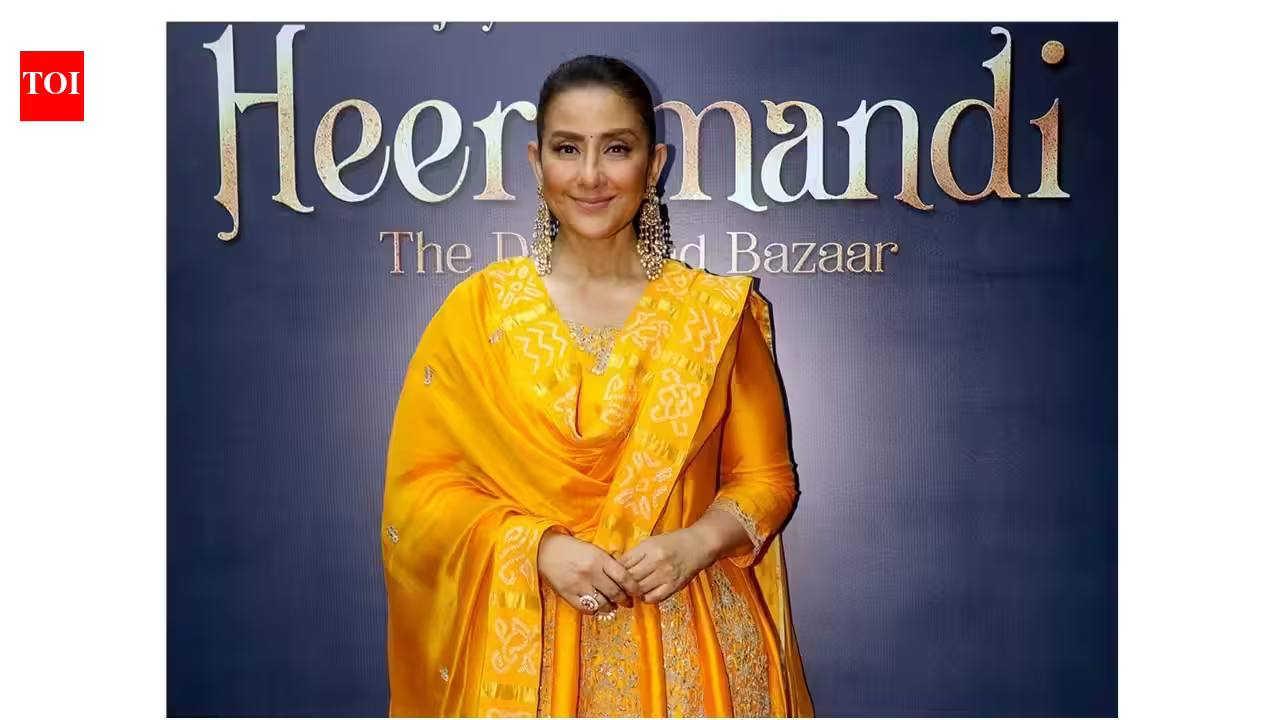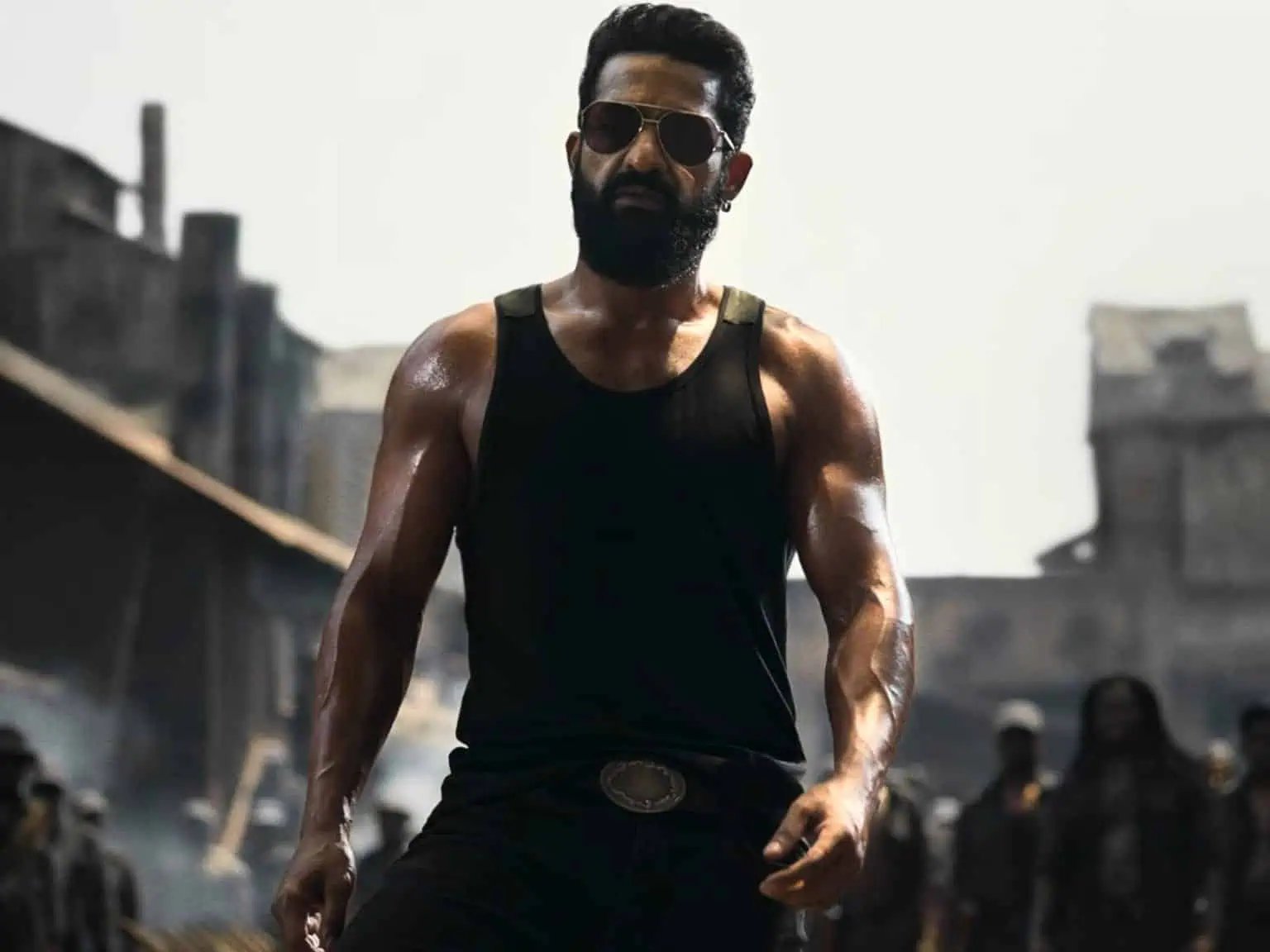







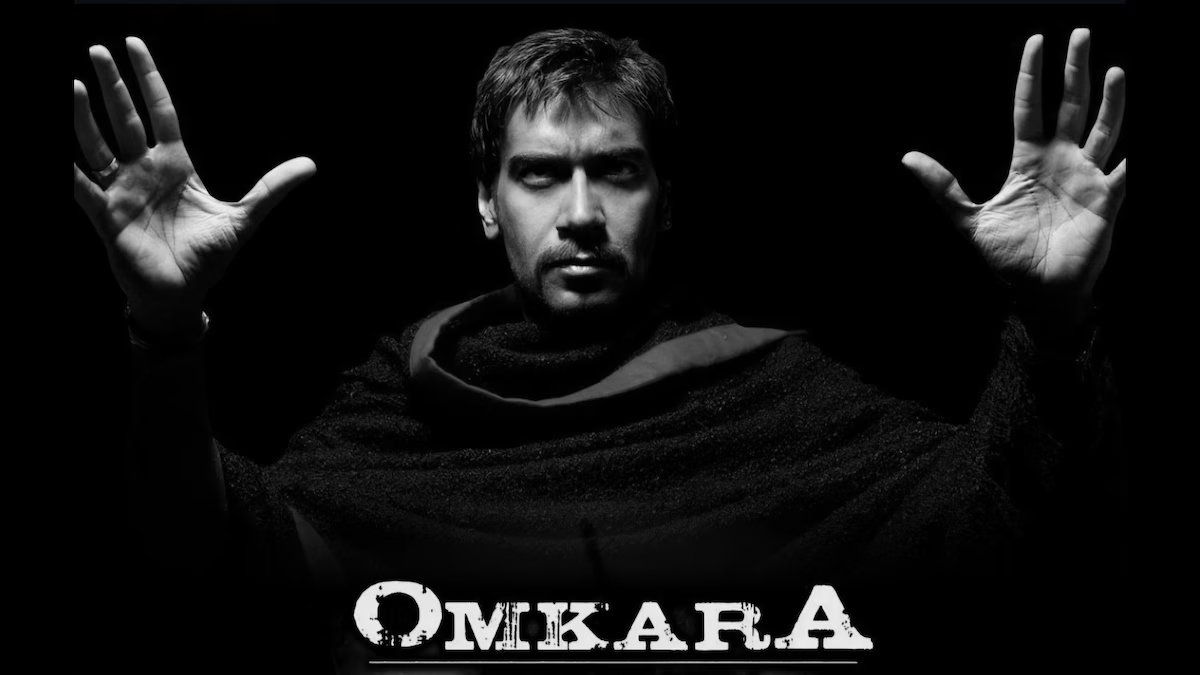
I’m talking about a specific film that released 20 years ago, altered Hindi cinema’s vocabulary, bent the rules, cemented careers, and showed what could be achieved. I’m talking about Omkara.
When Vishal Bhardwaj’s retelling of Othello released in 2006, it did more than prove that Shakespeare could survive translation, especially in heartland Hindi. It demonstrated that Shakespeare did not need translation at all. He merely needed to be relocated in a way that felt rooted, organic, authentic.
Twenty years on, Omkara remains perhaps the finest example of cultural adaptation in modern Hindi cinema: a film that absorbs Shakespeare so completely that the original text disappears into the rugged, parched landscape of North India overrun with insecure, scheming rural strongmen, caste arithmetic, criminal patronage and electoral alliances.
Today, Omkara is deeply etched in the contemporary cultural zeitgeist. A classic, its songs continue to dominate both personal and party playlists, and its dialogues have jumped off the film into everyday conversations. Widely considered a gold standard for literary adaptations for screen, Omkara has forever changed how filmmakers approach source material, redefining what mainstream stars could risk, and helped establish one of the most singular directorial voices in Indian cinema.
Two decades later, it also feels a strange, impossible anomaly—not because audiences have changed, but because the industrial ecosystem that once allowed such films to exist has.
Shakespeare Made Desi
Before Omkara, Bhardwaj had already, rather audaciously, reimagined Macbeth as Maqbool. Set in the snare of the Mumbai underworld, the 2003 crime drama starring Irrfan Khan, Tabu and Pankaj Kapur announced the arrival of a filmmaker with an unusually literary imagination.
Critically acclaimed but commercially modest, Maqbool earned Bhardwaj prestige but not stardom. Omkara was therefore a gamble. But instead of softening Shakespeare to cast a wider net, Bhardwaj doubled down, making this new world rougher, its language denser, politics more pointed and rooted.
What makes Omkara extraordinary is not how faithfully it follows Othello but its clear understanding of all that makes Othello transcend time and space so effortlessly.
Bhardwaj deftly transplants emotions as universal to the human condition as jealousy, masculinity, honour and manipulation into a political ecosystem where violence is transactional and reputation is currency. Omkara Shukla is no exotic Shakespearean hero; he is a crude, desi bahubali whose authority depends as much on public perception as brute brawn.
The genius of Bhardwaj’s screenplay lies in identifying caste as the Indian equivalent of inherited social anxiety. Omkara’s mixed-caste identity quietly informs his insecurity. Likewise, Langda Tyagi’s resentment emerges from the public shattering of his political ambition rather than ambiguous theatrical villainy. Few literary adaptations feel as organically native and alive to their milieu as Omkara does because Bhardwaj centres every tragedy in recognisable social structures rather than literary opulence.
Fascinating, Layered Women
Despite it being a story of male ambition, insecurity weaponised into manipulation, and wounded authority, Omkara has some of the most potent women characters ever written.
In a recent interview, Kareena Kapoor Khan, who played Dolly Mishra in the film, said, “The best part about Omkara was that everyone thought their role was the best.”
All three women—Dolly, Indu Tyagi, and Billo—occupy very different social positions, yet together they reveal the emotional cost and the collateral damage of male honour.
In a trailblazing career spanning over 25 years, her iteration of Desdemona remains one of Kareena Kapoor Khan’s most restrained and mature performances. She is remarkable in how she resists the temptation to romanticise innocence or glamourise emotion. Dolly’s tragedy lies in her unwavering belief that love can exist outside the political logic governing the men around her. In retrospect, Omkara’s Dolly sits comfortably alongside Chameli’s eponymous protagonist, Jab We Met’s Geet and Udta Punjab’s Dr. Preeti Sahani among Kareena Kapoor Khan’s finest portrayals.
In Konkona Sen Sharma’s feisty and defiant Indu, the film finds its moral centre. She possesses emotional intelligence that men mistake for domesticity. Her devastating confrontation with Langda Tyagi is one of Hindi cinema’s finest epilogues to Shakespeare, replacing theatrical justice with intimate reckoning.
Then there is Billo, whose celebrated dancing tracks—Bidi and Namak—often overshadow the character’s function. It was a neat casting choice. Through Bipasha Basu, Billo embodies female survival within a masculine ecosystem where entertainment, sexuality and political patronage intersect. She understands and plays by the rules of power because she has no illusion of escaping them.
The Throbbing Heart of a Landmark Trilogy
If Maqbool announced Bhardwaj’s Shakespearean ambitions and Haider (2014) eventually became his most politically expansive work, Omkara remains the axis around which the trilogy turns.
Maqbool was intimate. Meanwhile, Haider beautifully encapsulated the language of a landscape as serene and fractured as Kashmir. Omkara deftly balanced both impulses.
It contains the emotional accessibility of mainstream Hindi cinema while retaining the philosophical complexity of Shakespeare. It is arguably the trilogy’s most complete film because every element—writing, performance, music, dialect, production design and editing—compounds toward the same tragic inevitability.
Praising Bhardwaj’s Shakespeare films in a recent interview, actor Ratna Pathak Shah said, “Bhardwaj has used Shakespeare freely, riffing on the original plays, bringing in elements from wherever he wanted to. That’s his ability as a musician to go off in all kinds of directions but still stay true to the sum. He wasn’t weighed down by Shakespeare as it so often happens.”
From Omkara to Mirzapur: The Movie
When I watched Chloe Zhao’s heartbreaking Hamnet earlier this year after Jessie Buckley won the Oscar for her breathtaking performance as Shakespeare’s wife Agnes—a woman mourning the loss of her son—I couldn’t help but think of Bhardwaj and his nimble and, therefore, glorious interplay with Shakespeare over the years.
As films such as Hamnet continue to be made and explore Shakespeare in ways one can only gawk at and marvel at, closer home, the industrial conditions that enabled Omkara have largely disappeared.
Mid-budget complex adult dramas with major stars have steadily yielded ground to franchise spectacles, streaming series and intellectual property designed for scale and spectacle rather than specificity and poignancy. Studios today are more likely to commission a recognisable brand than an uncompromising literary adaptation steeped in regional politics, cast conflict and gender violence.
The forthcoming Mirzapur: The Movie best illustrates this shift. The Mirzapur universe owes an undeniable creative debt to works like Omkara—the fusion of politics, crime, rural power structures and alpha-masculinity. Yet it operates within franchise logic. Characters are expected to return. Worlds must expand. Myth-making becomes intellectual property.
Omkara, by contrast, is delightfully finite. It moves toward inevitable destruction rather than future instalments. Its emotional payoff depends precisely on the fact that no sequel can rescue anyone from tragedy.
That distinction reveals something larger, perhaps philosophical, about the current state of contemporary Hindi cinema. In our maddening race towards building universes and churning out sequels, we are depriving ourselves the satisfaction of embracing endings.
Omkara in the Age of Alpha
Twenty years on, Omkara has lost none of its edge because the India it portrays remains painfully recognisable. Political patronage, masculine insecurity, caste anxieties and honour continue to shape public life, even if they now circulate through social media alongside electoral rallies.
What has changed is the industry’s appetite for this kind of filmmaking.
Sure, Hindi cinema still produces ambitious films, but fewer possess Omkara’s confidence in audience intelligence. Bhardwaj trusted viewers to navigate dense dialects, moral ambiguity and Shakespearean tragedy without explanatory hand-holding.
Perhaps Omkara’s greatest achievement is not that it made Shakespeare feel Indian. It is that it made contemporary India feel Shakespearean—messy, violent, politically volatile and tragically human. Few films have captured the country’s moral weather with such precision. Fewer continue to illuminate it twenty years later.