







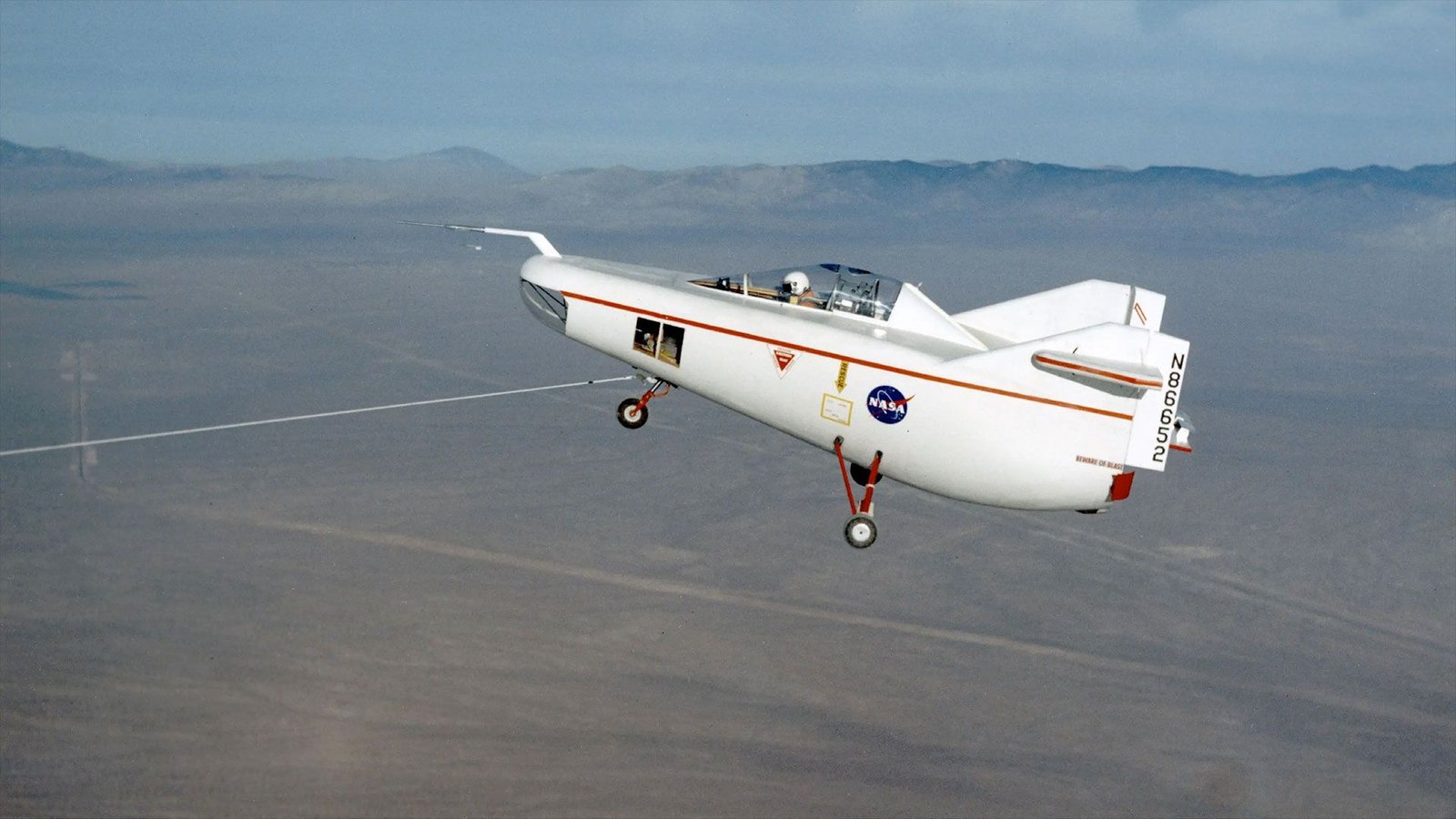
On August 16, 1963, a pivotal moment in aeronautical engineering unfolded as NASA’s M2-F1 aircraft prototype embarked on its inaugural glide flight. This peculiar wingless aircraft, affectionately likened to a “flying bathtub” due to its distinctive shape, represented a groundbreaking endeavor by NASA to explore a novel concept: the lifting body. Unlike conventional spacecraft that underwent violent ballistic re-entry, these unpowered gliders offered a gentler, more controlled method for returning piloted spacecraft safely to Earth, akin to an airplane landing.
For this initial test, the M2-F1 was meticulously towed to an altitude of 5,200 feet by a C-47 Skytrain transport aircraft. Upon release, test pilot Milt Thompson deftly navigated the glider through a two-minute descent, executing a remarkably smooth landing in California. This successful flight unequivocally demonstrated that a wingless lifting-body aircraft could be effectively controlled and brought down safely, marking a significant stride in aeronautical research.
The timing of this achievement was particularly crucial, occurring amidst the intense Space Race between the United States and the Soviet Union. As NASA relentlessly pursued advancements in space exploration, the development of alternative re-entry methods for astronauts returning from space became a key consideration. While NASA ultimately favored the familiar capsule and heat shield design for its Mercury, Gemini, and Apollo programs, the M2-F1’s triumphs, along with subsequent test flights, laid the foundational groundwork for continuous research into lifting-body vehicles.
This pioneering effort catalyzed the creation of an entire lineage of lifting-body test vehicles. Successors like the M2-F2, M2-F3, HL-10, and the U.S. Air Force’s X-24A and X-24B were engineered to conduct lifting-body flights at significantly higher speeds and altitudes, pushing the boundaries of aerodynamic understanding. The invaluable data gleaned from these comprehensive programs directly influenced the design and development of the iconic space shuttle. Ultimately, this research transformed the theoretical concept of landing a spacecraft back on Earth like an airplane into a tangible and routine practice, forever altering the landscape of human spaceflight.