







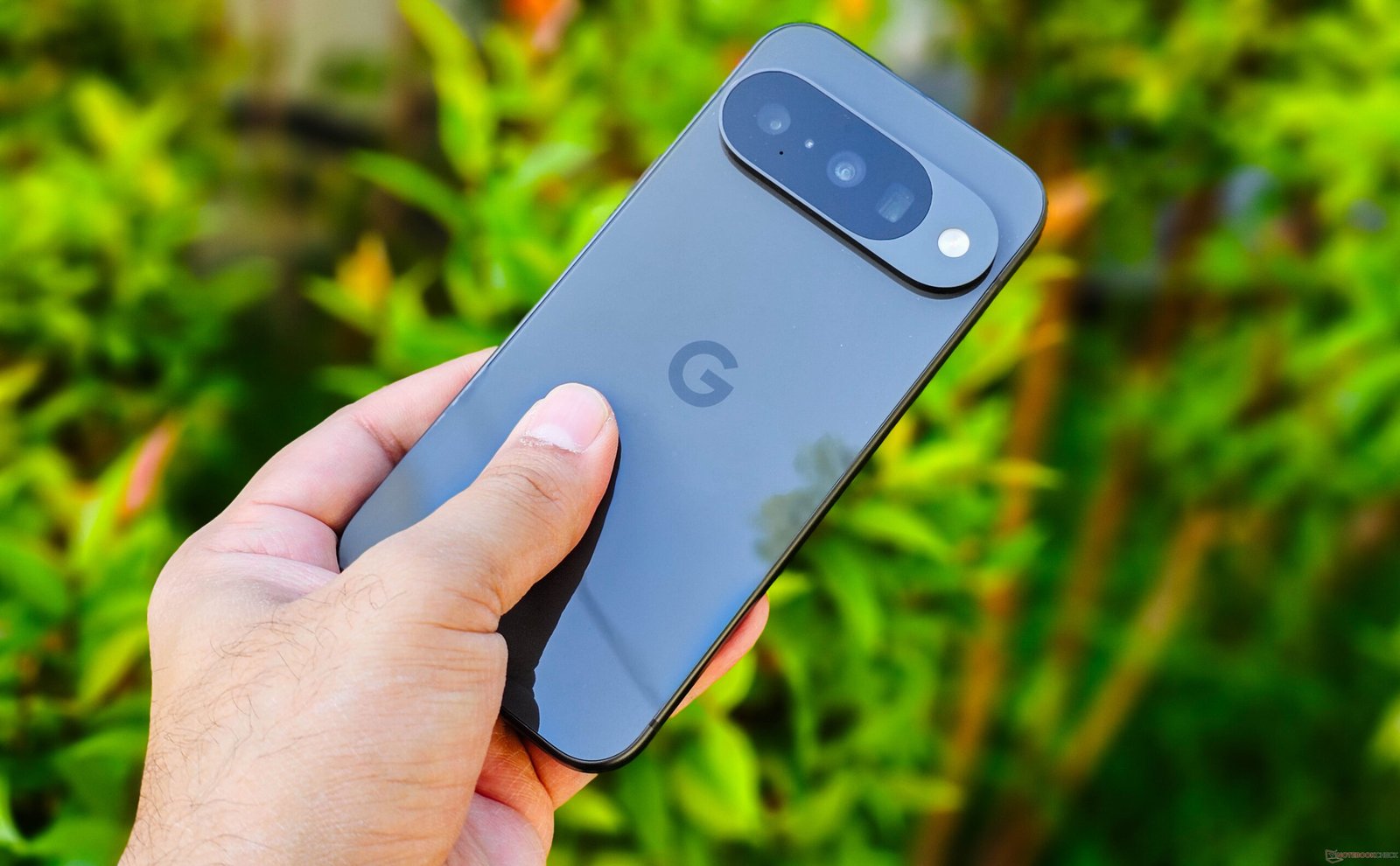
Google’s Tensor G5 and G6 Struggle to Close Efficiency Gap with Industry Leaders
A recent performance evaluation by renowned Chinese hardware analyst Geekerwan has cast a spotlight on Google’s upcoming custom silicon efforts. The comprehensive power-efficiency test, which examines both the yet-to-be-released Tensor G6 and its predecessor, the Tensor G5, reveals that Google’s latest chips continue to lag behind the industry benchmarks set by Qualcomm and Apple.
Performance vs. Power: The Data
The testing, which plotted performance against power draw across both CPU (Geekbench 6) and GPU (3DMark Steel Nomad Light) workloads, paints a challenging picture for Google’s hardware strategy. Both the G5 and G6 are fabricated using TSMC’s advanced 3nm processes—N3E and N3P, respectively—yet their efficiency metrics fail to eclipse those of their predecessors’ competitors.
In CPU testing, the Tensor G6 tracked closely with the older Snapdragon 8 Gen 2 and Huawei’s Kirin 9030 Pro. The chip topped out at approximately 8,000 points at 11W of power draw. This performance is notably overshadowed by the Snapdragon 8 Elite, which hit 10,100 points at 15W, and Apple’s A17 and A19 Pro processors, both of which maintained significantly higher scores while operating at similar or lower power thresholds.
The disparity widened in GPU testing. The Tensor G6 reached a peak of 1,200 points at roughly 6W, aligning once again with the Snapdragon 8 Gen 2 and Kirin 9030 Pro. By comparison, the Snapdragon 8 Elite surged ahead, yielding 2,550 points at 9.5W, with Apple’s silicon remaining firmly in the lead.
A Question of Process and Optimization
Perhaps most damning is the comparison to the Kirin 9030 Pro. While the Tensor chips utilize cutting-edge 3nm lithography, the Kirin chip is reportedly manufactured on SMIC’s N+3 process, which is roughly equivalent to TSMC’s much older N6 node. The fact that the Kirin chip maintains near-parity with the Tensor G5 suggests that Google has yet to derive the expected efficiency dividends from the move to more advanced nodes.
Geekerwan summarized the findings by placing the Tensor G6’s CPU efficiency roughly on par with the Snapdragon 8 Gen 3, while its GPU efficiency is closer to that of the Snapdragon 8 Gen 2. This effectively positions Google’s upcoming flagship silicon roughly two to three years behind the current performance-per-watt leaders in the mobile industry.
The Bottom Line
For Google, the Tensor project has always prioritized unique AI integration and specialized machine learning performance over raw benchmark dominance. However, as mobile users increasingly demand better battery longevity alongside peak processing power, these efficiency results present a significant hurdle. Unless Google can bridge this performance-per-watt divide, the Tensor series may continue to be viewed as a specialized tool rather than a competitive equal to the top-tier hardware found in the Snapdragon 8 Elite or the latest iPhone lineups.
As Google looks toward the future of the Pixel ecosystem, these results suggest that while their custom silicon is functional, it remains in a developmental “catch-up” phase compared to the rapidly evolving standards set by their primary rivals.