







The “Skinner Box” of Creativity: Navigating the Pocket App’s Chaotic Ecosystem
While the process of crafting games within the Pocket app feels nothing short of magical, the platform’s method for sharing those creations remains surprisingly restrictive. Pocket’s infrastructure for distribution creates a stark contrast to its intuitive design tools, tethering the life cycle of every user-created “gizmo” to a rigid social-sharing format.
The Friction of Sharing
Currently, there is no direct way to export a standalone game or host a deep-linked experience. Users are limited to sharing their projects as a “Post,” which requires pairing the interactive gizmo with a brief caption and a static cover image.
The silver lining is the app’s browser-based preview feature. By sharing a link to their post, creators can allow others to play an HTML5 version of their project directly in a web browser, bypassing the need for a full app installation. This functionality extends to desktop users, provided the game’s control scheme doesn’t lean too heavily on mobile-specific inputs like tilt-sensing or complex multitouch gestures.
The Algorithmic Roulette
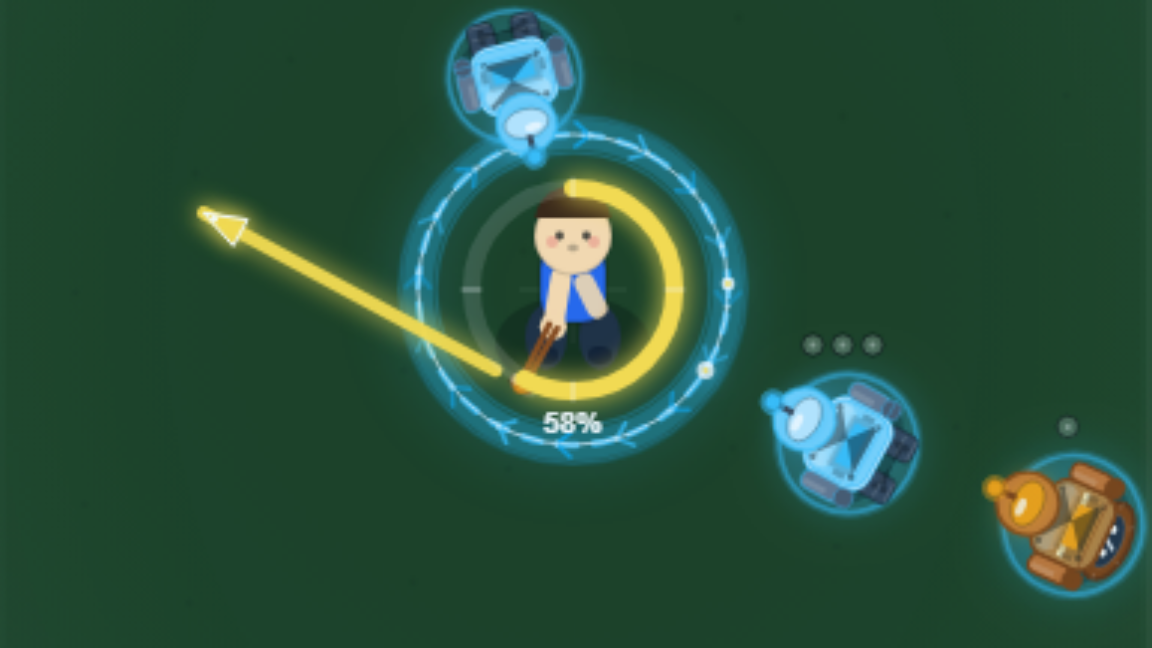
Discovery on the platform is driven by an algorithmic, endless-scroll feed that functions as a classic Skinner box, a psychological feedback loop common in modern social media. The experience of scrolling through the feed is erratic, ranging from creative, well-executed indie concepts to low-effort “Flappy Bird” clones, nonsensical inside jokes, and minimalist novelty projects, such as a low-poly seal that flops when tapped.
For users, the feed is a test of patience. While one can follow specific creators or curators to filter out the noise, the nature of the platform inherently favors “flashy,” quick-hit content over substantive or long-form gameplay.
Quantity vs. Quality
The app’s current design philosophy mirrors that of TikTok: it rewards creators who can grab a user’s attention in under a few seconds. Consequently, most “gizmos” are not designed for sessions lasting longer than a minute or two.
Beyond the design philosophy, the platform is facing a practical hurdle: content scarcity. During even brief periods of idle scrolling, it is common to see the same gizmos reappear in the feed. This recurrence suggests that for all its creative potential, Pocket is struggling to generate a sufficient volume of high-quality content to sustain its endless-scroll model, leaving users to navigate a landscape that currently struggles to balance inconsistent quality with a thin library of experiences.