









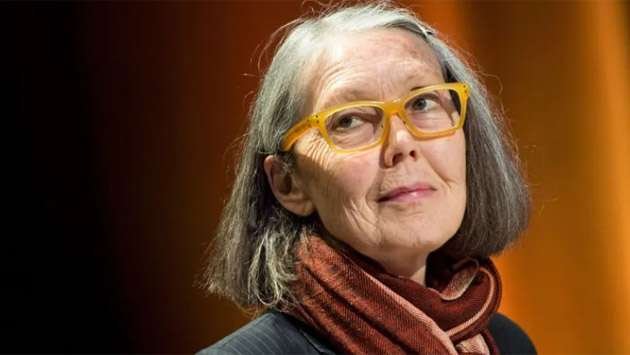
STOCKHOLM — The Swedish Academy announced on Thursday that the 2026 Nobel Prize in Literature has been awarded to the acclaimed Canadian poet, essayist, and translator Anne Carson. The prestigious honor was bestowed upon Carson “for her bold and inventive oeuvre that, in playful dialogue with the classical tradition, has created new forms for contemporary literature.”
The announcement, delivered from the historic Stock Exchange Building in Stockholm, marks a significant recognition of one of the most intellectually rigorous and genre-defying voices in modern letters. For decades, Carson has occupied a singular space in the literary landscape, frequently blurring the lines between poetry, prose, memoir, and classical scholarship.
“Anne Carson is a visionary who has fundamentally reconfigured how we engage with antiquity,” said Anders Olsson, chair of the Nobel Committee, during the press briefing. “She does not merely translate the past; she resurrects it, infusing ancient Greek structures with a startling, deeply human intimacy that speaks directly to the fractures of the 21st century.”
Born in Toronto in 1950, Carson began her career as a professor of classics, a background that has provided the scaffolding for her most celebrated works. Her breakthrough 1995 volume, Autobiography of Red, famously reimagined the myth of Geryon as a contemporary queer romance, an act of subversion that garnered international acclaim and established her signature style: a restless fusion of scholarly precision and emotional raw nerve.
Her bibliography, which includes Plainwater, Men in the Off Hours, and Nox—a poignant, accordion-style elegy for her brother—has been lauded for its refusal to adhere to traditional narrative constraints. In Nox, Carson pushed the limits of the physical book, presenting a collage of photographs, letters, and dictionary definitions that forced readers to grapple with the tactile nature of grief and memory.
Fellow writers and critics have long hailed Carson as a “poet’s poet,” noting her unique ability to make the dense, often intimidating world of classical tragedy feel immediate and necessary. Her influence on contemporary writing is immeasurable, as she has consistently paved the way for experimental forms that prioritize fragmented perception over linear storytelling.
The Nobel Prize, which includes a cash award of 11 million Swedish kronor (approximately $1 million USD), is considered the pinnacle of literary achievement. Carson becomes the second Canadian writer to receive the honor, following Alice Munro’s win in 2013.
As news of the award spread globally, literary organizations and scholars reacted with widespread celebration. “This is a win for the experimental, for the difficult, and for the profoundly imaginative,” noted one commentator. “Carson reminds us that literature is not a stagnant archive, but a living, breathing dialogue that began in the ancient world and continues to reinvent itself in her hands.”
Carson is expected to deliver her Nobel lecture in Stockholm this December.
Disclaimer: This content is auto-generated for informational purposes only.
Source: Read Original News