








The digital corridors of the internet have been vibrating with a singular, high-octane energy for months. As the release date for Nitesh Tiwari’s gargantuan adaptation of the Ramayana approaches—set for a worldwide debut this Thursday, November 5—the discourse has been nothing short of a pressure cooker. From the moment the first teaser dropped, the project has been caught in a relentless crossfire of fervent anticipation and stinging online mockery.
Now, with the finish line in sight, the men at the helm of this epic—star Ranbir Kapoor and producer Namit Malhotra—are stepping out from behind the curtain to address the noise. They aren’t just defending their vision; they are reframing the conversation entirely, choosing to look at the storm of memes and skepticism through the lens of philosophy rather than frustration.
The Philosophy of ‘Log Kahenge’
During a recent appearance at an IIMUN event, Ranbir Kapoor, who bears the heavy mantle of playing Lord Rama, addressed the online turbulence with a sense of calm that felt almost practiced. When faced with the realities of modern-day trolling, he leaned into a classic piece of Indian cultural wisdom: the iconic lines, “Kuchh to log kahenge, logon ka kaam hai kehna” (People will say something, it is their job to talk).
For those who have followed Kapoor’s career, the reference carries a weight that extends beyond this film. It harkens back to his 2018 turn in Sanju, where he played Sanjay Dutt. In the film, his character is reminded by his father, Sunil Dutt, that public opinion is as shifting as the wind. Kapoor seems to have internalized this, arguing that in an age of constant digital judgment, the only thing that retains value is one’s original intent. “Don’t be bothered by what people are saying,” he advised his audience. “What matters is the people who matter—the people who care for your work, your intention, and your kindness.”
Director Nitesh Tiwari, a filmmaker known for his grounded, empathetic storytelling, echoed this sentiment with a simpler, more direct question: “If your conscience is clear, and if our effort was hundred per cent, then what else do you need?”
Finding Humor in the Heat
While the director and the lead actor look inward, producer Namit Malhotra has taken a different tactical approach to the trolling: he’s laughing at it. In a recent international interview, the Prime Focus boss admitted that he has learned to stop viewing social media criticism as a personal assault and started viewing it as a byproduct of being in the spotlight.
“Honestly, after a point, I’ve started laughing at it because it’s meant for humor,” Malhotra remarked. He possesses a remarkably thick skin, observing that in the current cycle of viral content, everyone is a target sooner or later. “Today, it’s me. Tomorrow, it’ll be someone else.”
Malhotra views the chaotic cycle of praise and condemnation as an inevitable part of the “exile” that any great project must endure before it finds its place in history. He draws a surprisingly poetic parallel to his own protagonist, Lord Rama: “If I was happy to take the crown, I’ll take exile with the same ease… I’d have to take the good and the bad together.”
A Global Stage, A Divided House
The film recently held its world premiere at the Academy Museum of Motion Pictures in Los Angeles, an event that served as the final litmus test before the public weighs in on Thursday. As the international embargo has lifted, the critical response has been as polarizing as the Twitter threads that preceded it.
The reception is a study in contrasts. IndieWire found much to celebrate, applauding the sheer audacity of the production. Their review painted a picture of a visual banquet—a film filled with “war, musical numbers, Gladiator-style arena contests, talking eagles, and da Vinci-esque flying machines.” They highlighted the massive coup of bringing together Hans Zimmer and A.R. Rahman, describing the score as “musical majesty” that keeps the film’s relentless pacing afloat.
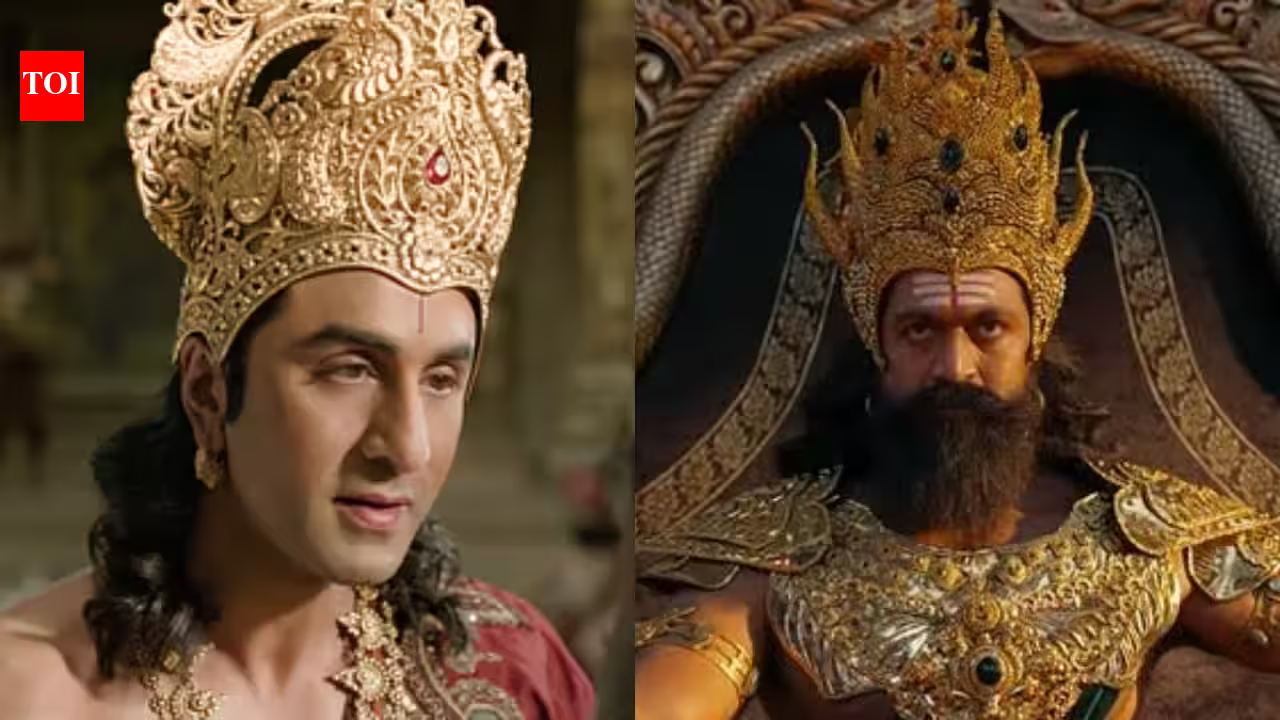
However, the prestige of the production didn’t shield it from deeper critiques. Other outlets, including IGN, felt that the film’s “Marvel-ness”—specifically the inclusion of lighthearted quips and rapid-fire action—sometimes undercut the gravity of the epic source material. The criticism centered on the characters themselves, with some reviewers arguing that beneath the gorgeous costumes and post-production polish, the leads—Kapoor’s Rama and Sai Pallavi’s Sita—occasionally felt more like symbols of virtue than fully realized human beings.
The ‘Ravana’ Factor
If there is a consensus brewing in the early reviews, it is that Yash, playing the formidable Ravana, serves as the film’s beating, complex heart. Screen Rant highlighted this particularly well, noting that while the mythological embodiments of Rama and Sita left some viewers wanting more depth, it was Yash’s interpretation of Ravana that felt grounded in a fascinating, dualistic ideology of revenge and restraint.
For the average viewer, this mix of international acclaim for the spectacle and skepticism regarding the character depth creates a complex pre-release narrative. The film, which also features a powerhouse supporting cast including Ravi Dubey, Lara Dutta, Anupam Kher, and Vivek Oberoi, is clearly swinging for the fences.
Whether the audience will prioritize the technical brilliance that the producers have poured their hearts into, or whether the “Marvel-fication” of the epic will prove a hurdle for purists, remains to be seen. But one thing is certain: as Ramayana hits theaters this Thursday, the team behind it has made their peace with the noise. They have accepted the “exile” of public critique and are ready to let the work stand on its own—or fall by its own sword. In the end, as Kapoor noted, it is only the intention that truly lasts.
Disclaimer: This content is auto-generated for informational purposes only.
Source: Read Original News