







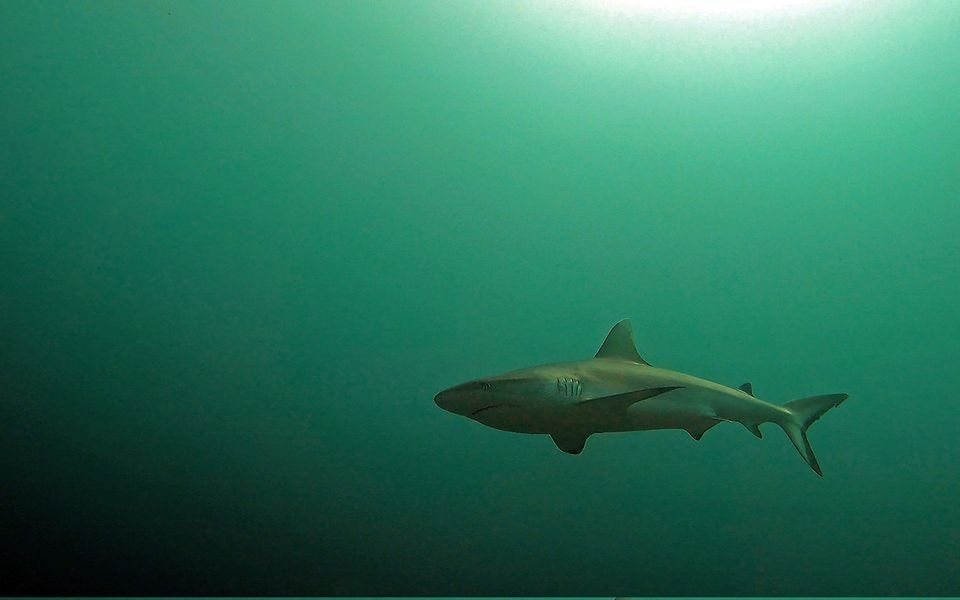
New Study Debunks Myths, Revealing Deep History of Sharks in Greek Waters
A comprehensive new study by the environmental organization iSea has sought to demystify the presence of elasmobranchs—sharks, rays, and chimaeras—in the Mediterranean, asserting that these creatures have been an integral, natural component of Greek marine ecosystems for millions of years.
The research aims to counter widespread misconceptions often sparked by isolated sightings or media-driven panic. According to the report, the relationship between these predators and the Aegean and Ionian seas is ancient. Historical accounts of these species in the region date back as far as Aristotle’s seminal work, History of Animals, while the first formal modern documentation of their presence in Greek waters was recorded in 1858.
Bridging the Knowledge Gap
Despite the passage of over 160 years since that first modern record, scientists note that our understanding of these species’ geographic distribution has remained remarkably thin. While scientific interest has spiked over the last two decades, the data regarding their specific habitats and migratory patterns has often been fragmented.
To address this, iSea conducted an extensive review, analyzing 5,596 distinct records to provide a clearer picture of marine biodiversity in the region. The findings confirm the presence of 62 unique species thriving in Greek waters, comprising 33 types of sharks, 28 species of rays, and one species of chimaera.
A Diverse Marine Population
The data provides a fascinating snapshot of the species most frequently encountered by researchers and the public alike:
- Sharks: The most commonly recorded species include the small-spotted cat shark, the common smooth-hound, and the blue shark.
- Rays: The study identified the rough ray, the longnose skate, and the marbled electric ray as the most frequently occurring species within the survey parameters.
Changing the Narrative
By providing a scientific framework for the presence of these animals, the study serves as a critical tool for conservation. Experts hope that by formalizing the history and distribution of these species, they can move past sensationalism and foster a greater understanding of the vital role these predators play in the Mediterranean food web.
For those interested in the ongoing efforts to protect these marine populations, the full report highlights that Greek sharks are not invasive anomalies, but long-standing residents that warrant both respect and rigorous scientific protection.