






It’s the universal nightmare of every performing artist: stepping up to the microphone in front of a roaring, sold-out crowd, opening your mouth to deliver the opening line of your biggest chart-topper, and finding… absolute, terrifying silence in your brain.
We’ve all seen it happen. A legendary singer pauses mid-verse, looks to the drummer for a cue, or worse, starts mumbling gibberish, hoping the audience’s collective singing will drown out the mental blackout. But as it turns out, this isn’t a sign of fading talent or a lack of professionalism—it’s just the natural, slightly chaotic byproduct of being a creative machine.
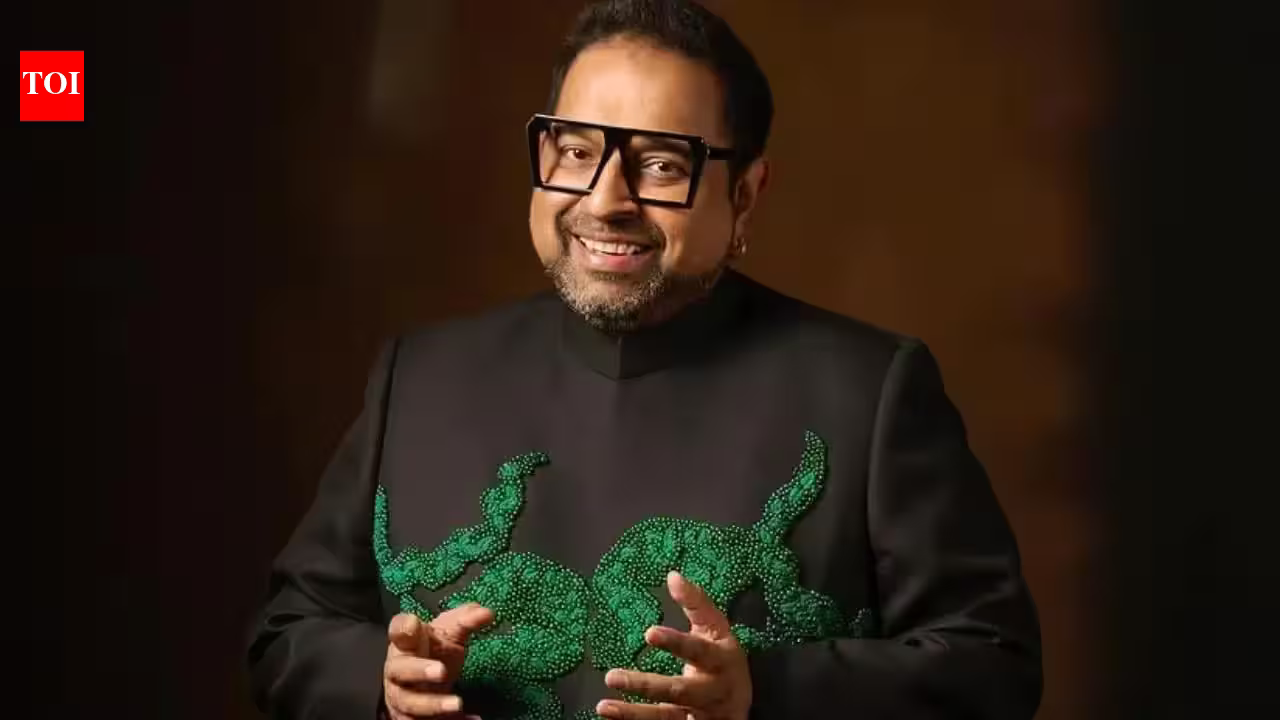
In a candid, laugh-filled conversation marking the 25th anniversary of the cult classic Dil Chahta Hai, musical maestro Shankar Mahadevan finally pulled back the curtain on this industry-wide phenomenon. Sitting down with his long-time collaborators Ehsaan Noorani and Loy Mendonsa, alongside fellow industry stalwarts Shaan and Meiyang Chang, Mahadevan offered a psychological explanation that makes a lot more sense than you might think.
The “Been There, Done That” Syndrome
When Shaan posed the question that has plagued many a veteran performer—why do I keep forgetting the lyrics to my own hits?—Mahadevan didn’t offer a platitude about aging or stress. He offered a diagnosis based on creative momentum.
“I will tell you why,” Mahadevan explained with his signature grounded charm. “Because you have already sung that song. The song has become popular. It has become a super hit. And you have already moved ahead. So that’s no longer a priority. That’s already done.”
It’s an interesting perspective on how the artistic mind functions. For a composer or a singer, a song is a living, breathing project only for the duration of its creation and early promotion. Once the track is “in the wild” and has achieved the status of a super hit, it’s archived in the back of the brain. Mahadevan suggests that the level of hyper-focus required for a fresh recording—where every nuance, melody, and lyrical syllable is under a microscope—simply evaporates once a song is mastered. You aren’t forgetting because you’re losing your edge; you’re forgetting because your brain has already cleared the cache to make room for the next creative mountain to climb.
When Improvisation Goes Wrong: The Javed Akhtar Files
While Mahadevan’s theory provided the “why,” Shaan offered the “how”—specifically, how it feels to get caught in the act. He shared a hilarious anecdote involving the legendary lyricist and poet Javed Akhtar, a man whose wordplay is as precise as it is revered.
Shaan recounted a recording session where he found himself in that familiar lyrical fog. Rather than hitting the pause button, he decided to channel his inner poet, filling in the gaps with his own off-the-cuff words. When he finished, he turned to Akhtar, looking for a stamp of approval.
“I was very coy,” Shaan laughed. “I asked him, ‘Is everything okay?’ He said, ‘You are writing it yourself.'”
Shaan admitted he was initially confused by the comment, thinking it was a compliment on his creative initiative. But Akhtar’s sharp-witted clarification brought him back to reality: “No, no, these are all your songs. You made your own lines.”
It serves as a stark reminder that even for the most seasoned playback singers, there is a boundary—and it’s one you cross at your own peril when dealing with the titans of the industry. It’s a moment of humility that highlights the thin line between a singer’s creative fluidity and the sanctity of a lyricist’s original vision.
25 Years of Redefining Cool: The Dil Chahta Hai Legacy
The conversation wasn’t just about memory slips and studio gaffes; it served as a poignant reflection on the silver jubilee of Dil Chahta Hai. When Farhan Akhtar’s directorial debut hit screens 25 years ago, it didn’t just perform well at the box office—it shifted the tectonic plates of Indian cinema.
Before this film, urban friendship, the nuances of independent thought, and the casual, relatable vibe of modern romance were rarely captured with such effortless authenticity. The film’s Goa road trip, in particular, transcended the medium of cinema to become a genuine cultural touchstone. A generation of young Indians began to view their friendships, their style, and their travel aspirations through the lens of Akash, Sameer, and Sid.
The film’s influence remains palpable today. It wasn’t just the conversational dialogue or the iconic fashion choices; it was the soundtrack. The Shankar-Ehsaan-Loy trio managed to weave a tapestry of rock, pop, and traditional Indian sounds that felt fresh, cosmopolitan, and undeniably youthful. Looking back at the film’s success, it’s easy to see why the artists involved are still talking about it—these are the songs that defined an era of Indian pop culture.
The Creative Cycle: Why We Remember What We Need
Mahadevan’s insight into the “forgetting” phenomenon also speaks to the broader nature of the entertainment industry. Artists are constantly pushed toward the next project, the next sound, and the next trend. In an industry that demands perpetual evolution, clinging too tightly to the past can feel like a creative anchor.
Perhaps forgetting the lyrics to a 25-year-old hit isn’t a failure, but a testament to how far an artist has traveled since they first stepped into the booth to record it. As Mahadevan noted, if you give a singer a brand-new track, “You will be 100% focused. And you will see to it like, ‘I shouldn’t make a mistake.’ Then there will be no mistakes there.”
Ultimately, the takeaway is clear: the brilliance of an artist isn’t defined by their ability to recite their own catalog perfectly on demand. It’s defined by their relentless focus on the next melody, the next lyric, and the next chance to prove that they haven’t stopped moving forward. Even if they occasionally have to improvise a line or two along the way.
Disclaimer: This content is auto-generated for informational purposes only.
Source: Read Original News