






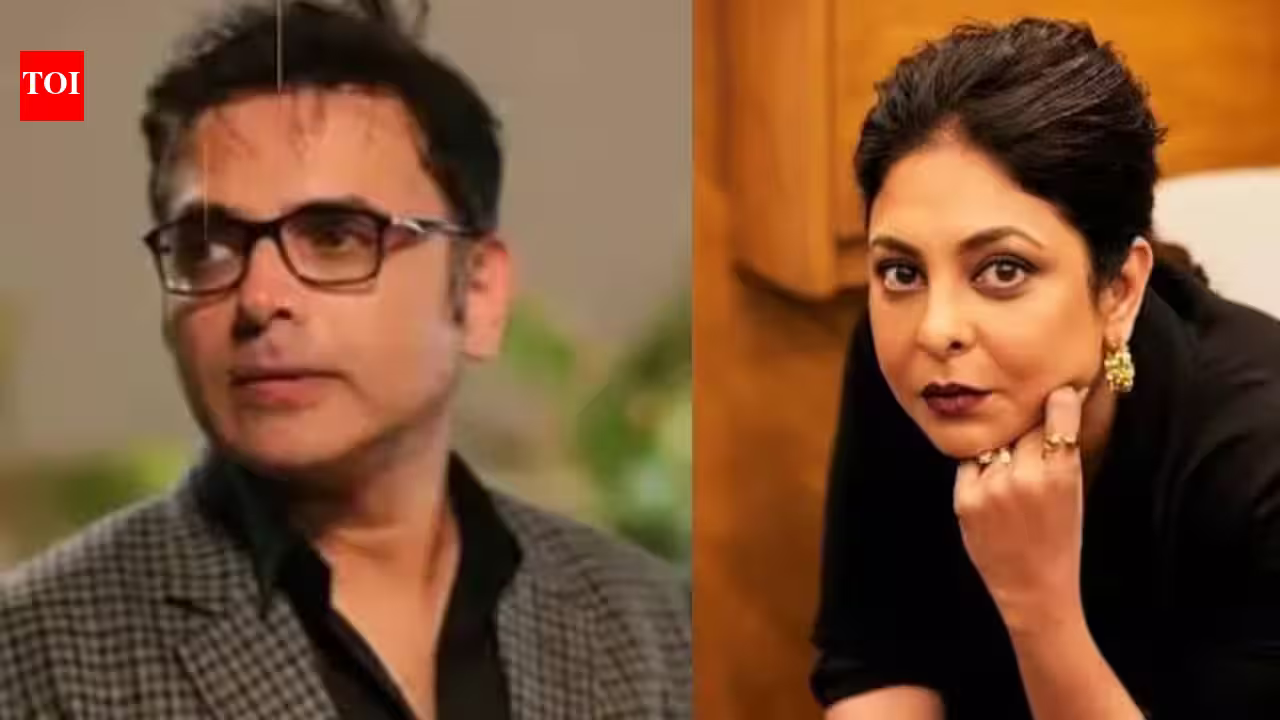
In an industry where personal narratives are often manicured by publicists and filtered through the glossy lens of social media perfection, Shefali Shah is choosing a different path. The powerhouse performer, known for her ability to command a scene with little more than a flicker of an eyelid, has turned her gaze inward. With the release of her memoir-in-essays, The Audacity of Being, Shah isn’t just offering a peek behind the curtain of her decades-long career; she is confronting the universal, often jagged, edges of human experience—including the breakdown of her first marriage to actor Harsh Chhaya.
For those expecting a tell-all filled with tabloid-ready revelations or salacious details, The Audacity of Being will feel like a departure. Shah has approached the subject of her past with a level of maturity that is as rare as it is refreshing. She isn’t interested in settling scores or playing the blame game. Instead, she is interested in the anatomy of a collapse and the quiet, devastating realization that “happily ever after” is a script that doesn’t always find its way to the final cut.
The Anatomy of a Relationship’s End
It is easy to forget that behind the awards, the critical acclaim, and the gravitas of roles like DCP Vartika Chaturvedi in Delhi Crime, there is a woman who has navigated the same messy, heart-wrenching terrain as the rest of us. Shah’s marriage to Harsh Chhaya remains a chapter of her life that has long been whispered about in trade circles, but by addressing it in her own voice, she effectively takes the power back from the gossip mills.
In her recent interactions surrounding the book, Shah emphasized that she isn’t interested in naming names or documenting the forensic specifics of why things went wrong. Instead, she treats the divorce as a broader, existential event. She speaks to the shock of it—the reality that when two people enter a marriage, they rarely, if ever, consider the possibility of a systemic failure. “Nobody is prepared for a divorce,” she noted, capturing that specific, hollow feeling of a foundation shifting beneath one’s feet. For Shah, the book isn’t about Harsh; it’s about the vulnerability of being human and the realization that sometimes, the most honest thing you can do is acknowledge when a partnership has reached its end.
Beyond the ‘Happily Ever After’ Myth
Society has spent centuries selling the idea of marriage as the ultimate destination—the final, blissful stop on the journey of life. Shah challenges this narrative with a surgeon’s precision. She posits that the tragedy isn’t always in the divorce itself, but in the societal pressure to maintain an illusion of success even when the internal reality is crumbling.
By writing about the “failure of a relationship” with such transparent respect, she strips away the stigma that often follows divorce in the public eye. She describes the process of watching a marriage “fall off the brink,” a phrase that resonates with anyone who has ever sat in a silent living room, knowing the inevitable was just around the corner. By framing it this way, she elevates the memoir from a personal diary to a piece of social commentary on how we perceive the longevity of love.
A Mosaic of the Human Experience
While the media is quick to latch onto the “divorce” angle, The Audacity of Being is far more than a post-mortem on a past life. Shah has curated a mosaic of her life that tackles the myriad pressures faced by women in the spotlight. She touches upon the anxieties of aging in an industry that prizes youth, the internal struggle of creative insecurities, and the evolving landscape of body image.
Parenting, too, finds its place in the pages. As a mother to two sons, Aryaman and Maurya, her life with filmmaker-producer Vipul Amrutlal Shah—whom she married in 2000—has been a long-term partnership that offers a contrast to her earlier experiences. By weaving these threads together, Shah presents a version of herself that is multifaceted, resilient, and, above all, unafraid to be seen as incomplete.
The Courage to Be Unapologetic
There is a palpable sense of irony in a professional actor—whose entire life is dedicated to becoming someone else—choosing to write a book that is fundamentally about finding one’s own voice. Shah has been clear: she doesn’t believe her life is inherently “worthy” of a grand, sweeping memoir in the traditional celebrity sense. Yet, she insists on her right to tell her own story. “I don’t promise an ingenious book, but what I do promise is absolute honesty,” she declared during the book’s announcement.
In an era of performative authenticity, that promise carries weight. She acknowledges that once these words are out in the world, they are no longer hers—they belong to the reader, the critic, and the fan. She knows that by putting her private pain into the public domain, she is inviting scrutiny. Yet, her tone suggests she is beyond the point of caring about the “point of view” of the masses. She is speaking from a place of earned confidence.
Refining the Legacy of a Performer
Whether it is the raw intensity she brought to Satya, the cultural phenomenon of Monsoon Wedding, or the sophisticated layers of Jalsa, Shefali Shah has always played characters who hold their own, even when the world around them is falling apart. The Audacity of Being seems to be an extension of that same spirit.
She is not asking for pity, nor is she offering a roadmap for successful relationships. She is simply offering a mirror. By pulling back the veil on her own history, she validates the experiences of her readers—proving that failure, whether in marriage or in any other endeavor, is not the end of the story. It is merely a transition. As she continues to define her career on her own terms, this memoir serves as a reminder that Shefali Shah’s greatest performance to date is the one where she plays herself—unfiltered, audacious, and profoundly human.
Disclaimer: This content is auto-generated for informational purposes only.
Source: Read Original News