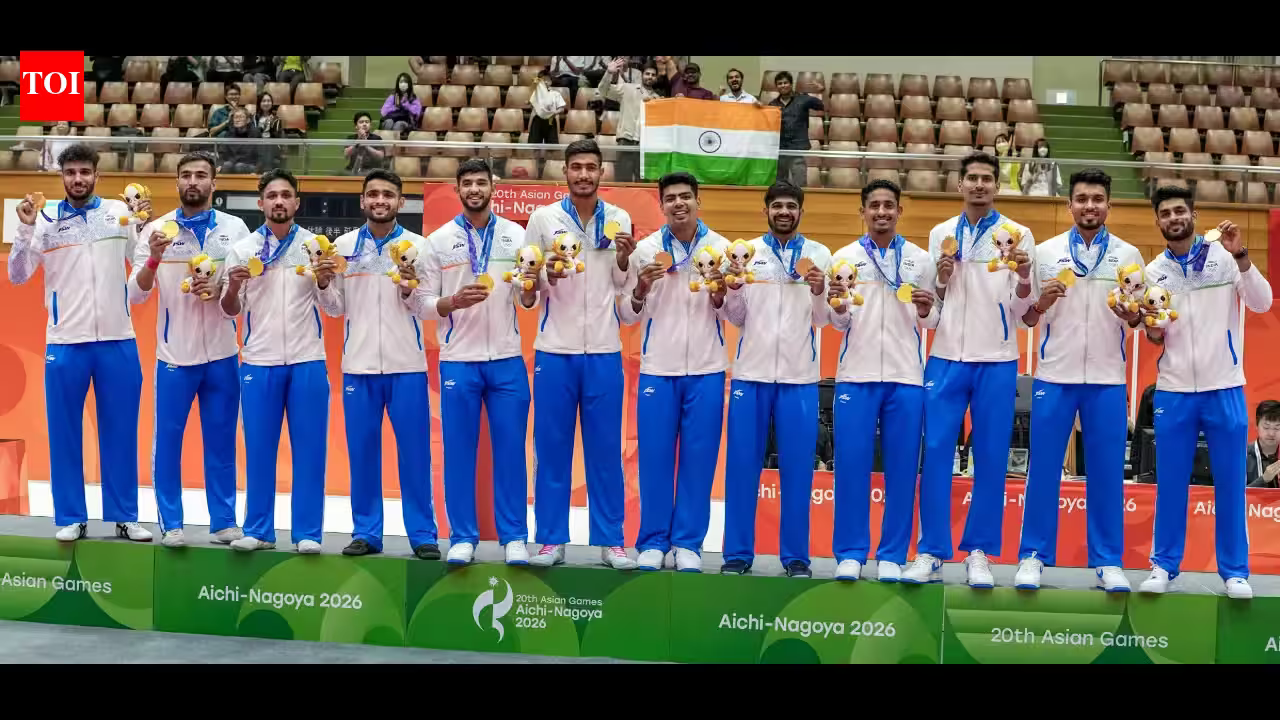






Aichi-Nagoya stands as the backdrop for a sobering reality check for Indian badminton. As the curtain fell on the 2026 Asian Games individual events this Sunday, the Indian contingent was forced to reconcile with an underwhelming campaign that yielded only a single bronze medal—secured in the men’s team event—leaving the nation’s marquee stars empty-handed in the quest for individual glory.
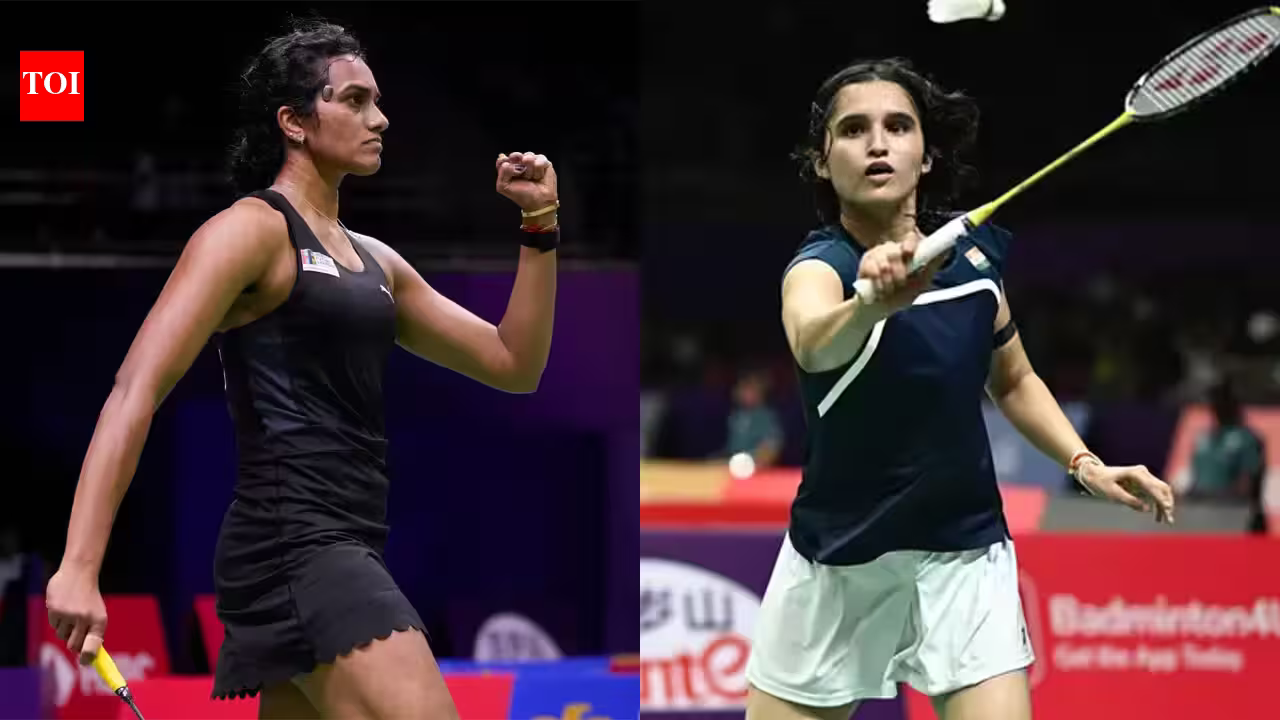
The final day of play saw the hopes of millions dashed as both PV Sindhu and 19-year-old rising star Unnati Hooda were eliminated in the quarterfinals. Their exits, preceded by losses in the doubles categories earlier in the day, cemented a stark decline in performance compared to the heights scaled during the Hangzhou Games just a few years ago.
Sindhu’s heroic effort runs out of steam
The narrative of the day centered on two-time Olympic medalist PV Sindhu. Entering the quarterfinal match against Tokyo Olympic champion Chen Yu Fei, there was a glimmer of hope that the Indian veteran could replicate her form from the Japan Open Super 750 title victory she secured back in July.
Sindhu’s opening game was a masterclass in aggressive court coverage and precision. She dictated the pace, maneuvering the Chinese star with sharp, incisive shot-making to secure a convincing 21-11 lead. For a brief moment, it felt as though an upset was firmly on the cards.
However, the grueling nature of the tournament schedule began to exact its toll. Having played twice already on Saturday, Sindhu was stepping onto the court for the third time in less than 24 hours. The fatigue manifested in the second game, which descended into a grueling war of attrition. The players traded leads, locked in a stalemate at 16-16, until Chen’s relentless consistency pushed her to a 21-18 win.
The momentum swing proved fatal in the decider. Chen, sensing her opponent’s waning energy, opened a 11-7 cushion at the mid-game interval. Sindhu struggled to find her rhythm, managing only three additional points as the Chinese star sprinted to a 21-10 victory, effectively ending the Indian icon’s Asian Games pursuit.
Hooda pushes the world’s elite to the brink
If Sindhu’s match was a testament to experience battling fatigue, the contest between 19-year-old Unnati Hooda and world No. 3 Akane Yamaguchi was a display of sheer, fearless potential. Hooda, tasked with the daunting prospect of taking down a three-time world champion, refused to be intimidated.
After conceding the first game 16-21, where Yamaguchi’s superior tactical range dominated the early exchanges, Hooda flipped the script in the second. The teenager showcased an aggressive attacking display, erasing a 7-7 deadlock and embarking on an eight-point unanswered streak that left the Japanese star reeling. Claiming the second game 21-14, Hooda proved that she belongs on the international stage.
The decider remained a nail-biter, with the score tied at 5-5. While Hooda successfully extended the length of the rallies, forcing Yamaguchi to labor for every point, the Japanese world-class defender held firm. Yamaguchi’s ability to manage the pressure allowed her to edge ahead, closing out the match 21-17. Despite the loss, Hooda’s performance serves as a bright spot for the future of Indian badminton, highlighting a resilience that will be needed for future cycles.
Doubles campaign ends in heartbreak
The singles quarterfinals were only the conclusion of a difficult Sunday. The doubles contingent, which had carried high expectations, also saw their campaigns reach a premature end.
The pairing of Treesa Jolly and Gayatri Gopichand—who famously captured a bronze medal at the World Championships just last month—could not find a way past the world No. 5 duo from Malaysia, Pearly Tan and Thinaah Muralitharan. The Malaysians dominated the tempo, handing the Indians a 21-18, 21-9 defeat.
In a heartbreaking near-miss, mixed doubles pair Dhruv Kapila and Tanisha Crasto nearly pulled off the upset of the tournament against world No. 1 Feng Yan Zhe and Huang Dongping. After dropping the opener, the Indians roared back to force a decider, only to fall narrowly 18-21 in the final game.
A call for re-evaluation
The overarching theme of the Aichi-Nagoya Games for India has been the punishing workload imposed on its top shuttlers. With key athletes like Sindhu and Hooda forced to play multiple high-intensity matches within a single 24-hour window, the physical toll was undeniably a factor in the waning performance levels observed in the final stages of their respective matches.
While the men’s team secured a bronze to avoid a complete shutout, the lack of an individual medal is a significant dip from the Hangzhou Games, where India celebrated a historic men’s team silver, Satwiksairaj Rankireddy and Chirag Shetty’s monumental doubles gold, and HS Prannoy’s singles bronze. As the contingent prepares to head home, the coaching staff and the Badminton Association of India will undoubtedly be forced to conduct a thorough review of the schedule, training cycles, and depth of the squad to ensure that the sport remains competitive on the global stage.
For now, the story of these Games for India is one of “what might have been,” as the team leaves Japan with a single medal to show for a campaign that promised much more.
Disclaimer: This content is auto-generated for informational purposes only.
Source: Read Original News