







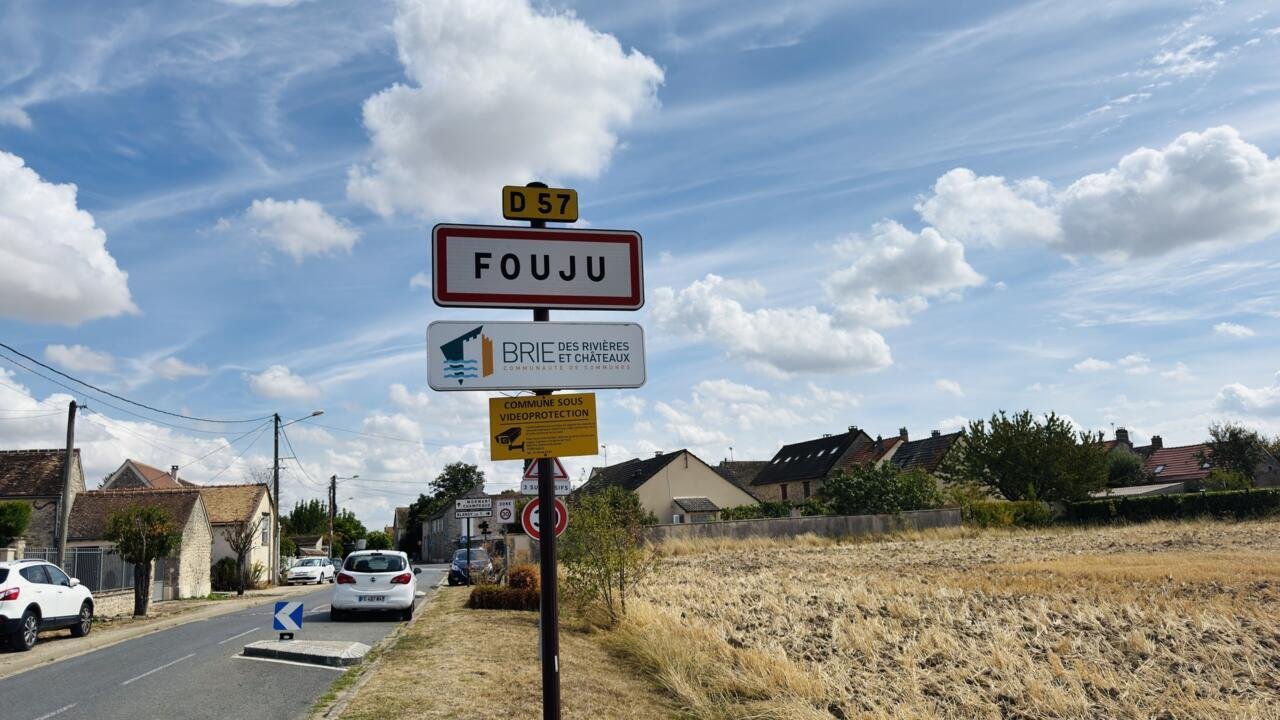
In the quiet village of Fouju, located an hour’s drive from Paris, the skyline is defined by a 14th-century church and the gentle sweep of surrounding grain fields. Soon, however, this rural landscape will be transformed by the construction of Campus IA, a colossal artificial intelligence data centre destined to become the largest of its kind in Europe.
Spanning 70 hectares—the equivalent of 100 football pitches—the project is a cornerstone of France’s ambition to establish itself as a global leader in AI infrastructure. With President Emmanuel Macron unveiling over €100 billion in private investment to foster domestic technological autonomy, the government views these facilities as essential to reducing reliance on US-based tech giants.
Yet, the project has ignited a firestorm of controversy. Critics point out that despite the goal of French sovereignty, the €50 billion funding originates largely from the United Arab Emirates’ sovereign wealth fund. Furthermore, while the facility will be operated by the French firm Mistral AI, the company has already entered into agreements to share computing capacity with Microsoft, casting doubt on the project’s ability to truly curb dependence on foreign tech monopolies.
Beyond the geopolitical implications, environmental concerns are paramount. Experts from the United Nations Environment Programme (UNEP) have long warned that the rapid expansion of AI is driving significant ecological degradation, ranging from the resource-intensive extraction of rare earth minerals to the massive carbon footprints left by data centres.
At the Fouju site, local residents and activists from the NGO France Nature Environnement (FNE) have raised alarms regarding the facility’s immense energy and chemical requirements. By 2038, the campus is expected to consume up to 1.4 gigawatts of electricity—roughly the entire output of a typical nuclear reactor. To ensure operational continuity, the site will house 700 electricity generators powered by diesel or biodiesel, with 30,000 tonnes of fuel stored on-site.
“This should be considered a high-risk facility,” says Jean-François Dupont, a local activist. A primary concern for residents is the use of cooling systems that rely on potentially toxic PFAS compounds—so-called “forever chemicals.” While the developers maintain that the risk of leakage is “very low,” activists argue that the concentration of these substances in the atmosphere poses a long-term threat to the local ecosystem.
Economic promises made by project supporters—who cite the potential for 1,000 new jobs and significant tax revenue—are also being met with skepticism. Critics argue that data centres are largely automated and provide few long-term, high-skilled positions. For residents like Servane Silva, the arrival of such infrastructure feels like a continuation of a trend that has turned their region into an industrial dumping ground, following decades of intensive farming and the proliferation of logistics warehouses.
The debate in France mirrors an international trend where the social and environmental costs of AI are increasingly being weighed against the industry’s rapid expansion. Globally, public opposition has already led to the cancellation or delay of similar projects, from Google’s water-intensive developments in Chile to massive energy-consuming data centres in the Netherlands.
Architect and researcher Marina Otero, who studies the footprint of digital infrastructure, suggests that society must move away from the current, unchecked “race” for computing power. “Does a data centre really need to be available 24 hours a day?” she asks, proposing that the industry should instead adopt more sustainable models that prioritize utility over speed.
As the construction crews prepare to break ground in Fouju, the village stands as a microcosm of a broader, global reckoning. At stake is not just the future of French technological prowess, but the question of whether the pursuit of artificial intelligence can be reconciled with the finite resources and environmental health of the planet.
Disclaimer: This content is auto-generated for informational purposes only.
Source: Read Original News