








India’s GCC Landscape Undergoes Transformative Shift Towards Leaner, AI-Driven Models
BENGALURU – India’s Global Capability Centre (GCC) ecosystem is experiencing a significant paradigm shift, moving away from a focus on sheer scale and headcount towards a more agile, specialized, and engineering-led model. This evolution is driven by a heightened emphasis on Artificial Intelligence (AI) and product engineering, as companies seek to build highly specialized teams rather than expansive workforces.
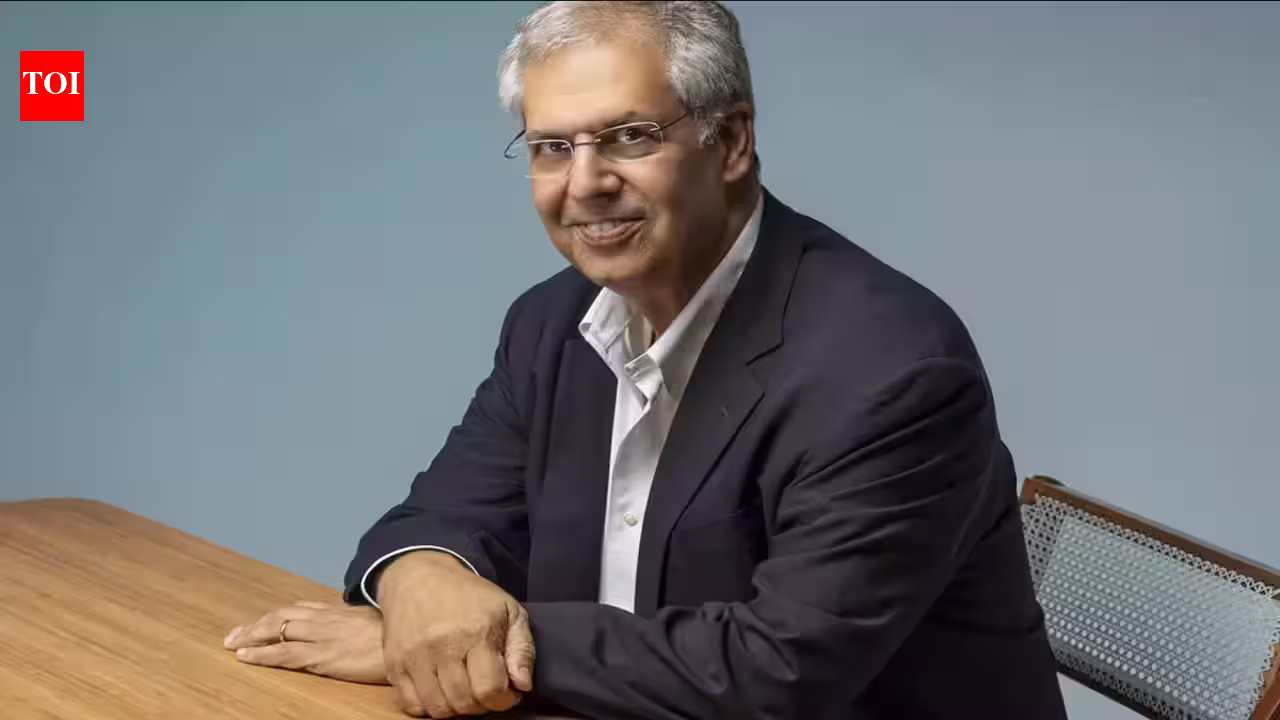
US audio major Bose Professional’s Mangaluru R&D centre illustrates the shift. Focused on next-generation professional audio products, the centre began with one employee, has grown to 25 and is planned to scale up to 75, CEO John Maier told TOI last year.
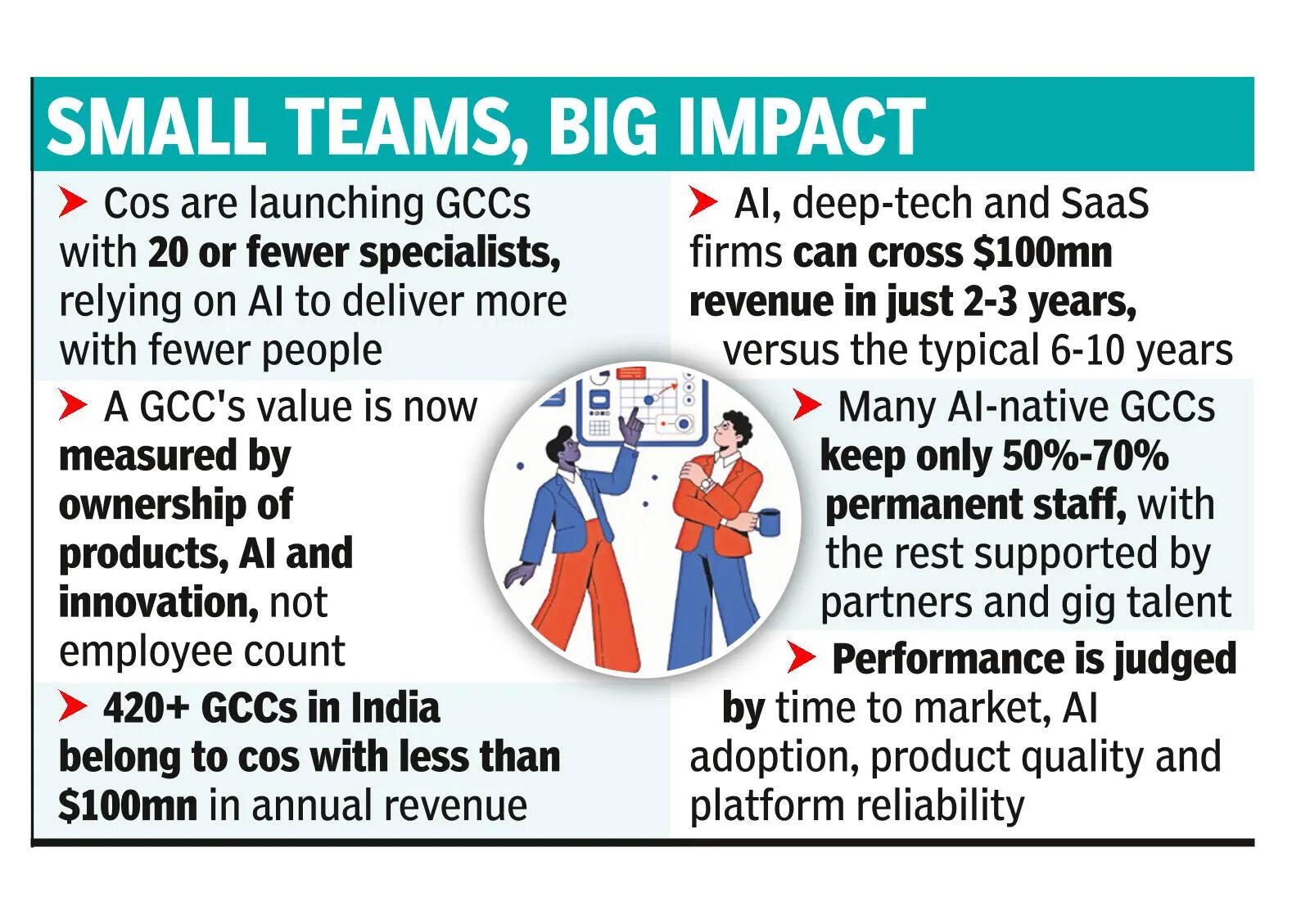
Data from the IT industry body Nasscom reveals a burgeoning trend: over 420 GCCs in India are now established by parent firms with revenues under $100 million. This statistic underscores the increasing presence of smaller enterprises entering the GCC space, all while prioritizing technology, product development, and niche capabilities.
Bose Professional’s Mangaluru R&D Centre: A Case Study
A prime example of this transformative shift is US audio major Bose Professional’s R&D centre in Mangaluru. Focused on developing next-generation professional audio products, the centre commenced operations with just one employee. It has since expanded to a team of 25 and is slated to grow to 75. CEO John Maier, in an interview with TOI last year, highlighted the company’s strategy to bring more product development in-house, aiming to enhance efficiency and accelerate innovation.
Nasscom further cited companies like McCain Foods, CoreStack, Blueshift, Veryon, Greenlight, and Ava Care as embodying this new wave of smaller, specialized GCCs.
Redefining GCC Relevance Beyond Headcount
Arindam Sen, GCC sector leader (TMT) at EY India, emphasized that the size of a GCC should not be the sole determinant of its strategic relevance. “Headcount alone should not define the category or determine the strategic relevance of a GCC,” Sen stated. He explained that a company with $1 billion in revenue might start with a 20-, 50-, or 100-person GCC, while a $60-billion enterprise could establish a centre with several hundred or even a thousand employees.
The fundamental change, according to Sen, lies in the nature of work being undertaken. Newer centres are increasingly focused on high-value functions such as AI, product engineering, cybersecurity, and advanced analytics, rather than transactional operations. He argues that access to specialized talent, accelerated product development, intellectual property ownership, and enhanced resilience are compelling justifications for establishing smaller, focused centres.
AI’s Impact on GCC Economics
Lalit Ahuja, founder of ANSR, highlighted AI’s pivotal role in reshaping GCC economics. AI capabilities are enabling companies to achieve more with leaner teams. Organizations can now initiate their GCC journey with teams of 20 or fewer, concentrating on specialized capabilities instead of immediately building large workforces.
Ahuja noted that some companies are significantly reducing initial workforce projections by 30% to 50%. For instance, a plan that once envisaged 5,000 employees might now be recalibrated to around 3,000. Furthermore, some AI-native GCCs maintain a permanent core workforce of approximately 50% to 70%, supplementing the rest with flexible talent and service partners.
Ahuja asserts that these productivity gains are transforming how GCC performance is evaluated. Metrics now include faster time to market, improved quality and execution, a shrinking technology backlog, reduced software licenses, and an increased capacity for high-value work.
Value Density Over Headcount: The New Measure of Success
Nitika Goel, managing partner at Zinnov, views the sub-$100 million segment not as a fixed category but as a launchpad for future growth. While companies typically take six to ten years to exceed $100 million in revenue, a rapidly growing segment in AI, deep-tech, and vertical SaaS can achieve 40% to 70% annual growth, crossing this threshold in just two to three years.
Consequently, Goel argues that headcount is an inadequate measure of a centre’s importance. “What actually matters is value density, whether that team owns a global product or a critical AI capability, and how fast the parent starts routing more strategic work there,” she explained.
Goel described this trend as the “democratisation of the GCC model,” citing examples such as RapidAI, Meltwater, Sonatype, and Guardant Health. These modern centres can achieve viability within 12 to 24 months, a stark contrast to the traditional three-to-five-year scale-up model.
Ultimately, ROI should be intrinsically linked to tangible outcomes, as suggested by Sen. A product engineering centre, for example, could be assessed by release velocity, platform adoption, product reliability, and revenue impact. An AI centre, on the other hand, could be measured by deployed use cases, productivity improvements, adoption rates, and the value realized. “The real question is not whether the centre is large enough, but whether it owns outcomes that matter to the enterprise,” Sen concluded, encapsulating the essence of India’s evolving GCC landscape.