








President Donald Trump has initiated a significant escalation in the ongoing trade conflict with Canada, announcing a series of import bans on specific categories of Canadian goods. The move, set to take effect on September 29, targets a wide array of products including motorcycles, various dairy items, and alcohol. Administration officials stated the decision serves as direct retaliation for Canada’s latest round of counter-tariffs, which went into effect early Tuesday morning.
## Leveraging Obscure Law to Reshape Trade
The latest measures are grounded in Section 338 of the Tariff Act of 1930—a statute that remained dormant for decades before the Trump administration utilized it to impose new duties on Canadian imports in late August. Beyond the new bans, the White House is performing a strategic realignment of its existing tariff structure. Duties on commodities like road salt, cement, and medical-grade pads are being phased out to make room for levies on more consumer-facing goods, such as motorboats, all-terrain vehicles, and specialized cheeses.
The administration also reaffirmed its commitment to a potential 50% tariff on automobiles and trucks, a threat that remains on the table for early 2026. These developments signal a deepening rift between the two North American neighbors, with U.S. Trade Representative Jamieson Greer recently grouping Canada alongside China as the only nations currently retaliating against U.S. economic policy.
## The Role of AI and Digital Rhetoric
The trade war has increasingly migrated into the digital realm, characterized by an aggressive information campaign on social media. The Trump administration has leaned heavily into the use of generative AI and digital media to shape public perception. Trump has frequently shared AI-generated memes mocking Canadian leadership and economic conditions, while the official White House social media accounts have amplified the animosity with provocative imagery, such as graphics depicting a bald eagle dominating a Canada goose.
This digital brinkmanship is matched by inflammatory rhetoric from top cabinet members. Treasury Secretary Scott Bessent recently drew intense criticism after comparing Canada to a “little yippy dog” during a televised interview. The intensity of the online conflict, including Trump’s move to unilaterally “rename” Lake Ontario to “Lake America,” has forced Canadian officials to adopt a defensive posture, pledging to ignore the provocations while remaining focused on strategic economic protection.
## Diplomatic Standoff and Future Outlook
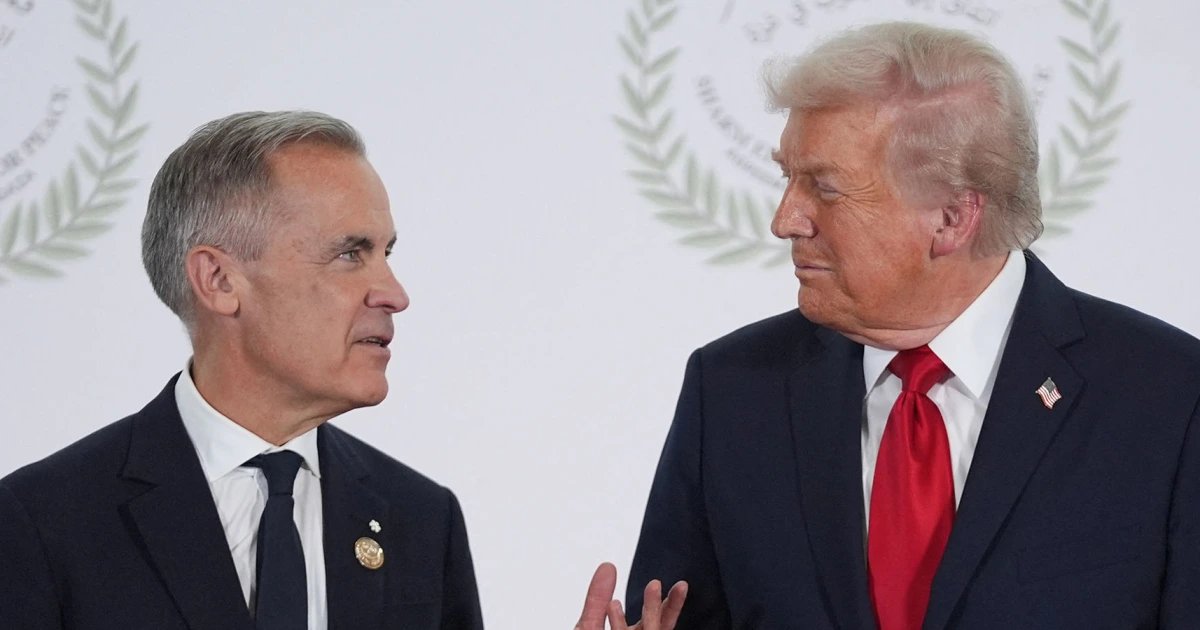
Despite the volatility, the business sector is pushing for a cooling-off period. The Distilled Spirits Council of the U.S. has formally urged both Washington and Ottawa to return to the bargaining table, citing the economic burden placed on retailers and suppliers. However, Canadian Prime Minister Mark Carney has shown little interest in resuming negotiations under current conditions. Carney noted that his administration would only entertain future discussions when American officials pivot away from personal attacks and “memes” toward serious diplomatic engagement.
While Canada remains in a holding pattern regarding U.S. negotiations, the Trump administration is simultaneously pivoting its diplomatic focus elsewhere. As U.S.-Canada talks remain frozen, Commerce Secretary Howard Lutnick is scheduled to meet with Mexican leadership on Wednesday. The discussions in Mexico City aim to address the trilateral trade landscape, marking a potential shift in the administration’s strategy as it juggles friction with its northern neighbor while securing regional partnerships elsewhere. For now, Canadian officials have indicated they are assessing the latest U.S. measures while maintaining that they are prepared to weather the trade volatility by leaning into their G7-leading economic fiscal position.
Disclaimer: This content is auto-generated for informational purposes only.
Source: Read Original News