








India’s Private Sector Investment Showing Unprecedented Conviction, Says Kumar Mangalam Birla
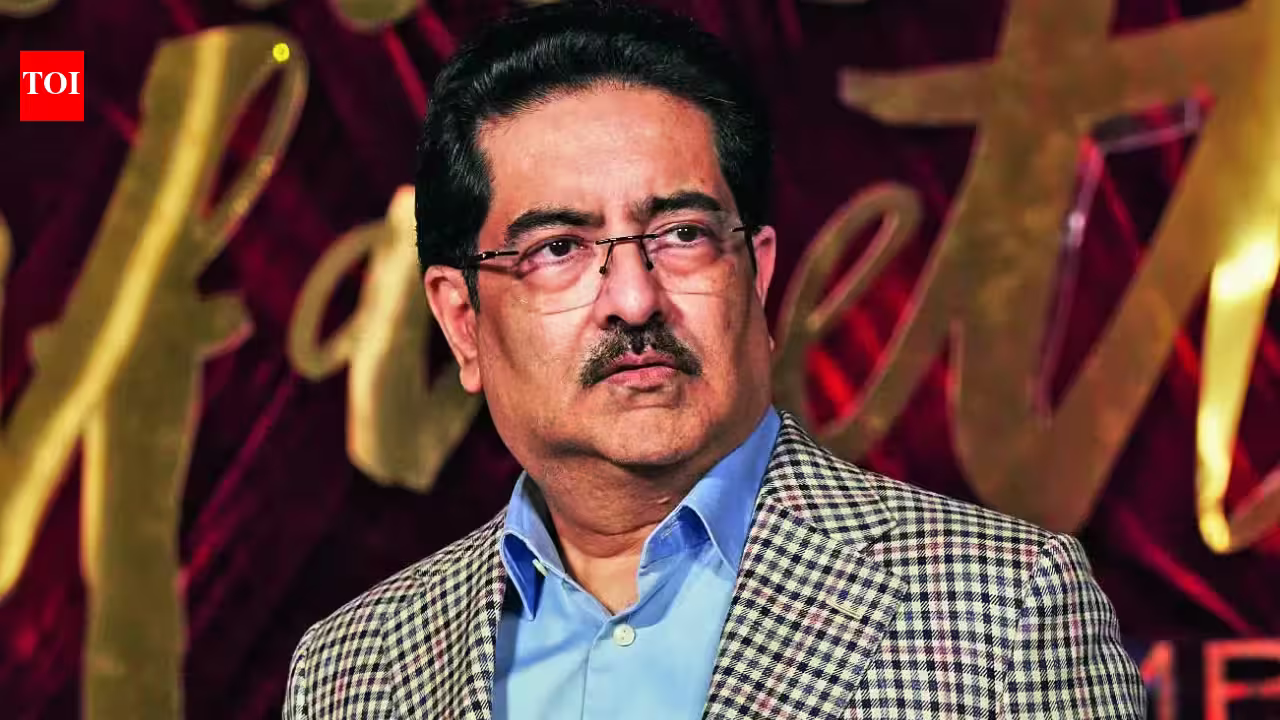
NEW DELHI: Addressing concerns regarding the pace of private capital expenditure in India, Aditya Birla Group Chairman Kumar Mangalam Birla has pushed back against narratives of corporate hesitation, asserting that the country is currently witnessing a period of "highest" investor confidence in recent history.
Speaking at the ET World Leaders Forum on Friday, Birla emphasized that the private sector is scaling up capital expenditure (capex) at an aggressive pace. Citing data from the Reserve Bank of India (RBI), he pointed to the robust growth in bank credit to the corporate sector—a trend he noted is healthily distributed across large corporations and small and medium enterprises (SMEs) alike.
"Conviction is at an All-Time High"
While acknowledging that corporations are exercising strict financial discipline when greenlighting projects, Birla cautioned against misinterpreting caution for a lack of faith in the Indian growth story.
"There is capital discipline, wherein you will take a view regarding the investments. But I don’t think we should confuse it with conviction about India," Birla remarked. "Conviction about India is perhaps the highest I have seen in a long time."
Navigating Global Trade Realities
Birla also addressed the evolving landscape of global trade and the protectionist measures—specifically tariffs—being adopted by advanced economies. He argued that tariff policies alone are insufficient to drive industrial capacity shifts, noting that modern business strategy is far more complex and data-driven.
Using the aluminum sector as a case study, he explained, "You cannot invest in aluminum facilities in the US just because there are tariffs on aluminum exported from India. That’s something that cannot happen practically. The route we have taken is to be ‘local for local’ customers."
This "local-for-local" approach suggests that global manufacturing hubs are increasingly driven by domestic market demand and supply chain logistics rather than reactionary tariff-hopping.
Regulatory Environment and Ease of Doing Business
Reflecting on the domestic regulatory environment, Birla lauded the government’s efforts over the last decade. He credited structural shifts—including the rapid digitalization of the economy, comprehensive tax reforms, and the formalization of financial systems—with significantly improving the ease of doing business in India.
"The government has done a lot in the past decade. Financialization, tax reforms, digitalization… all have helped in ease of doing business," he said, adding that the challenges businesses face in India today are comparable to global benchmarks and do not pose any unique, structural hurdles.
Beyond the "China Plus One" Strategy
Looking ahead, Birla expressed optimism that India is well-positioned to serve as a primary growth engine for the global economy. He advocated for a shift in perspective, encouraging Indian industry to move beyond the narrow confines of a "China plus one" strategy—which views India primarily as an alternative to Chinese manufacturing—and instead focus on carving out an independent identity as a global manufacturing and consumption powerhouse.
As global trade remains defined by uncertainty, Birla’s comments underscore a growing consensus among top industry leaders: that despite global headwinds, the structural strength and reform-led momentum of the Indian market remain a compelling magnet for capital.
For more insights on the shifting economic landscape, you can read the full report on tariffs and their impact on corporate strategy.