







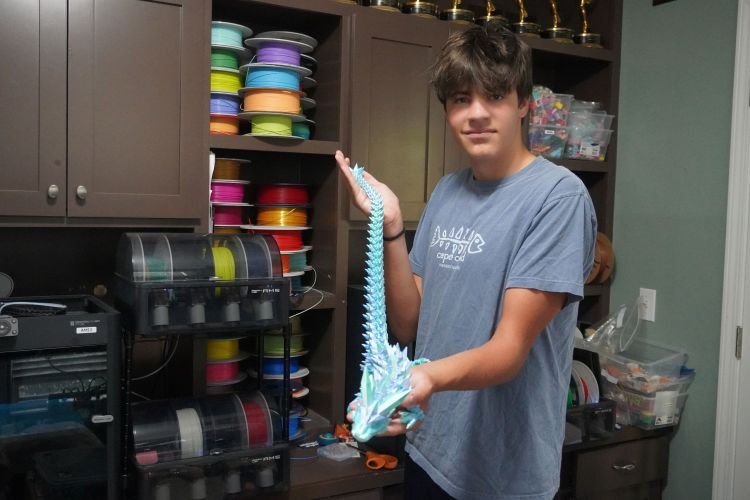
Beyond Toys: How One Forest Hills Junior is Using 3D Printing to Change Lives
FOREST HILLS — For many teenagers, a 3D printer is a gateway to creating plastic trinkets, desk accessories, or gaming figurines. For Forest Hills Central High School junior Brady Ashcroft, however, the technology has become a vehicle for humanitarian aid and a masterclass in entrepreneurship.
Ashcroft, the founder of the growing business “Brady’s Fidget Factory,” first gained international attention when he pivoted his production line to assist victims of the devastating twin earthquakes that struck Venezuela this past June.
Engineering With a Conscience
When news of the disaster reached him, Ashcroft didn’t hesitate to put his commercial ventures on hold. He joined a global network of makers using their machines to provide critical medical supplies.
“There were thousands of deaths and tens of thousands of injuries,” Ashcroft said. “The 3D-printing community came together… we all printed splints for all body parts, and even some for pets.”
For Ashcroft, this experience highlighted the true potential of his craft. While he built his business on the popularity of fidget toys, dragons, and personalized name tags, he maintains that the most rewarding aspect of his hobby is its capacity to do good.
“I saw the injuries and the devastation, and I just thought, ‘They don’t deserve that,'” he explained. “I want to use [my printer] for something that matters—something more meaningful than just relieving anxiety.”
From a Hobby to a Growing Enterprise
Ashcroft’s journey into the world of manufacturing began at age 14. What started as a single printer in his home has since expanded into a small, dedicated office space housing eight active machines.
His business, Brady’s Fidget Factory, has become a fixture on Etsy and a common sight at local craft fairs. Balancing the demands of high school—including his involvement with the rowing team and engineering coursework—with the logistical headaches of a growing startup has been a steep learning curve.
“Making a business requires a lot of work; it’s not just a piece of cake,” Ashcroft noted. “It took us a month to get our first sale, and now we’re getting 10 to 15 orders a day. It’s hard to keep track of it and stay up with it.”
A Future in Engineering
Ashcroft credits much of his success to the support system at Forest Hills Central. He specifically points to engineering teacher Rob Miedema, who has mentored him in design, and Principal Jonathan Haga, who commissioned him to create custom desk nameplates for staff members—a project that has seen him produce over 70 pieces to date.
As he looks toward the future, Ashcroft plans to leverage his hands-on experience in a professional engineering career. While he admits that the rise of home 3D printing may eventually saturate the market for his current products, he believes the skills he has developed—coding, problem-solving, and design—will be his most valuable assets.
“I’m looking more towards engineering because, as years go on, more people are going to own 3D printers,” he said. “Having this experience will really help me in the future. It’s just the beginning.”
Whether he is printing custom signage for his school or medical supplies for disaster relief, one thing is clear: Ashcroft is not just printing objects; he is printing a blueprint for how young entrepreneurs can leverage modern technology to make a tangible impact on the world.